
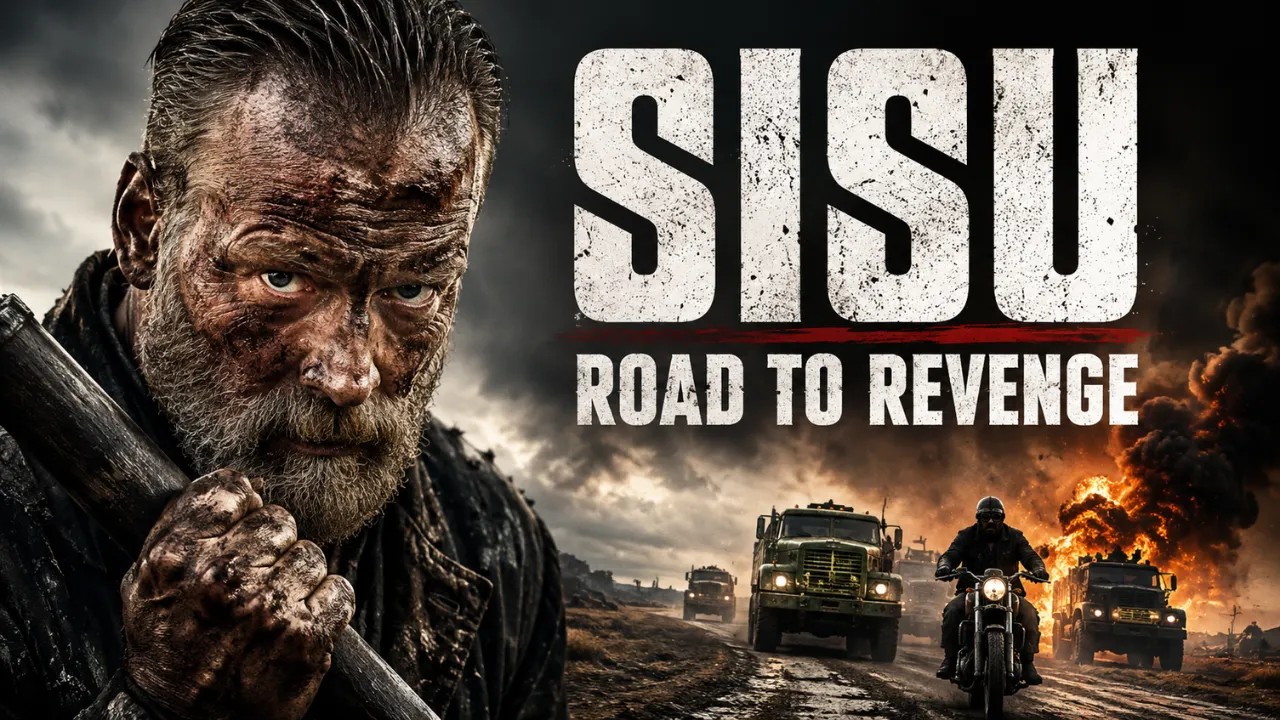
After watching Sisu Road to Revenge from beginning to end, one thing became immediately clear: this sequel isn’t interested in simply repeating the formula of its predecessor. While the original impressed through relentless survival action, the new film places greater emphasis on emotional motivation without sacrificing the brutal intensity that made the franchise memorable. Throughout this review, the analysis is based on the film’s storytelling, performances, technical execution, and overall viewing experience.
Directed by Jalmari Helander, this sequel returns audiences to the harsh landscapes where survival depends on grit, intelligence, and an unbreakable spirit. Rather than repeating everything that worked previously, the filmmaker chooses to push the central character into an even more personal conflict. This time the battle is no longer only about staying alive. It becomes an emotional journey driven by memories, loss, and unfinished vengeance, giving the narrative greater depth alongside its explosive action sequences.
From the opening moments, Sisu Road to Revenge establishes an atmosphere filled with danger and tension. Every location feels unforgiving, every encounter carries consequences, and every action sequence is designed to remind viewers that the protagonist refuses to surrender regardless of the odds. Fans of survival thrillers, historical action adventures, and revenge stories will immediately recognize the film’s commitment to practical action and visual storytelling instead of unnecessary exposition.
Review Methodology
This review is based on the complete viewing of Sisu Road to Revenge. The evaluation considers storytelling, performances, action choreography, cinematography, pacing, sound design, and the overall entertainment value rather than promotional material or early impressions.
Movie Overview
| Details | Information |
|---|---|
| Movie Title | Sisu Road to Revenge |
| Genre | Action, Adventure, Thriller |
| Director | Jalmari Helander |
| Lead Actor | Jorma Tommila |
| Supporting Cast | Stephen Lang, Richard Brake |
| Runtime | Approximately 89 minutes |
| Language | English and Finnish |
| Sequel To | Sisu (2022) |
Sisu Road to Revenge continues the franchise with a stronger emotional core while preserving the brutal survival action that defined the original film.
What Is Sisu Road to Revenge About?
At its heart, Sisu Road to Revenge tells the story of a man who refuses to let tragedy define him. The story of Sisu Road to Revenge remains focused on survival, justice, and resilience, making it more than a conventional revenge thriller. Haunted by painful memories from wartime, the legendary survivor Aatami Korpi decides to dismantle the home where his family once lived with hopes of rebuilding it somewhere peaceful. What appears to be a simple personal mission soon transforms into another life-threatening journey when an old enemy returns, determined to eliminate him once and for all.
Instead of presenting revenge as simple anger, the movie frames it as a deeply personal search for justice. Every mile travelled represents another reminder of the protagonist’s painful past, while every confrontation reinforces his refusal to abandon the values that keep him moving forward.
The story succeeds because it remains focused. Rather than filling the screenplay with multiple subplots or dozens of supporting characters, the film concentrates on one relentless objective. That approach allows the pacing to remain tight and constantly engaging.
Returning to the World of Sisu
One of the biggest strengths of Sisu Road to Revenge is how naturally it reconnects audiences with its unforgettable central character. Anyone who watched the original film remembers Aatami Korpi as an almost mythical survivor whose determination bordered on the impossible. His silence became his identity, while his actions created unforgettable cinematic moments.
The sequel understands exactly why audiences admired him in the first place. Instead of dramatically changing his personality, it builds upon his established characteristics. He remains calm under pressure, rarely wastes energy on unnecessary conversation, and consistently finds creative solutions when faced with overwhelming danger.
This consistency makes the sequel feel authentic rather than manufactured. The filmmakers clearly respect the foundation established in the first movie while giving longtime fans enough fresh material to justify another chapter. For fans of the original, Sisu Road to Revenge feels like a natural continuation rather than a simple repeat of familiar ideas.
Jorma Tommila Once Again Commands the Screen
Leading an action movie without lengthy dialogue is never an easy challenge, yet Jorma Tommila once again demonstrates why he is perfectly suited for the role of Aatami Korpi.
His performance depends almost entirely on physical expression, body language, facial reactions, and carefully timed movements. Rather than explaining emotions through speeches, he communicates determination, grief, exhaustion, and resilience with subtle performances that feel remarkably believable.
Every movement appears deliberate. Whether he is preparing for danger, studying his surroundings, or confronting another enemy, Tommila creates tension simply through his presence.
The character’s quiet personality also allows audiences to project themselves into his journey. His silence never feels empty because every action communicates exactly what he is thinking. His performance is one of the strongest reasons why Sisu Road to Revenge succeeds as both an action film and an emotional character study.
A More Personal Conflict
While the original story largely focused on survival against impossible odds, Sisu Road to Revenge introduces a more emotional motivation.
The memories of family, home, and everything destroyed during wartime become central themes throughout the narrative. Instead of merely escaping dangerous situations, the protagonist is now protecting something deeply meaningful.
That emotional foundation makes every confrontation feel heavier.
When audiences understand why a hero continues fighting despite impossible circumstances, every victory carries greater satisfaction. Every setback becomes more painful, and every decision feels increasingly significant.
The film avoids becoming overly sentimental. Instead, it balances emotional storytelling with relentless action, allowing quieter moments to strengthen rather than interrupt the overall pace.
The Action Remains the Biggest Attraction
Anyone familiar with the first film will already know what to expect regarding action.
Sisu Road to Revenge embraces large-scale practical stunts, brutal close-quarters combat, explosive vehicle chases, and inventive survival sequences. Rather than relying exclusively on computer-generated spectacle, the film emphasizes practical filmmaking techniques that make every collision, explosion, and fight feel tangible.
One aspect that stood out while watching the film was how the action rarely felt repetitive. Every major confrontation introduces a different tactical challenge, preventing the excitement from fading despite the film’s straightforward narrative.
Instead of repeating identical fight scenes, each confrontation introduces new environments, new obstacles, and fresh tactical challenges. This variety keeps viewers engaged while highlighting the resourcefulness of the central character.
The choreography consistently emphasizes creativity rather than sheer destruction. Even when the odds appear impossible, Aatami uses intelligence, experience, and determination instead of relying purely on physical strength.
The practical action sequences in Sisu Road to Revenge consistently deliver tension without depending on excessive CGI.
Beautiful Landscapes with Hidden Danger
One of the first technical strengths I noticed was the cinematography. The contrast between the peaceful landscapes and the sudden bursts of violence creates a visual identity that feels distinct from many modern action films.
Wide natural landscapes create an incredible contrast against the violent events unfolding across the screen. Empty roads, forests, rivers, and abandoned locations become more than simple backgrounds; they actively contribute to the atmosphere.
One of the first technical strengths I noticed was the cinematography. The contrast between the peaceful landscapes and the sudden bursts of violence creates a visual identity that feels distinct from many modern action films.
There are few places where help can arrive quickly, meaning every encounter carries genuine consequences. This isolation enhances suspense because audiences understand the protagonist must rely entirely on himself.
The cinematography frequently shifts between expansive panoramic shots and intense close-up compositions. These transitions maintain visual variety while emphasizing both the scale of the journey and the intimacy of individual confrontations. The stunning visuals further establish Sisu Road to Revenge as one of the most visually distinctive action films in recent years.
A Worthy Continuation Rather Than a Simple Repeat
Creating a sequel always presents unique challenges.
Many follow-up films simply attempt to recreate earlier success by repeating familiar ideas. Fortunately, Sisu Road to Revenge demonstrates greater ambition.
Although it preserves the core identity of the franchise, it expands the emotional motivations, introduces formidable new threats, and raises the overall scale of the journey.
The storytelling never forgets that audiences returned primarily because they enjoyed the original character. Every creative decision appears designed to strengthen that connection instead of replacing it.
For longtime fans, this balance between familiarity and innovation becomes one of the movie’s strongest qualities.
Supporting Cast Delivers Strong Performances
While Aatami Korpi remains the emotional and narrative center of the film, the supporting cast makes a meaningful contribution to the overall experience. Every major character has a purpose, ensuring that the story never feels overcrowded with unnecessary personalities or distractions.
Stephen Lang brings a commanding presence whenever he appears on screen. His years of experience in action and dramatic roles are evident through his confident performance. Rather than relying on exaggerated expressions or theatrical moments, he portrays a character whose confidence and authority naturally increase the tension surrounding every encounter.
Richard Brake also leaves a memorable impression. His ability to portray unpredictable and intimidating characters has earned him recognition throughout his career, and that quality once again enhances the atmosphere of Sisu Road to Revenge. Instead of presenting a one-dimensional villain, the screenplay provides enough personality to make every confrontation feel significant. His scenes create anticipation because viewers understand that every meeting between hero and antagonist has meaningful consequences.
Beyond the principal performers, the supporting characters contribute to the realism of the journey. Each interaction feels connected to the larger narrative rather than existing merely to fill screen time. That careful balance allows the story to maintain its momentum without becoming unnecessarily complicated.
Direction That Understands the Franchise
Jalmari Helander once again demonstrates why he is closely associated with the Sisu franchise. His direction reflects confidence, patience, and a clear understanding of what audiences appreciated in the original film.
Rather than overwhelming viewers with constant explosions or endless action sequences, Helander carefully controls the pacing. Quiet moments provide opportunities for reflection, allowing the audience to appreciate the protagonist’s emotional journey before the next challenge arrives. These pauses never slow the film down; instead, they increase the impact of the action that follows.
One of the director’s greatest strengths is visual storytelling. Instead of depending on lengthy conversations to explain every situation, he trusts the audience to understand emotions through expressions, locations, and carefully constructed scenes. This approach gives the film a cinematic quality that feels increasingly rare within the modern action genre.
The sequel also expands its world without losing the intimate atmosphere that defined the original. Although the scale becomes larger, the narrative remains focused on one man’s determination. That consistency ensures the franchise retains its unique identity while still evolving.
Action Choreography That Feels Grounded
Modern action films often rely heavily on digital effects, rapid editing, and unrealistic stunts. Sisu Road to Revenge takes a noticeably different approach.
The action feels physical, practical, and believable within the world established by the film. Every punch, collision, chase, and confrontation carries visible weight, making each sequence more immersive. Instead of creating spectacle for its own sake, every action scene pushes the story forward or reveals something about the protagonist’s character.
The choreography demonstrates remarkable creativity. Different environments become active participants in the conflict, forcing both hero and opponents to adapt continuously. Whether travelling across isolated roads, navigating damaged structures, or surviving hostile surroundings, Aatami constantly uses intelligence as effectively as strength.
The filmmakers also avoid repeating identical sequences. Every major confrontation introduces fresh tactical challenges, preventing the movie from becoming predictable. This variety helps sustain excitement from beginning to end while rewarding viewers who appreciate carefully designed action.
Another notable achievement is the film’s ability to maintain tension even during quieter moments. Viewers rarely feel completely relaxed because the possibility of danger always exists. That continuous sense of uncertainty keeps the audience emotionally invested throughout the journey.
Cinematography Creates a Powerful Atmosphere
The visual presentation deserves recognition alongside the performances and action.
Wide landscape photography emphasizes both the beauty and harshness of the surrounding environment. Vast forests, isolated roads, rugged terrain, and abandoned locations create an atmosphere where survival feels genuinely uncertain. These settings are not simply attractive backgrounds; they become active elements within the story.
Lighting also contributes significantly to the mood. Natural light, shadows, changing weather conditions, and carefully composed framing combine to create scenes that remain visually memorable long after the credits begin.
The camera frequently avoids unnecessary movement, allowing viewers to appreciate the environment and follow the action clearly. Instead of confusing audiences with excessive cuts, the cinematography presents each confrontation in a way that highlights the performers’ physical commitment.
This restrained visual style increases realism while helping every action sequence feel more impactful.
Sound Design and Musical Score
Action movies often depend on loud music to create excitement, yet Sisu Road to Revenge understands that silence can be equally powerful.
The soundtrack supports the emotional tone without overwhelming the narrative. During moments of tension, subtle musical compositions gradually increase suspense rather than forcing dramatic emotions upon the audience.
Sound effects receive equal attention. Footsteps, vehicles, distant gunfire, environmental sounds, and combat sequences are all mixed carefully, creating an immersive listening experience that complements the impressive visuals.
The selective use of silence proves especially effective. Several scenes rely almost entirely on natural sounds, allowing viewers to concentrate on the unfolding danger without unnecessary distractions.
Themes That Add Emotional Weight
Although many viewers will approach Sisu Road to Revenge expecting thrilling action, the film also explores meaningful themes beneath its entertaining surface.
Resilience
The central message revolves around perseverance. No matter how overwhelming the obstacles become, Aatami refuses to surrender. His determination represents the belief that courage is measured not by the absence of fear but by the willingness to continue despite it.
Memory and Loss
The protagonist’s connection to his past gives emotional significance to the entire journey. Rather than seeking conflict for personal satisfaction, he carries memories that continue influencing every decision. This emotional foundation transforms the action into something more meaningful.
Justice Versus Revenge
The title naturally suggests revenge, yet the story repeatedly encourages viewers to consider the difference between vengeance and justice. Personal loss motivates the protagonist, but his actions also reflect responsibility, honour, and the desire to prevent further suffering.
Survival
Survival remains one of the franchise’s defining ideas. Every challenge reminds audiences that physical strength alone is never enough. Intelligence, patience, adaptability, and determination ultimately become equally valuable.
Strengths and Areas That May Divide Viewers
Every film appeals differently to different audiences, and Sisu Road to Revenge is no exception.
Strengths
- Outstanding lead performance by Jorma Tommila.
- Beautiful cinematography that enhances the atmosphere.
- Creative and varied action choreography.
- Strong pacing with very little unnecessary filler.
- Emotional storytelling that complements the action.
- Practical filmmaking techniques that increase realism.
- Excellent balance between suspense and spectacle.
Possible Limitations
- The intentionally minimal dialogue may not appeal to viewers who prefer character-driven conversations.
- Some audiences may wish for additional background regarding supporting characters.
- The film prioritizes atmosphere and action over complex plot twists.
These aspects are unlikely to disappoint existing fans of the franchise, yet they are worth considering for viewers approaching the series for the first time.
Although the film succeeds in maintaining tension, there are moments where the minimalist storytelling may leave some viewers wanting more character development outside of Aatami Korpi. The straightforward narrative is intentional, but audiences expecting multiple interconnected storylines may find it relatively simple.
Who Should Watch Sisu Road to Revenge?
This film is particularly suitable for viewers who appreciate action stories built around determination rather than elaborate superhero abilities. Fans of survival thrillers, historical adventures, and character-focused action cinema will likely enjoy the experience.
If you admired the original Sisu, the sequel successfully expands its world while preserving the qualities that made the first film memorable. New audiences can also appreciate the story, although watching the earlier installment first may provide additional emotional context.
Frequently Asked Questions
Is Sisu Road to Revenge a direct sequel?
Yes. The film continues the journey of Aatami Korpi while introducing a fresh conflict that builds upon events from the earlier story.
Do I need to watch the first movie?
While the sequel can be enjoyed independently, watching the original film provides greater understanding of the protagonist’s background and motivations.
What genre is the movie?
It combines action, adventure, thriller, and survival elements with historical influences.
Is the movie suitable for family viewing?
The film contains intense action and violent sequences, making it more appropriate for mature audiences.
Who delivers the strongest performance?
Jorma Tommila once again anchors the film through an expressive performance that relies more on physical storytelling than dialogue.
Does the sequel offer enough new ideas?
Yes. Although it respects the foundation established previously, it introduces fresh emotional motivations, larger challenges, and expanded storytelling.
What makes Sisu Road to Revenge different from other action films?
Its emphasis on practical action, visual storytelling, emotional restraint, and atmospheric filmmaking helps distinguish it from many contemporary action releases.
Is the pacing consistent?
The narrative maintains a steady rhythm, balancing quieter emotional scenes with intense action to keep viewers engaged.
Is this review spoiler-free?
Yes. This review avoids discussing major plot twists while highlighting the film’s strengths, weaknesses, performances, and overall viewing experience to help audiences decide whether it is worth watching.
If you’re someone who enjoys practical action over CGI-heavy spectacle, this sequel is easy to recommend. However, viewers looking primarily for deep political drama or complex mysteries should approach it with different expectations. Understanding what kind of experience the film aims to deliver helps appreciate its strengths much more.
Final Verdict
Sisu Road to Revenge proves that a sequel does not need to abandon its identity to feel fresh. Instead of relying on bigger explosions alone, the film builds upon the emotional foundation established previously while delivering inventive action, memorable performances, and visually striking filmmaking.
Jorma Tommila once again demonstrates why Aatami Korpi has become such a compelling action hero. His quiet determination, combined with impressive physical storytelling, gives the movie a unique personality that separates it from many formula-driven blockbusters.
The supporting cast strengthens the narrative, the direction remains confident, and the action consistently feels exciting without sacrificing realism. While viewers seeking complex political drama or intricate mysteries may find the straightforward narrative relatively simple, audiences looking for an intense, character-focused action experience are likely to appreciate what the film offers.
Overall, Sisu Road to Revenge successfully continues the franchise’s legacy by combining relentless action with emotional purpose. It delivers a cinematic journey that respects its predecessor while confidently establishing its own identity.
This review reflects an independent analysis based on the completed film and focuses on storytelling quality, filmmaking techniques, and audience experience. Opinions are presented to help readers decide whether the movie matches their interests rather than to promote the film.
Conclusion
For fans of action cinema, Sisu Road to Revenge stands as one of the year’s most engaging releases. Its combination of practical action, atmospheric direction, emotional storytelling, and memorable performances creates an experience that remains entertaining from beginning to end.
Rather than chasing modern trends, the film stays committed to its own style. That confidence ultimately becomes one of its greatest strengths. Whether you are returning to Aatami Korpi’s world or discovering the franchise for the first time, this sequel offers a rewarding adventure that highlights resilience, determination, and the enduring fight for justice.
If you enjoy honest movie reviews, detailed film analysis, and the latest updates from Hollywood, explore more reviews on our website and stay connected for upcoming releases, exclusive previews, and in-depth coverage of the biggest films of the year.Whether viewed as a sequel or as a standalone action experience, Sisu Road to Revenge delivers an engaging blend of survival, revenge, and emotional storytelling.
About the Reviewer
This review is written by a contributor who regularly analyzes action, thriller, and adventure films with a focus on storytelling, filmmaking techniques, performances, and audience experience. Reviews are based on direct viewing and independent editorial analysis.