
He-Man and the Masters of the Universe: Complete Guide, Characters & Legacy (2026)

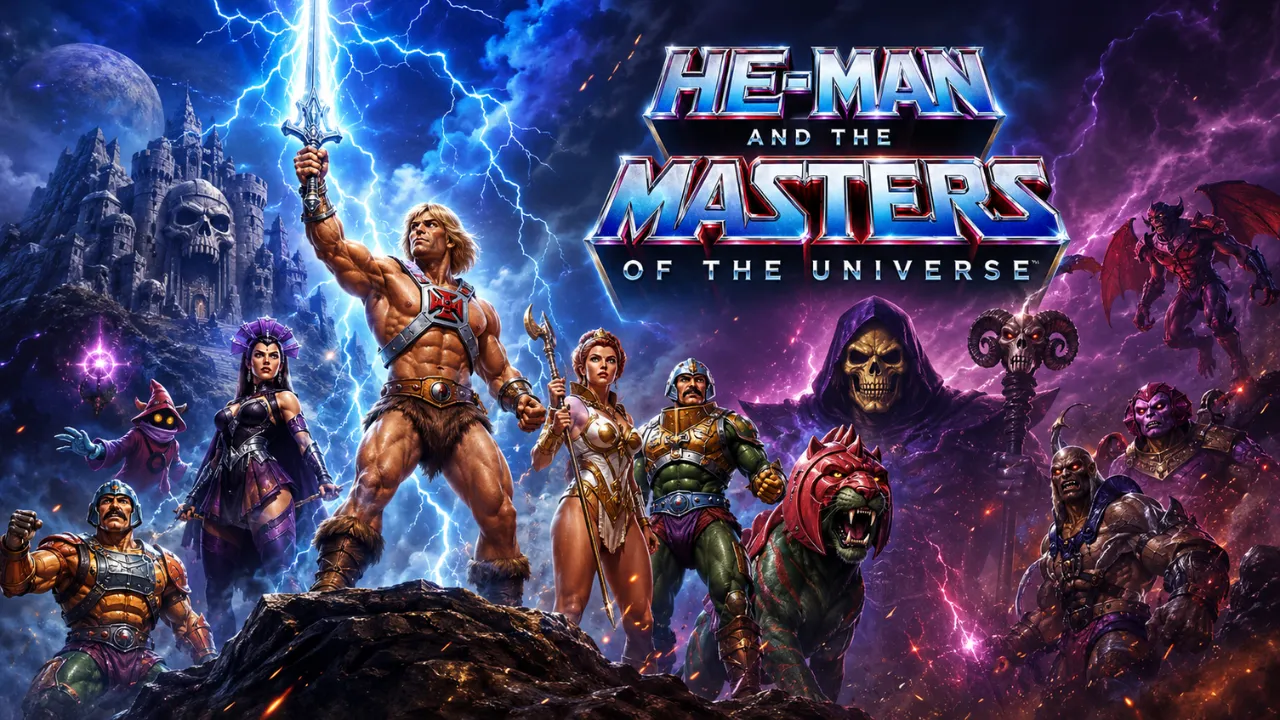
He-Man raising the Power Sword in front of Castle Grayskull.

Very few fantasy franchises have managed to stay relevant across multiple generations, but He-Man and the Masters of the Universe continues to prove that timeless storytelling never truly disappears. Whether you first discovered the legendary warrior through the classic 1980s animated series, collected the iconic action figures, watched the modern Netflix adaptations, or recently became curious because of the upcoming live-action movie, He-Man and the Masters of the Universe remains one of pop culture’s most recognizable heroes.

Unlike many nostalgic franchises that rely solely on memories, He-Man and the Masters of the Universe has consistently reinvented itself. Every new generation receives its own version of Eternia while still respecting the themes that made the original unforgettable—courage, responsibility, friendship, and the constant battle between good and evil.

As of 2026, the franchise is once again enjoying renewed popularity thanks to modern adaptations, renewed fan interest, collectible lines, and growing excitement surrounding the live-action reboot. This guide explores everything you need to know, from the story and characters to its cultural impact and lasting legacy.


What is He-Man and the Masters of the Universe?

At its core, He-Man and the Masters of the Universe is a fantasy adventure franchise centered around Prince Adam, the seemingly ordinary heir to the kingdom of Eternia. Although he appears carefree and unassuming, Adam possesses a magical secret.

By raising the legendary Power Sword and declaring the famous words:

“By the Power of Grayskull… I Have the Power!”

he transforms into the mighty He-Man, the most powerful man in the universe.

His mission extends far beyond defeating villains. He-Man and the Masters of the Universe protects Castle Grayskull, safeguards Eternia’s ancient magic, and prevents the sinister Skeletor from obtaining unlimited power.

The story combines elements of:

  • High fantasy
  • Science fiction
  • Mythology
  • Medieval kingdoms
  • Advanced technology
  • Heroic adventure

This unusual blend helped the franchise stand apart from many other animated shows of its era.


The Origins of the Franchise

Many people assume He-Man and the Masters of the Universe began as a television show, but that’s only part of the story.

The franchise actually started in 1982 when toy company Mattel launched a new line of action figures. Rather than adapting an existing comic or film, Mattel built an entirely original universe around its toys.

Comic mini-books packaged with the figures introduced Eternia and its heroes before television audiences ever saw them.

In 1983, Filmation released the animated series that transformed He-Man and the Masters of the Universe into a worldwide phenomenon. Children weren’t simply buying toys anymore—they were investing in an expanding fantasy universe filled with memorable heroes, magical artifacts, terrifying villains, and moral lessons.

This clever combination of merchandising and storytelling became a blueprint that countless entertainment franchises would later follow.


The World of Eternia

One of the franchise’s greatest strengths is its imaginative setting.

Eternia isn’t a typical fantasy kingdom.

Instead, it mixes futuristic cities with ancient castles, magical forests, robotic creatures, prehistoric landscapes, mystical temples, and advanced alien technology.

This unique world allows almost any type of adventure to exist naturally.

A single episode might include:

  • Magic spells
  • Laser weapons
  • Dragons
  • Robots
  • Ancient prophecies
  • Space travel

Rather than feeling inconsistent, these elements work together because Eternia embraces imagination above realism.

That creative freedom explains why the universe continues to inspire writers decades later.


Prince Adam vs He-Man

One of the most interesting aspects of the franchise is the contrast between Prince Adam and his heroic alter ego.

Prince AdamHe-Man
Appears lazy and carefreeBrave and fearless
Keeps his identity secretPublic protector of Eternia
Relies on wisdomUses incredible strength
Faces personal responsibilityFaces global threats
Represents humanityRepresents heroism

Although the transformation provides immense physical power, Adam’s greatest challenge is emotional rather than physical.

He must constantly balance:

  • Family expectations
  • Leadership responsibilities
  • Personal freedom
  • Protecting his secret identity

This internal conflict gives the character more depth than many people initially expect from an action-oriented cartoon.


Main Characters

He-Man and the Masters of the Universe/ Prince Adam

He-Man and the Masters of the Universe represents more than physical strength.

His greatest qualities include compassion, leadership, honesty, and sacrifice.

Unlike many superheroes who seek revenge or personal glory, He-Man consistently fights because protecting others is the right thing to do.

This moral clarity remains one of the reasons families continue introducing the character to younger audiences.


Skeletor

If He-Man and the Masters of the Universeis hope, Skeletor embodies endless ambition.

Recognized by his blue skin and terrifying skull face, Skeletor seeks ultimate power by conquering Castle Grayskull.

What makes him memorable isn’t simply his evil plans.

His dramatic speeches, sarcastic humor, explosive temper, and theatrical personality have turned him into one of animation’s greatest villains.

Modern interpretations often give Skeletor additional emotional complexity, making him feel more dangerous than ever.


Teela

Teela has evolved significantly throughout different adaptations.

Originally introduced as Captain of the Royal Guard, she has gradually become one of the franchise’s strongest heroes.

Modern stories portray her as:

  • Intelligent
  • Skilled in combat
  • Independent
  • Loyal
  • Emotionally resilient

Rather than simply supporting He-Man, she frequently becomes central to the story herself.


Man-At-Arms

Duncan, better known as Man-At-Arms, serves as Eternia’s greatest inventor and military strategist.

He combines scientific knowledge with battlefield experience, creating advanced weapons while mentoring younger heroes.

His fatherly relationship with Prince Adam gives the franchise much of its emotional heart.
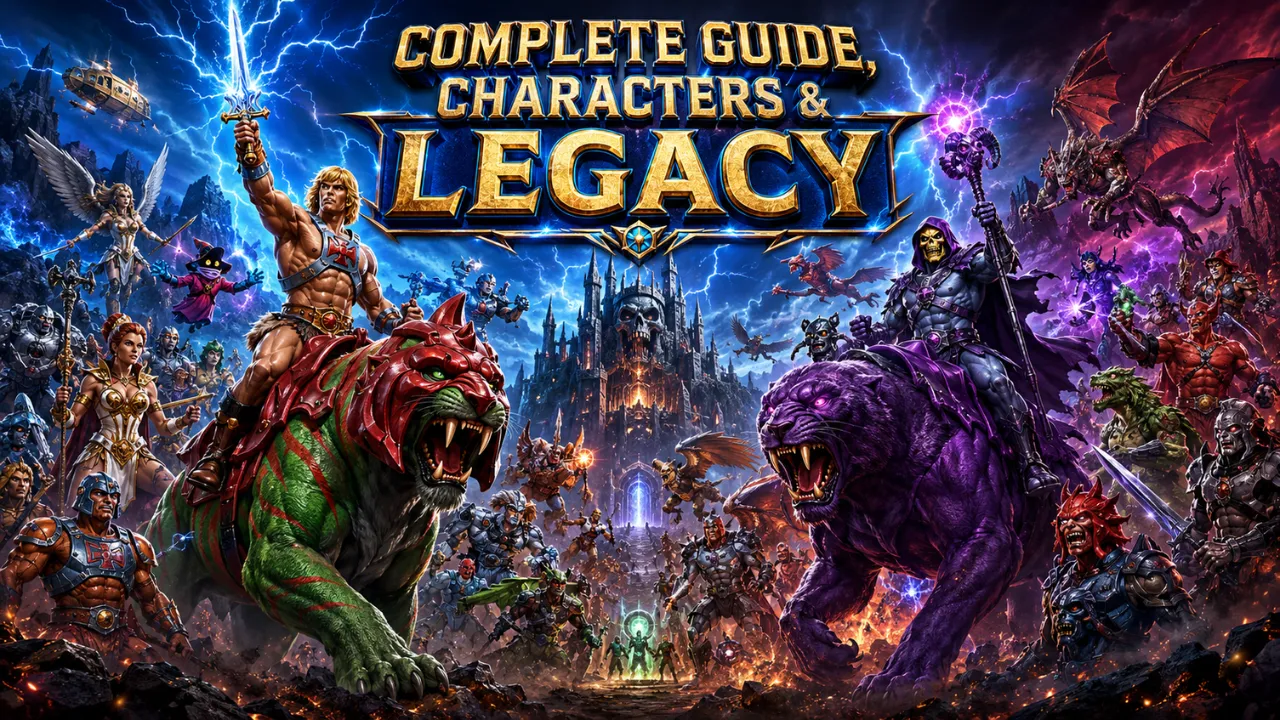
He-Man and the Masters of the Universe Skeletor facing He-Man


Battle Cat

Few fictional companions are as iconic as Battle Cat.

Originally the timid pet tiger Cringer, he transforms alongside Adam into the fearless Battle Cat.

This parallel transformation reinforces one of the franchise’s central messages:

Even those who appear afraid can discover extraordinary courage.


Evil-Lyn

Far more than Skeletor’s assistant, Evil-Lyn has become one of the franchise’s most fascinating characters.

Modern adaptations portray her as politically intelligent, magically gifted, and morally complex.

Rather than pursuing destruction for its own sake, she often seeks freedom, recognition, and personal power.

This layered characterization has earned her increasing appreciation among longtime fans.


Heroes vs Villains

HeroesVillains
He-ManSkeletor
TeelaEvil-Lyn
Man-At-ArmsBeast Man
Battle CatTrap Jaw
OrkoMer-Man
The SorceressTri-Klops

The balance between these memorable personalities keeps the conflict engaging even decades after their original introduction.


Why the Franchise Still Matters in 2026

Many 1980s cartoons faded into obscurity once nostalgia disappeared.

He-Man survived because its themes remain universal.

The franchise continues exploring:

  • Responsibility
  • Self-belief
  • Leadership
  • Friendship
  • Sacrifice
  • Hope
  • Courage

These ideas resonate regardless of age or generation.

Modern audiences may enjoy darker fantasy stories, but He-Man reminds viewers that optimism can still create compelling adventures.


My Analysis & Commentary

One reason He-Man and the Masters of the Universe has endured for more than four decades is that it never depended solely on flashy action or toy sales. At its heart, the franchise is about responsibility. Prince Adam isn’t chosen because he’s already the strongest—he becomes strong because he’s willing to carry the burden of protecting others.

From my perspective, this is what separates He-Man from many action heroes of the same era. While some characters are defined primarily by their powers, Adam’s defining trait is restraint. He doesn’t seek conflict; he accepts it because he understands what’s at stake.

Another factor behind the franchise’s longevity is its flexibility. Every generation has interpreted Eternia differently—sometimes brighter and more family-friendly, other times darker and more emotionally complex. Yet the central idea remains unchanged: power has value only when it is used to protect others.

In my view, that’s why the series still attracts new fans in 2026. It offers more than nostalgia—it presents timeless themes that continue to resonate in modern storytelling.

Evolution of the Franchise Through the Years

One of the biggest reasons He-Man and the Masters of the Universe has remained relevant is its ability to evolve without losing its identity. Instead of repeating the same formula, each generation has introduced a fresh interpretation of Eternia while preserving the franchise’s core themes of courage, responsibility, and the fight against evil.

The Classic 1983 Era

The original animated series introduced audiences to the magical world of Eternia and quickly became a global phenomenon. While each episode featured exciting battles, it also ended with a short moral lesson, encouraging children to value honesty, kindness, teamwork, and responsibility.

For many fans, this version remains the definitive portrayal of He-Man because it established the characters, iconic catchphrases, and mythology that continue to influence every adaptation.


The 2002 Reimagining

The 2002 reboot took a more serialized and story-driven approach. Characters received richer backstories, battles became more intense, and the world of Eternia felt larger and more detailed.

Rather than relying only on nostalgia, this version expanded the mythology and explored relationships between heroes and villains in greater depth. Many longtime fans still consider it one of the strongest adaptations because it respected the original while modernizing its storytelling.


Modern Netflix Adaptations

The Netflix era introduced the franchise to an entirely new audience. Modern animation, faster pacing, and more emotionally layered characters helped younger viewers connect with Eternia without requiring prior knowledge of the older series.

Some creative decisions divided longtime fans, which is common with beloved franchises. However, the renewed attention also proved that He-Man continues to generate discussion and excitement decades after his debut.


Live-Action Movie: Why 2026 Could Be a Turning Point

Perhaps the most exciting chapter in the franchise’s history is the upcoming live-action adaptation. Bringing a fantasy world like Eternia to life is a significant challenge, but it also presents an opportunity to introduce He-Man to audiences who have never watched the animated series.

A successful adaptation will need to balance several elements:

  • Respect the original mythology.
  • Develop believable emotional arcs.
  • Create visually convincing fantasy environments.
  • Make the characters relatable to modern audiences.
  • Deliver action without sacrificing storytelling.

If executed well, the film could redefine the franchise for another generation, much like other classic fantasy properties that have found renewed success on the big screen.


Recommended Watch Order

For newcomers, the growing number of adaptations can feel overwhelming. Fortunately, there is no single “correct” order. The following sequence provides a smooth introduction to the universe.

OrderTitleWhy Watch It?
1Original 1983 SeriesThe foundation of the franchise.
22002 RebootExpanded lore and stronger character development.
3Netflix AdaptationsModern storytelling and updated visuals.
4Live-Action MovieA fresh interpretation for today’s audience.

This order allows viewers to appreciate how the mythology has evolved over time while recognizing the elements that have remained consistent.


Why He-Man Continues to Inspire New Generations

Many fictional heroes are remembered for their extraordinary powers. He-Man, however, is remembered for what those powers represent.

His transformation is symbolic. Prince Adam is not fearless before becoming He-Man; he chooses to face danger despite uncertainty. That distinction matters because it reminds audiences that true courage is not the absence of fear but the willingness to act in spite of it.

The franchise also promotes values that remain relevant today:

  • Leadership requires responsibility.
  • Strength should protect, not dominate.
  • Friendship is a source of resilience.
  • Power without wisdom can become dangerous.

These ideas help explain why parents who grew up with He-Man often introduce the series to their own children.


Interesting Facts You May Not Know

Even longtime fans are sometimes surprised by the history behind the franchise.

  • The action figures were released before the animated television series.
  • The famous transformation phrase has become one of the most recognizable lines in animation history.
  • He-Man has appeared in comics, novels, video games, and numerous collectible lines over the years.
  • The design of Eternia intentionally blends medieval fantasy with futuristic technology, creating a setting unlike most fictional worlds.
  • The franchise has inspired fan conventions, cosplay communities, podcasts, and extensive online discussions across generations.

These details highlight how He-Man has grown beyond a television series into a lasting entertainment brand.

He-Man and the Masters of the Universe fantasy action banner


Comparison: Classic vs Modern He-Man

FeatureClassic VersionModern Adaptations
StorytellingMostly standalone adventuresOngoing serialized narratives
AnimationTraditional hand-drawn styleModern digital animation
Character DevelopmentSimple and straightforwardMore emotionally complex
ToneFamily-friendly adventureBalanced action with deeper themes
AudiencePrimarily childrenBoth longtime fans and new viewers

Neither approach is inherently better. The classic series excels in charm and nostalgia, while modern adaptations provide greater emotional depth and cinematic storytelling.


My Opinion & Critical Analysis

After revisiting the franchise across its various adaptations, one thing becomes clear: He-Man’s greatest strength is not his sword—it is the values he represents.

Some critics have dismissed the franchise as little more than a vehicle for selling toys. While merchandising undoubtedly played a significant role in its creation, reducing He-Man to a marketing strategy overlooks the emotional connection it has built with audiences over four decades.

The best versions of the story understand that the transformation into He-Man is not merely physical. It represents accepting responsibility, protecting others, and choosing integrity over personal comfort.

That said, not every adaptation has achieved the same level of success. Certain modern reinterpretations have struggled to balance nostalgia with innovation, occasionally making creative decisions that divided fans. Yet this willingness to experiment has also kept the franchise alive. A series that never evolves risks becoming a museum piece rather than a living story.

From my perspective, the future of He-Man and the Masters of the Universe depends on maintaining that balance. Respecting established mythology while embracing fresh storytelling is what will ensure Eternia continues to captivate audiences for years to come.


The Legacy of He-Man

Very few animated franchises from the early 1980s continue to influence popular culture as strongly as He-Man.

Its impact can be seen through:

  • Generations of devoted fans.
  • Successful toy and collectible lines.
  • Comic book expansions.
  • Video game appearances.
  • Streaming-era adaptations.
  • Enduring catchphrases recognized worldwide.

More importantly, He-Man has demonstrated that heroic storytelling does not need cynicism to remain compelling. Themes such as hope, honor, and selflessness still resonate with audiences when presented sincerely.

That enduring message is perhaps the franchise’s greatest legacy.


Frequently Asked Questions (FAQ)

Who is He-Man and the Masters of the Universe?

He-Man and the Masters of the Universe is the heroic alter ego of Prince Adam, the heir to the throne of Eternia. By wielding the Power Sword, Adam transforms into the legendary defender of Castle Grayskull.

Who is the main villain?

Skeletor serves as He-Man’s greatest enemy. His ultimate goal is to seize the power of Castle Grayskull and rule Eternia.

Is He-Man and the Masters of the Universe suitable for children?

Yes. While action scenes are central to the story, most adaptations emphasize positive values such as courage, honesty, teamwork, and responsibility, making them appropriate for family audiences.

Do I need to watch the original series first?

No. Each major adaptation offers a self-contained introduction, though beginning with the classic series provides valuable context for the franchise’s mythology.

Why has He-Man and the Masters of the Universe remained popular for so long?

The combination of memorable characters, imaginative world-building, timeless themes, and continuous reinvention has allowed the franchise to remain relevant across multiple generations.


Final Verdict

He-Man and the Masters of the Universe is more than a nostalgic relic from the 1980s. It is a franchise that has continually adapted to changing audiences while preserving the ideals that first made it memorable. Whether experienced through classic animation, modern reboots, collectibles, comics, or the upcoming live-action film, the world of Eternia continues to offer stories about courage, responsibility, and the enduring battle between good and evil.

For longtime fans, revisiting He-Man and the Masters of the Universe is a reminder of why the character became an icon. For newcomers, it is an opportunity to discover a fantasy universe whose themes remain surprisingly relevant in 2026. As long as stories about hope, sacrifice, and heroism continue to matter, the legend of He-Man and the Masters of the Universe is unlikely to fade.


Conclusion

From its humble beginnings as a toy line to its status as one of the most recognizable fantasy franchises in entertainment history, He-Man and the Masters of the Universe has earned its place in popular culture. Its unforgettable heroes, memorable villains, imaginative setting, and universal themes have allowed it to transcend generations.

While adaptations may evolve, the heart of the story remains the same: true power is measured not by strength alone but by the willingness to use it for the good of others. That timeless message ensures that the legacy of Eternia will continue to inspire fans—both old and new—for many years to come.

Leave a Comment

Your email address will not be published. Required fields are marked *

Scroll to Top