 by
by When I first came across Sisu, my expectations were a bit different from what I usually feel before watching a war-themed action movie. After watching the trailer, the tone immediately suggested something raw and stripped down. There were no long speeches, no complicated plot hints, and not even many emotional dialogues. Instead, the trailer felt like a promise of pure determination. That mindset shaped how I approached the film, and it became the foundation for my Sisu Road to Revenge Analysis while watching it.
What stood out to me immediately is that this movie doesn’t try to impress the audience with complicated storytelling. Instead, it focuses on something much simpler but much stronger: a single man’s refusal to surrender. Throughout myAnalysis, I kept noticing how the film uses silence, atmosphere, and brutal action to communicate its message rather than relying on words.
The Power of a Silent Protagonist
One of the most interesting aspects of the movie is its main character, Aatami. When watching the film, I quickly realized that his strength is not just physical; it’s psychological. The film doesn’t try to explain his emotions through dialogue, which actually makes the character feel even more mysterious and powerful.
While doing my Sisu Road to Revenge Analysis, I found myself thinking about how rare it is to see a modern action film where the protagonist barely speaks. Most movies depend on dramatic speeches or emotional conversations to build character depth. Here, however, the character’s determination speaks louder than any line of dialogue ever could.
At several moments during the film, I noticed that the camera simply focuses on his expressions or the environment around him. That silence creates tension in a very unique way. Instead of telling us how the character feels, the film lets the audience interpret it.
And honestly, that approach made the experience feel more immersive.
The Atmosphere Feels as Important as the Action
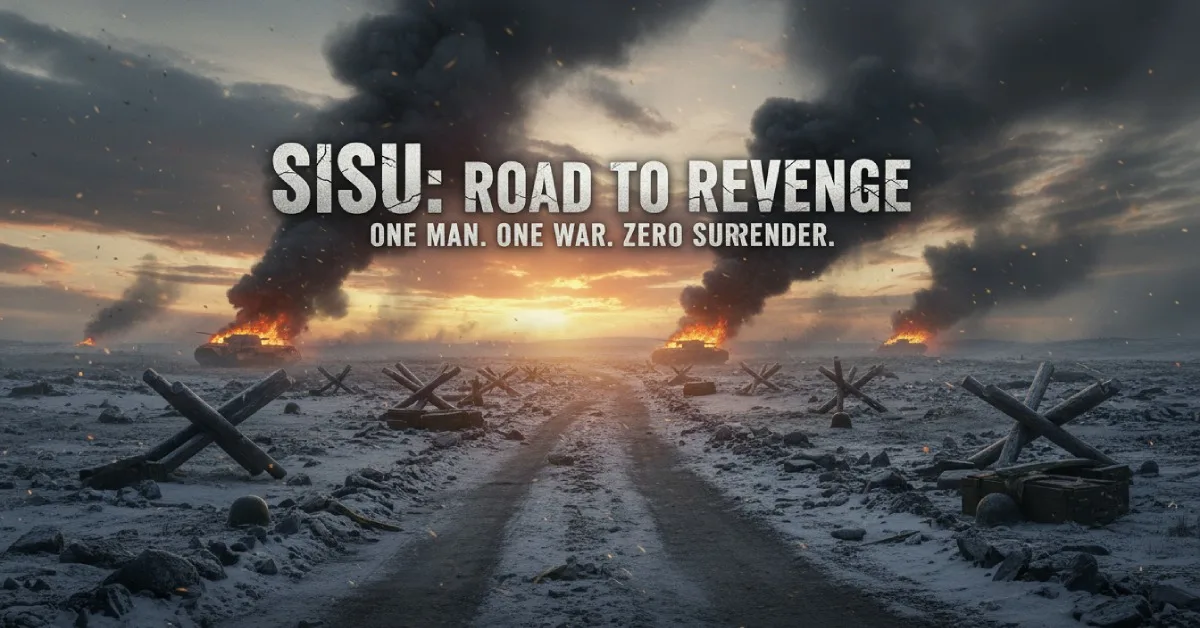
Another thing that became clear during my Sisu Road to Revenge Analysis is how important the environment is to the film’s identity. The harsh landscapes, dusty terrain, and isolated settings give the story a sense of realism that many action movies often overlook.
When watching the film, I felt like the landscape itself was almost another character. It doesn’t just exist in the background—it actively shapes the mood of every scene.
This choice adds weight to the character’s journey. The more hostile the environment looks, the more impressive his persistence feels. Instead of flashy city environments or modern warfare technology, the film relies on natural surroundings and raw survival instincts.
That simplicity is surprisingly effective.
The Trailer Sets the Right Expectations
Before watching the movie, the trailer already hinted at a brutal and relentless experience. It didn’t promise a complex story or emotional drama. Instead, it focused on intense action and the unstoppable mindset of the protagonist.
Because of that, I approached the film with a clear expectation. My Sisu Road to Revenge Analysis started even before watching the movie itself, simply from observing the tone of the promotional material.
What the trailer suggested was exactly what the movie delivered: a story driven by determination rather than dialogue. Sometimes trailers exaggerate or mislead audiences, but in this case the marketing felt surprisingly honest.
It prepared me for a film that prioritizes intensity and atmosphere over traditional storytelling.
A Different Kind of Action Experience
One thing I appreciated while watching the film is how it approaches action scenes. Many modern action movies rely on fast editing and complex choreography. This movie feels different.
During myAnalysis, I noticed that the action scenes feel more grounded and brutal rather than stylish. They are designed to emphasize survival rather than spectacle.
Instead of feeling like a polished Hollywood action sequence, many moments feel almost unpredictable. The film allows scenes to breathe, letting tension build naturally before the action explodes.
That pacing gives the film a gritty tone that fits perfectly with the theme of relentless perseverance.
The Theme of Determination
If there’s one idea that kept returning to my mind throughout my Sisu Road to Revenge Analysis, it’s the concept of determination.
The word “Sisu” itself represents an idea deeply connected to resilience and inner strength. Watching the film, it becomes clear that the story is less about revenge and more about persistence.
What impressed me most is how the film communicates this theme without constantly explaining it. Instead of hearing characters talk about courage or resilience, we simply watch it unfold through actions.
In many ways, that approach feels more powerful than traditional storytelling.

The Role of the Antagonists
Another element worth mentioning is the presence of the antagonists. In many action films, villains are given complex backstories or emotional motivations. Here, they serve a more direct purpose.
During my Sisu Road to Revenge Analysis, I realized that the antagonists function more like obstacles than fully developed characters. And interestingly, that actually works for the type of story the film is telling.
The focus remains firmly on the protagonist’s endurance rather than on moral debates or complicated character dynamics. The conflict feels simple but effective.
This simplicity allows the film to maintain its intense pacing without unnecessary distractions.
Minimal Dialogue, Maximum Impact
One of the boldest creative choices in the movie is the minimal dialogue. At first, I wondered if this approach would make the film feel empty. But as the story progressed, it became clear that the silence is intentional.
During my Sisu Road to Revenge Analysis, I started appreciating how much emotion and tension can exist without words. Silence forces the audience to pay attention to small details—facial expressions, background sounds, and visual storytelling.
It’s a technique that many modern films rarely attempt, but here it becomes one of the movie’s biggest strengths.
Why the Film Feels Different
By the time the movie ended, I realized that Sisu succeeds because it embraces simplicity instead of trying to impress audiences with complexity.
My Sisu Road to Revenge Analysis ultimately led me to the conclusion that the film’s strength lies in its clarity of purpose. It knows exactly what kind of experience it wants to deliver.
Rather than juggling multiple subplots or emotional arcs, the movie focuses entirely on the theme of resilience.
That focused storytelling makes the entire experience feel intense and memorable.
If you enjoy reading this Sisu: road to revenge, you can explore more film analysis on our website.
Final Thoughts
Looking back at the movie, what stayed with me the most is the feeling of persistence that runs through every moment. This isn’t a film that relies on complicated drama or elaborate world-building.
Instead, it tells a straightforward story through atmosphere, action, and character presence.
My Sisu Road to Revenge Analysis made me appreciate how powerful a simple concept can be when it’s executed with confidence. The film doesn’t try to be something it’s not. It commits fully to its theme of determination.
And because of that commitment, the experience feels surprisingly unique compared to many modern action films.
For viewers who enjoy intense action combined with a strong visual atmosphere, this movie delivers a memorable experience. It reminds us that sometimes the most compelling stories are not about grand narratives but about the strength of a single individual refusing to give up.