
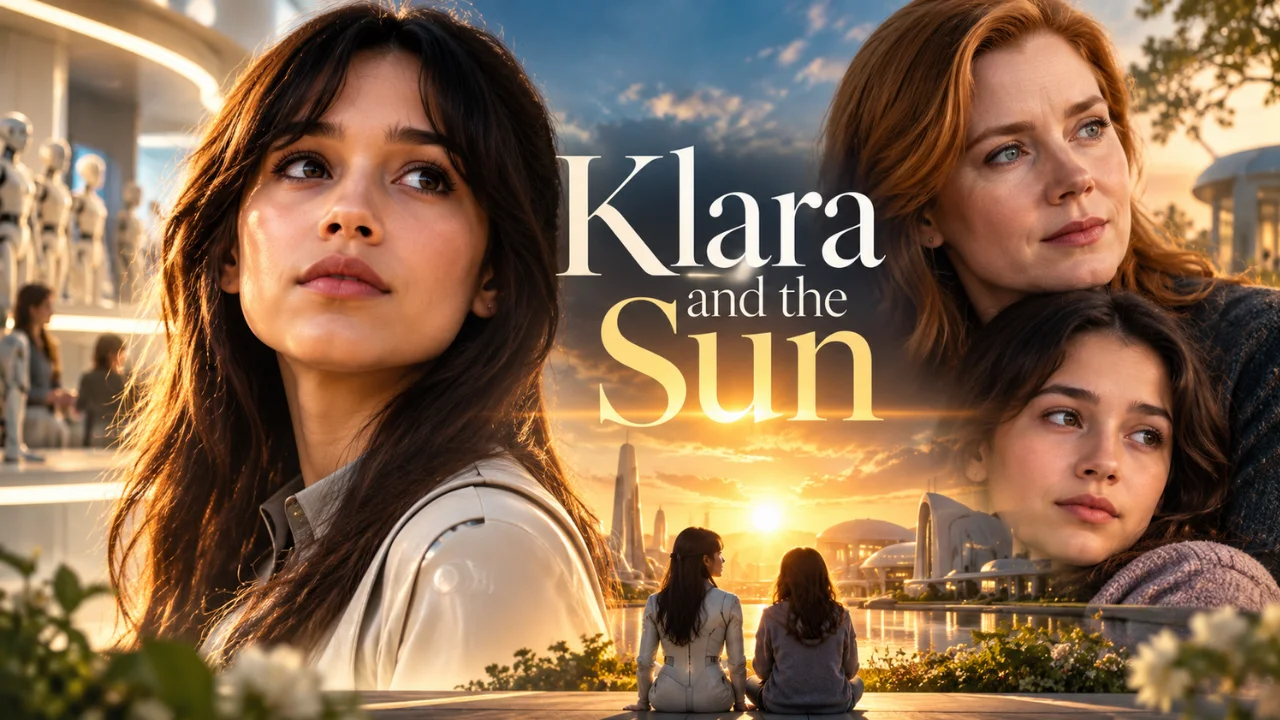
Klara and the Sun 2026: Cast, Plot, Review and Ending Explained
Klara and the Sun 2026 adapts Kazuo Ishiguro’s novel into a science-fiction drama directed by Taika Waititi. Starring Jenna Ortega, Amy Adams and Mia Tharia, the film follows an artificial companion who hopes to help a teenager facing serious personal challenges.
Rather than portraying AI as a threat to humanity, the story examines a more personal question: what happens when an artificial companion becomes part of a family’s emotional life but cannot fully understand its struggles?
Its central question is simple but difficult: can a machine offer meaningful comfort when it cannot fully understand the people it wants to help?
This guide to Klara and the Sun 2026 covers the movie’s story, cast, release information and key themes for viewers who want to know more before watching. Explore more film coverage in our Movie section.
Klara and the Sun 2026: Movie Details and Cast
Title: Klara and the Sun
Release year: 2026
Director: Taika Waititi
Screenplay: Taika Waititi and Dahvi Waller
Based on: The novel by Kazuo Ishiguro
Main cast: Jenna Ortega, Amy Adams and Mia Tharia
Genre: Science-fiction drama with comedy elements
Runtime: Approximately 116 minutes
US and UK theatrical release: October 23, 2026
The film is distributed by Sony Pictures. You can check the Klara and the Sun IMDb page for additional movie details. Release dates and cinema availability can vary by country, so check local listings for regional screenings.
Klara and the Sun Release Date
The Klara and the Sun 2026 theatrical release is scheduled for October 23 in the US and UK, with Australian cinemas set to show the film from October 22.
An India release date and a streaming date should only be treated as confirmed when an official regional distributor or platform announces them. A theatrical opening does not mean the film will immediately be available to stream.
What Is Klara and the Sun About?
The story takes place in a future where Artificial Friends, known as AFs, are designed to provide companionship. Klara, played by Jenna Ortega, is one of these artificial beings. She studies the people around her, hoping to understand their behaviour and what makes human relationships meaningful.
Klara eventually meets Josie, a teenager played by Mia Tharia, who chooses her as a companion. Josie lives with her mother, Chrissie, played by Amy Adams. Their family has experienced loss, and Josie’s health adds to the uncertainty surrounding their future.
Klara wants to help Josie. She also believes the Sun has the power to restore energy and bring hope. Her faith shapes the choices she makes, even when she does not fully understand the medical and emotional problems facing the family.
In Klara and the Sun 2026, Klara’s observations let viewers see familiar human behaviour through the perspective of someone still learning what emotions and relationships mean.
Klara and the Sun Cast
Jenna Ortega as Klara
Jenna Ortega plays Klara, an Artificial Friend whose curiosity and loyalty guide the story. Klara’s unusual way of interpreting the world gives the film both its humour and its emotional perspective.
Her character is not simply a human personality placed inside a robot. She has to learn social behaviour by watching people, which makes ordinary interactions unfamiliar and sometimes confusing.
Amy Adams as Chrissie
Amy Adams plays Chrissie, Josie’s mother. Chrissie wants a better future for her daughter, but fear and difficult family circumstances influence her decisions.
Her role introduces an uncomfortable question: when parents are desperate to protect their children, how can they tell the difference between a hopeful choice and a risky one?
Mia Tharia as Josie
Mia Tharia plays Josie, the teenager who chooses Klara as her companion. Josie’s relationship with Klara gives the story its emotional centre, while her health and family situation create the main source of tension.
Other Cast Members
Jenna Ortega, Amy Adams and Mia Tharia anchor the film’s central relationships, while the supporting cast expands the story beyond Klara and Josie’s immediate bond.
Aran Murphy as Rick
Steve Buscemi as Capaldi
Natasha Lyonne as the Store Manager
Rachel House as Melania
The supporting characters help show how differently people respond to artificial companions and to the difficult choices surrounding Josie’s future.
Klara and the Sun Trailer
The official trailer introduces Klara as an Artificial Friend searching for a home. It highlights her meeting with Josie and presents the film as a mixture of science fiction, family drama and offbeat humour.
Rather than promising a large-scale battle between humans and machines, the trailer focuses on the relationships at the centre of the story. It also hints at the difficult circumstances surrounding Josie’s family.
The trailer is a useful introduction to the premise, but it does not reveal every important development. Viewers unfamiliar with Ishiguro’s novel can approach the film without needing to know the book’s ending in advance.
Klara and the Sun Review: What Works and What Doesn’t?
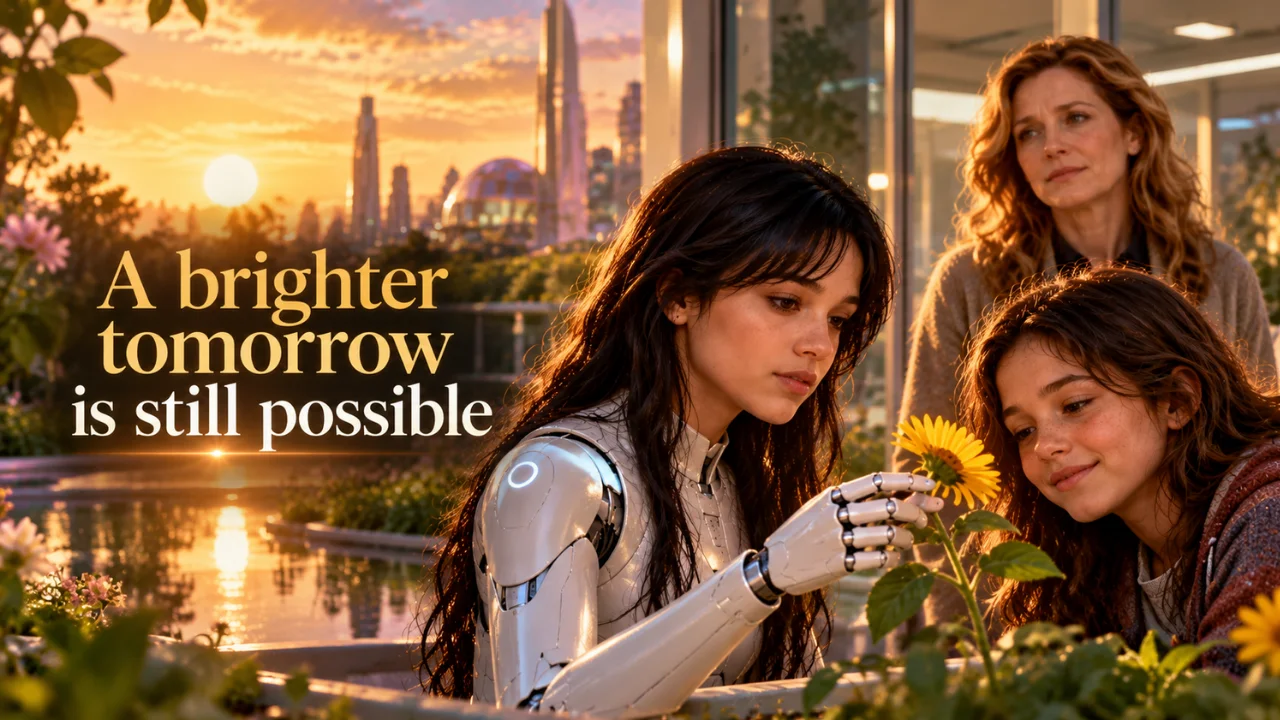
The film has an appealing central idea: an artificial companion tries to understand a family whose problems cannot be solved through simple logic. Jenna Ortega’s role places Klara’s observations at the centre of the story, while Amy Adams and Mia Tharia represent different sides of the family’s emotional struggle.
The contrast between Klara’s sincerity and human uncertainty gives the story its strongest source of tension. Klara wants to help, but she cannot control the choices people make or guarantee the outcome she hopes for.
The film’s biggest creative challenge is balancing its lighter moments with the serious issues facing Josie’s family. Whether that balance works will depend on viewers’ expectations: some may welcome the warmth, while others may prefer the novel’s more restrained approach. For additional context on the adaptation, read The Guardian’s interview with Taika Waititi about Klara and the Sun.
Readers familiar with Ishiguro’s novel may notice this change in tone. The book allows many moments to remain open to interpretation, whereas the film presents its emotions more directly. As a result, some viewers may find the adaptation easier to follow, while others may miss the ambiguity that makes the novel distinctive.
One of the strongest elements of Klara and the Sun 2026 is the tension between Klara’s desire to help and her limited understanding of the family’s problems. This conflict gives the science-fiction premise its emotional weight.
Klara and the Sun Ending Explained
Spoiler warning: This section discusses the ending and the film’s differences from the novel.
Klara’s main goal is to help Josie. Her faith in the Sun gives her a way to understand a world where illness, family pressure and uncertainty are beyond her control.
The ending brings the story’s central tension into focus. Klara’s devotion is genuine, but wanting to help someone is not the same as having the power to change their circumstances. Her value cannot be measured only by whether she achieves the outcome she hopes for.
The film takes a more sentimental direction than the novel’s ending. In Ishiguro’s book, Klara eventually finds herself in a Yard among discarded Artificial Friends, looking back on her time with Josie. The scene reinforces the novel’s concerns with memory, abandonment and the limits of Klara’s understanding.
The film’s conclusion creates a different emotional effect from the novel’s ending. To understand that difference fully, viewers can compare how each version treats Klara’s memories, her connection with Josie and the limits of her role. The difference is important: the novel leaves readers with a stronger sense of how easily an artificial companion can be set aside, while the film places greater emphasis on emotional closure.
Neither ending removes the story’s difficult question: if a relationship cannot last forever, does that make the care shared within it any less meaningful?
Klara and the Sun: Book vs Movie
Kazuo Ishiguro’s novel was published in 2021. The film retains the central relationship between Klara and Josie but changes the tone and presentation of parts of the story.
The major differences include:
Tone: The novel is restrained and often unsettling. The film introduces more visible humour and sentiment.
Perspective: The book stays close to Klara’s limited observations. The film can show the surrounding human world more directly.
Supporting storylines: The adaptation reshapes and simplifies some characters and plot elements.
Ending: The novel concludes on a melancholy note, while the film moves towards a more sentimental resolution.
Comparing Klara and the Sun 2026 with Ishiguro’s novel helps readers see how adapting a story for the screen can change its tone and emotional impact. The key comparison is how each version presents Klara’s limited understanding of people and the emotional consequences of treating an artificial companion as replaceable.
For readers, comparing the two versions offers a chance to consider how the same premise can produce different feelings about love, inequality and the value of an artificial being.
What Does Klara and the Sun Say About AI?
AI shapes the world of Klara and the Sun, but the heart of the story lies in how people form connections, cope with uncertainty and seek comfort from others.
Can an Artificial Companion Offer Real Comfort?
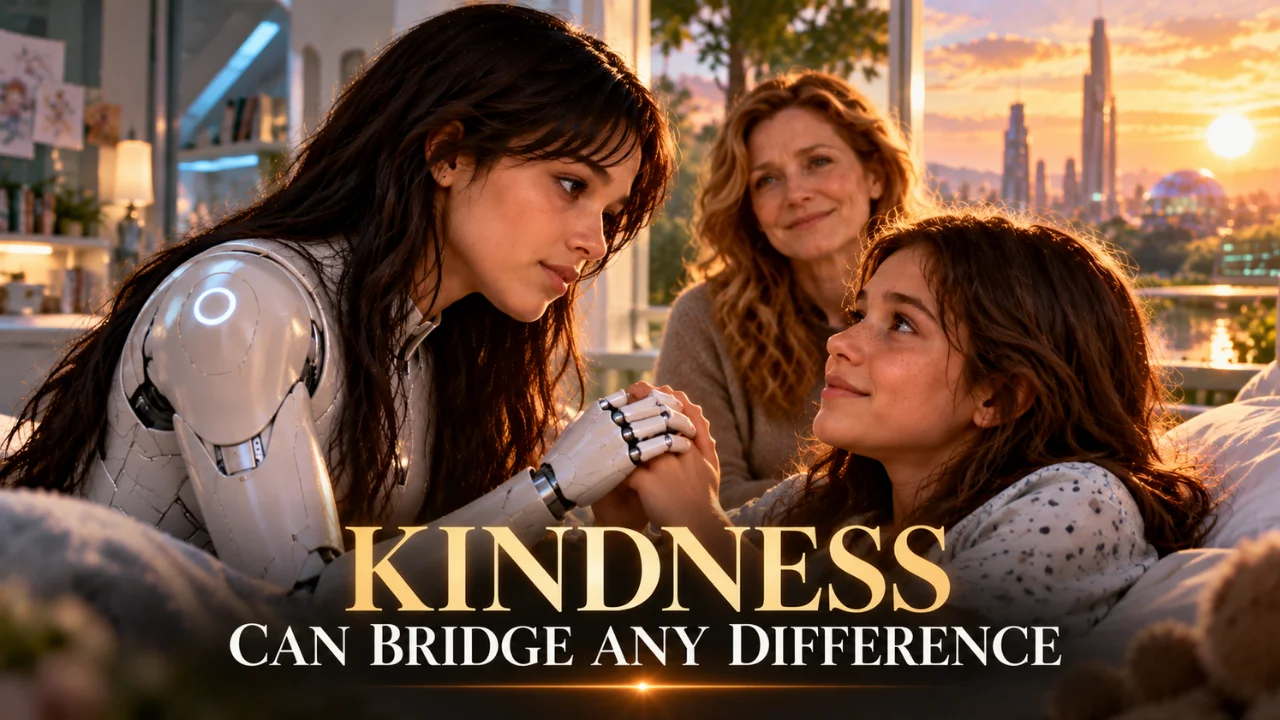
Klara gives Josie attention and loyalty. Their relationship invites viewers to consider whether companionship depends on shared human experience or whether care can still matter when the two sides understand the world differently.
Can Technology Replace Human Relationships?
The film suggests that technology may provide comfort, but it cannot simply remove illness, grief or family conflict. A companion can be present without being able to fix everything.
Who Decides the Value of an Artificial Being?
Klara is created to serve a purpose, and the people around her judge her partly by how useful she is. That raises questions about responsibility and how society treats systems designed to meet human needs.
Klara’s relationship with Josie offers a fictional lens for thinking about AI companionship: a system may respond to people’s needs, but that does not automatically mean it understands their experiences. The story raises this question without serving as a prediction of how real AI will develop. For another perspective on the film’s AI themes, read Digital Trends’ discussion of the future presented in Klara and the Sun.
Where to Watch Klara and the Sun
The film’s initial release is theatrical. Check local cinema listings for screening times in your region.
A streaming platform and digital rental date should not be assumed until an official announcement confirms them. Availability may differ between countries, so a release in one market does not guarantee simultaneous access elsewhere.
Frequently Asked Questions
1. When was Klara and the Sun released?
The film’s US and UK theatrical release is October 23, 2026. Its Australian release is October 22, 2026.
2. Who stars in Klara and the Sun 2026?
Jenna Ortega plays Klara, alongside Mia Tharia as Josie and Amy Adams as Chrissie. The film also features Aran Murphy, Steve Buscemi, Natasha Lyonne and Rachel House in supporting roles.
3. Who directed Klara and the Sun?
Taika Waititi directed the film and co-wrote the screenplay with Dahvi Waller. The film is based on Kazuo Ishiguro’s novel.
4. Is Klara and the Sun based on a book?
Yes. The film adapts Kazuo Ishiguro’s 2021 novel, which follows an artificial companion named Klara as she tries to understand human behaviour and help a teenager facing personal challenges.
5. Is Klara and the Sun a horror movie?
No. It is a science-fiction drama with comedy elements. It explores serious subjects, including illness and loss, but is not a conventional horror film.
6. Where can I watch Klara and the Sun online?
Check official distributor announcements for a confirmed streaming or digital release date. The theatrical release does not establish when the film will become available online.
7. Is Klara and the Sun worth watching?
It may appeal to viewers who enjoy reflective science fiction and stories about relationships. Viewers who prefer the novel’s restrained tone may have reservations about the film’s humour and changes to the source material.
Final Verdict
Klara and the Sun 2026 uses the idea of an artificial companion to explore loneliness, family pressure and the limits of care. Jenna Ortega leads the cast as Klara, with Amy Adams and Mia Tharia playing key roles in the family story.
The adaptation’s biggest point of discussion is its tone. Its more sentimental approach may help some viewers connect with the characters, while readers who valued the novel’s ambiguity may find that the film leaves fewer questions unresolved.
For audiences interested in character-driven science fiction, Klara and the Sun 2026 offers a story centred on relationships rather than technological spectacle. Its most compelling idea is that genuine care and the ability to solve a problem are not the same thing. Readers of Ishiguro’s novel can also compare how the film reshapes that idea for the screen.