 by
by Horror thrives in the silence between heartbeats. Few games capture that tension like Until Dawn. At its heart, the Until Dawn story isn’t just about jump scares—it’s about friendship, betrayal, memory, and choices that define us when everything falls apart.
1. The Prank That Went Too Far
Every legend begins with a mistake. For the Washington family, that mistake was born not out of malice alone, but out of thoughtless cruelty.
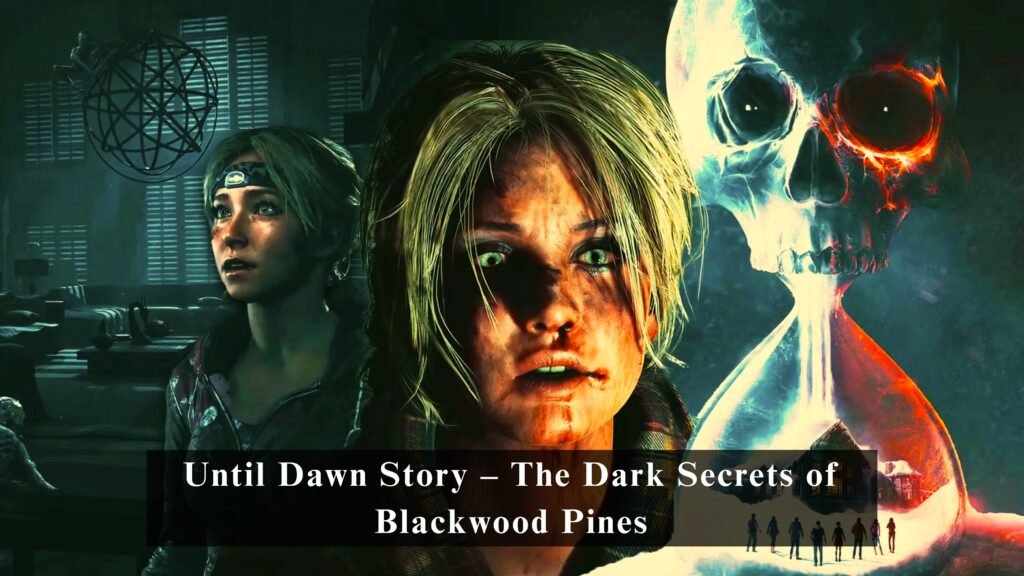
It was a bitterly cold night at the Washington lodge, perched high in the isolated beauty of Blackwood Pines. Inside the warm wooden walls, laughter echoed from the group of teenagers gathered for a winter getaway. Hannah Washington, shy and kind-hearted, had always been the quieter twin. Her sister Beth, by contrast, was fiercely protective.
But that night, the group decided to play a joke at Hannah’s expense. Mike, the charming athlete, flirted with her to lure her into an embarrassing trap. Jessica, enjoying the spectacle, played along. The others snickered behind doors, ready to watch her humiliation unfold.
When Hannah realized what was happening, the shame burned hotter than the fire in the lodge’s hearth. She fled into the snowstorm outside. Beth followed her, but the cold night swallowed them both. At the cliff’s edge, the nightmare reached its peak. A shadowy figure pursued them. Hannah slipped, Beth caught her, but both tumbled into the abyss.
The prank, meant to be harmless, became a spark of tragedy. That night would haunt everyone who was there—not just for the loss of the twins, but because deep down, each of them knew: they were responsible.
2. One Year Later
Grief changes people. Josh Washington, the twins’ brother, invited his friends back to the lodge exactly one year after the tragedy.
The lodge, once a haven of joy, now felt different. Its hallways whispered with memory. Every creaking floorboard seemed to echo Hannah’s laughter or Beth’s protective warnings.
Josh insisted this gathering would help everyone heal—a reunion. Yet beneath every word lay silence: We shouldn’t be here. We don’t belong here anymore.
3. The Lodge’s Dark History
What Josh didn’t tell his friends—and perhaps didn’t even fully understand—was that the lodge carried a legacy beyond the Washington family. The land had been home to strange disappearances, rumors of Native curses, and legends of “the Wendigo,” a creature born from the darkest human instincts.
This history added a chilling layer to the reunion. Even before the first scream, the lodge was alive with shadows, waiting.
4. The First Signs of Fear
Strange things began happening almost immediately: doors creaked open on their own, objects moved when no one was looking, and distant, almost human cries echoed from the forest.
The friends tried to rationalize the occurrences. “It’s just the wind,” someone said. “Maybe an animal.” Yet the tension between them grew. Mike became more aggressive. Jessica panicked easily. Sam and Emily, always perceptive, noticed the subtle changes in each friend—the stress, the paranoia, the fear that refused to leave.
At night, the haunting truly began. A lurking figure seemed to follow them, always at the edge of vision. Snow crunched, shadows shifted, and the lodge that once symbolized safety became a trap.
5. Secrets Between Friends
Fear has a way of exposing the cracks in even the strongest relationships. Old resentments, crushes, and betrayals came to light as the friends tried to survive. Mike’s arrogance endangered the group. Ashley’s caution sometimes slowed them down. Chris and Emily clashed, their arguments escalating under the pressure of terror.
Even Josh wrestled with his guilt. Each memory of that terrible night returned in fragments: the prank, the snow, the cliff, the helpless screams. Could he protect his friends now? Or would the past claim even more victims?
6. The Wendigo: More Than a Legend
As the terror escalated, it became clear the stories of the Wendigo were more than folklore. The creature, driven by hunger and rage, had human origins. Every encounter left the friends terrified, forcing them to question not just what was real, but what darkness existed within themselves.
7. Survival and Choice
The Until Dawn story isn’t linear—it changes with the choices characters make. Each decision could save a friend or doom them. Who runs, who hides, who confronts danger? In many ways, the real horror was human choice under pressure, revealing the true monsters might be within.
8. The Psychological Strain of Fear
Fear isn’t just physical. It eats away at the mind. Sleepless nights, hallucinations, mistrust among friends—it all combined to create a psychological labyrinth. The woods of Blackwood Pines became a mirror to their worst fears: guilt, regret, and the ever-looming presence of death.
9. Secrets Revealed
Over time, secrets about the prank, about lies told, and betrayals hidden finally surfaced. Each revelation increased the tension and the danger. No one was safe. The lodge became both a stage and a trap, pushing each friend to confront the darkness within themselves and in others.
Conclusion: The Lasting Legacy of Blackwood Pines
The Until Dawn story is more than a tale of horror. It’s a meditation on guilt, friendship, and human nature. It shows how a single moment—a prank, a lie, a bad decision—can echo through time and change lives forever.
Blackwood Pines stands as a reminder: sometimes, the scariest monsters aren’t the ones you see—they’re the ones inside your heart.