 by
by Why The Brutalist is a Film to Watch
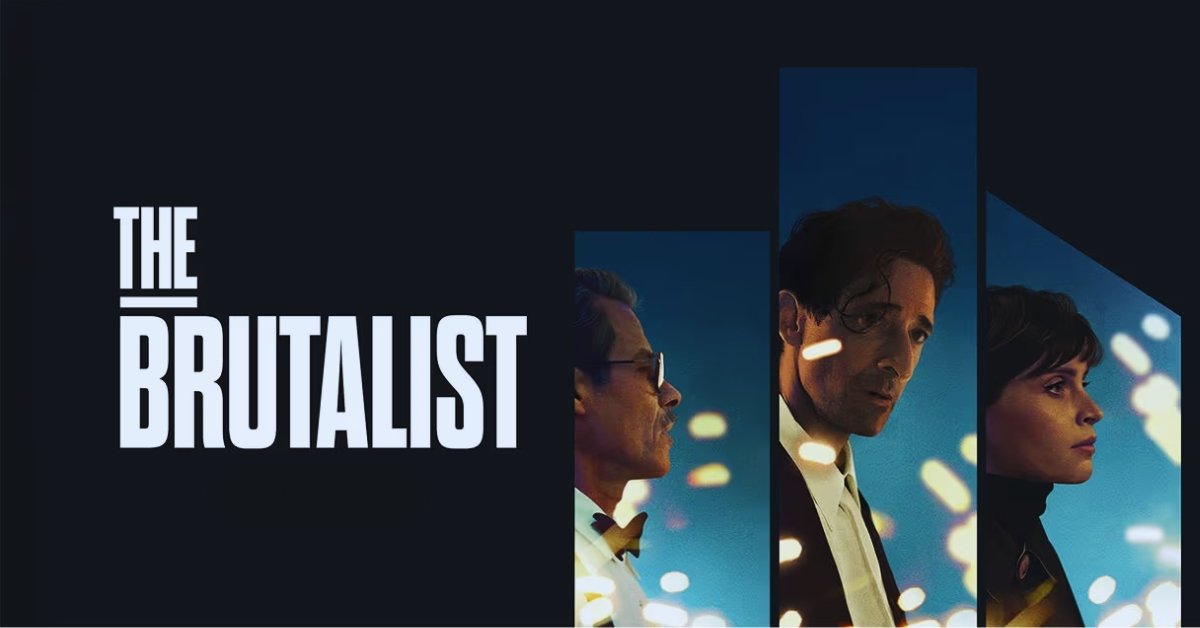
Cinema is often a reflection of society, history, and human emotion. Some movies entertain, some challenge, and a few remain etched in memory because of their emotional depth and storytelling ambition. The Brutalist (2024) is one such film. Directed by Brady Corbet and co-written with Mona Fastvold, this post-World War II epic delves into trauma, immigration, art, and identity. Unlike standard Hollywood fare, it’s a slow-burn, emotionally immersive experience that invites viewers to reflect on morality, survival, and creativity in the face of hardship.
Spanning over 215 minutes, including an intermission, the movie’s grandeur is mirrored in its VistaVision cinematography, giving audiences a sweeping visual and emotional experience. The Brutalist premiered at the 81st Venice International Film Festival in 2024, garnering critical acclaim for its performances, production design, and narrative depth. It’s a film that asks more than it gives, making it both challenging and profoundly rewarding for audiences willing to invest emotionally.
Plot Summary: A Story of Trauma, Dreams, and Compromise
At the heart of The Brutalist is portrayed by Adrien Brody, a Jewish-Hungarian architect and Holocaust survivor who seeks to rebuild his life in post-war America. László’s journey is one of resilience, hope, and moral compromise, showing how displacement and trauma can shape both ambition and personal relationships.
The Struggle of Starting Anew
Arriving in the United States, László is filled with optimism. He dreams of resuming his architectural career and reuniting with his wife and niece, who remain in Europe. However, the reality he encounters is harsh. Far from the grand opportunities he envisioned, he ends up working modestly at a furniture shop owned by his cousin. The struggle captures the immigrant experience — the tension between hope and the barriers imposed by society, language, and opportunity.
The Temptation of Power
László’s talent eventually catches the attention of a wealthy industrialist, Harrison Lee Van Buren, played by Guy Pearce. Van Buren offers him a chance to remodel a family estate, presenting both opportunity and moral complexity. While initially a stepping stone toward László’s ambitions, the project’s dynamics reveal the conflicts between creativity and control, ambition and compromise. László finds himself navigating a fine line between survival, personal integrity, and artistic expression.
Love and Separation
Felicity Jones plays Erzsébet, László’s wife, who embodies the pain of separation and the hope of reunion. Their fractured family dynamic illustrates the cost of displacement and survival. László’s longing for his family becomes a recurring theme, emphasizing how personal ambition and societal challenges can intersect and often conflict.
Architecture as Metaphor
The buildings László designs are more than structures; they are symbols of memory, survival, and legacy. The narrative uses architecture as a metaphor for identity, portraying the struggle to maintain integrity while navigating societal and economic pressures. Every building, every project, becomes a reflection of the tension between idealism and reality.
Cast and Performances
The Brutalist thrives on its strong ensemble cast. Each performance is layered and emotionally rich, enhancing the movie’s immersive quality.
-
Adrien Brody as László Tóth
Brody delivers one of his career-best performances, portraying a man haunted by loss and yet driven by hope. He captures the delicate balance between vulnerability, ambition, and moral struggle, making the audience empathize with László’s journey in every frame. -
Felicity Jones as Erzsébet
Jones provides a nuanced portrayal of quiet resilience and emotional depth. Her interactions with László convey the pain of separation, the sacrifices made for survival, and the emotional weight that accompanies displacement. -
Guy Pearce as Harrison Lee Van Buren
Pearce brings authority, privilege, and subtle menace to Van Buren. His character is both a benefactor and a source of moral tension, highlighting how wealth and power influence creativity and personal freedom. -
Supporting Cast
Actors including Joe Alwyn, Raffey Cassidy, and Stacy Martin add texture to the story, creating a vivid backdrop of post-war immigrant life, social hierarchy, and the struggle for dignity and opportunity.
Cinematic Style and Craft
One of the standout aspects of The Brutalist is its visual and narrative craftsmanship.
VistaVision Cinematography
Shooting in VistaVision provides the film with sweeping, immersive visuals reminiscent of classic epic cinema. The format gives a grand sense of scale, complementing the narrative’s emotional weight.Epic Runtime
At 215 minutes, the film includes a 15-minute intermission, echoing the structure of classical epic storytelling. This long runtime allows for character development, exploration of moral dilemmas, and thematic depth that shorter films often cannot achieve.Production Design and Music
The sets, costumes, and score work harmoniously to evoke the post-war era, while also reflecting the inner emotional states of characters. The production design mirrors László’s journey, blending physical spaces with emotional landscapes.Narrative Ambition
The film tackles multiple themes simultaneously: immigration, trauma, art vs. commerce, morality, memory, and identity. The interwoven narratives demand attention and reflection, rewarding patient viewers with a layered cinematic experience.

Why The Brutalist Matters
In a cinematic landscape dominated by blockbusters and franchises, The Brutalist is a reminder of what films can achieve when storytelling, performance, and craft align:
-
A Study of Humanity
The film’s exploration of trauma, displacement, and survival offers a window into the immigrant experience and human resilience. -
An Artistic Statement
The use of VistaVision, epic runtime, and carefully constructed sets show that cinema can be a monument — both literal and metaphorical — preserving stories of hardship, hope, and moral complexity. -
Discussion and Reflection
It encourages debate about morality, ambition, and compromise. Every viewer’s experience is personal, shaped by empathy, patience, and reflection.
Conclusion: A Film That Stays With You
The Brutalist (2024) is not merely a movie; it’s a cinematic journey. Its ambition, emotional depth, and craftsmanship make it a film that challenges viewers to reflect on history, morality, and human resilience. While demanding patience and engagement, it rewards audiences with profound insights and unforgettable performances.
Adrien Brody’s nuanced portrayal, Felicity Jones’ quiet strength, and Guy Pearce’s imposing presence combine to create a story that resonates long after the credits roll. Through its exploration of immigration, trauma, artistic integrity, and power, The Brutalist reminds us that cinema can be more than entertainment — it can be art, history, and reflection all at once.
For anyone looking for a thought-provoking, visually stunning, and emotionally resonant film, The Brutalist is a must-watch.