 by
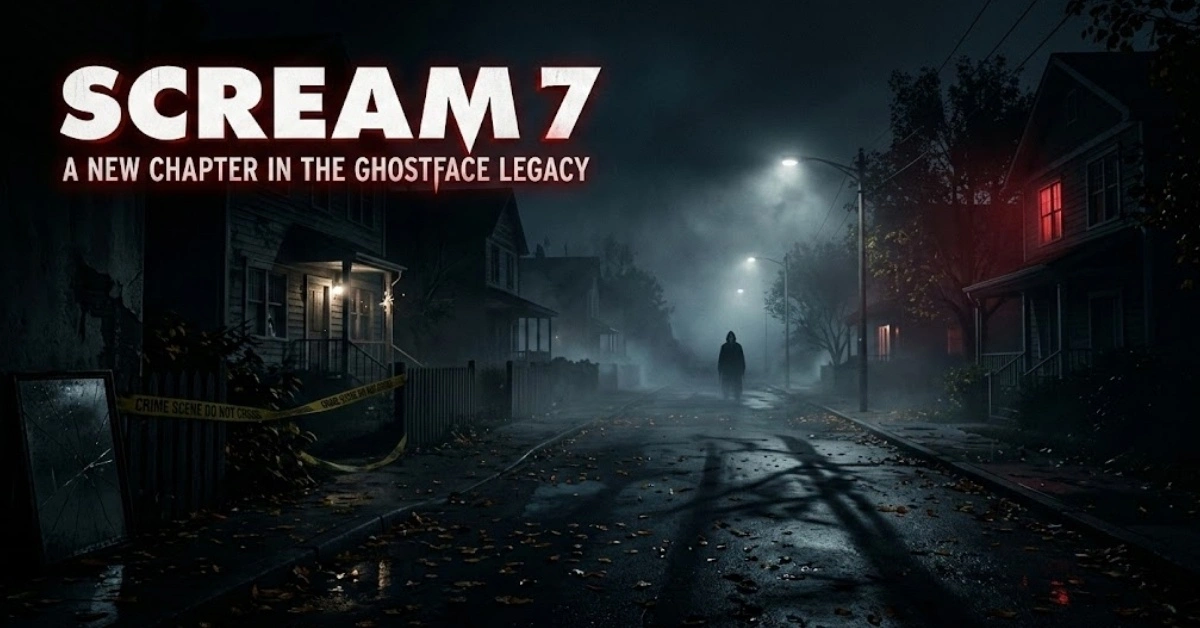
by When I walked into the theater for Scream 7 (2026), I already had expectations. After so many sequels, reboots, and reinterpretations, it’s hard not to. The trailer had hinted at a darker tone, a more personal conflict, and a stronger emotional center. But what stayed with me after watching the film wasn’t just the tension or suspense — it was how carefully the film tried to protect and reshape the Scream 7 Ghostface Legacy.
This isn’t a storytelling recap. It’s simply what I felt, noticed, and questioned while watching the film unfold on screen.
The Weight of a Long-Running Franchise
One of the first things I felt during Scream 7 was pressure — not from the jump scares, but from the history behind it. When a franchise carries decades of cultural memory, every new installment feels like it has something to prove. The earlier films built a reputation for being self-aware, sharp, and emotionally layered beneath the horror surface.
Watching this film, I kept thinking about how fragile the Scream 7 Ghostface Legacy actually is. If the tone shifted too far toward pure shock value, it would lose its identity. If it leaned too much into nostalgia, it would feel outdated. Surprisingly, the film walks a thin line between both.
There’s a maturity in how it handles tension. Instead of overwhelming the audience, it lets moments breathe. Silence becomes as important as confrontation. And as a viewer, that restraint felt intentional.
My First Reaction After the Trailer
Before seeing the movie, I watched the trailer several times. The marketing suggested intensity — emotionally and psychologically. I went in expecting a more aggressive version of the franchise. But while watching, I realized the film isn’t trying to be louder. It’s trying to be sharper.
That shift in mentality changed my viewing experience. Instead of waiting for sudden surprises, I began observing character behavior more closely. Small gestures, hesitant dialogue delivery, and even camera framing started to feel meaningful. The Scream 7 Ghostface Legacy isn’t just about the masked figure; it’s about how people react to fear.
Character Presence and Emotional Balance
What stood out most to me wasn’t the action, but the emotional reactions of the characters. In earlier installments, characters often balanced humor and fear. Here, the emotional weight feels slightly heavier.
At one point, I found myself wondering how different the dynamic would feel if a certain legacy character hadn’t been part of the film. Would the emotional stakes feel the same? Probably not. That thought alone made me appreciate how carefully the cast was assembled.
The performances don’t feel exaggerated. Instead, they feel restrained — almost cautious. That caution reflects how trauma lingers over time. It made me think about how the Scream 7 Ghostface Legacy isn’t just about survival; it’s about what survival does to a person.
Atmosphere Over Shock
Something I personally value in horror films is atmosphere. And in this movie, atmosphere carries more weight than spectacle. The lighting choices are softer in some sequences, and darker in others, but never chaotic. There’s a steady rhythm.
While watching one particular confrontation scene, I realized I wasn’t gripping my seat because of what was happening physically — I was tense because of the emotional uncertainty. Who can be trusted? Who is holding something back? That psychological tension feels more modern.
The Scream 7 Ghostface Legacy evolves here by focusing less on shock and more on suspicion.
The Evolution of Fear
Fear in earlier films often felt external — something chasing, something attacking. In this installment, fear feels internal. Characters hesitate. They second-guess. They watch each other closely.
As a viewer, I started doing the same. I wasn’t just watching the screen; I was analyzing expressions. That level of engagement is rare in long-running franchises.
I also appreciated that the film didn’t rush its emotional beats. In one quiet scene, instead of dramatic music swelling in the background, the silence stretched just long enough to make me uncomfortable. That discomfort felt deliberate.
It made me think that maintaining the Scream 7 Ghostface Legacy isn’t about reinventing everything — it’s about refining what already works.
Nostalgia Without Overdependence
Franchise films often rely heavily on nostalgia. While there are moments that clearly acknowledge past entries, they don’t dominate the narrative energy. Instead of leaning entirely on legacy references, the film seems focused on building its own identity.
I found that refreshing.
When a familiar element appeared on screen, I didn’t feel manipulated into excitement. I felt recognition — and there’s a difference. Recognition feels earned. It respects the audience’s memory without exploiting it.
That balance protects the Scream 7 Ghostface Legacy from feeling repetitive.
Psychological Tension vs. Physical Threat
During one intense sequence, I noticed something interesting: the tension didn’t come from how fast events were unfolding, but from how slowly they did. The pacing forced me to sit with uncertainty.
I began asking myself questions:
What would I do in this situation?
Would I trust this character?
Would I stay or leave?
That level of internal questioning made the experience immersive. The film doesn’t just show fear — it invites you to participate in it mentally.
For me, that’s where the Scream 7 Ghostface Legacy feels strongest. It doesn’t treat the audience as passive observers.
Performance Depth
Without diving into plot details, I can say the performances carry emotional subtlety. Some characters project strength on the surface but reveal vulnerability through silence. Others appear confident but hesitate at crucial moments.
I kept thinking about how different the film would feel if even one of these performances lacked depth. It would tip the balance toward cliché. Instead, it remains grounded.
As a viewer analyzing performances, I felt the cast understood the responsibility of carrying the Scream 7 Ghostface Legacy forward.
Modern Horror Identity
Another thing I noticed was how modern the film feels without abandoning its roots. The dialogue patterns, character awareness, and thematic concerns reflect today’s audience expectations. Yet, it never forgets the simplicity of its core concept.
That restraint matters.
In an era where horror sometimes competes to be louder or more extreme, this film seems more interested in psychological layering. It made me realize that longevity in horror doesn’t come from escalation — it comes from consistency.
The Scream 7 Ghostface Legacy survives here because it adapts quietly rather than dramatically.
My Overall Feeling After Watching
When the credits rolled, I didn’t feel overwhelmed. I felt reflective. I thought about the emotional arcs, the tension pacing, and the subtle performances. That reflective feeling is a sign of effective filmmaking.
This isn’t just another installment added for the sake of numbers. It feels considered. It feels aware of its past while cautiously stepping forward.
As someone watching both as a fan and as an analyzer, I believe Scream 7 (2026) respects its foundation while testing new emotional territory. The fear feels more psychological. The tone feels more mature. And the franchise feels carefully handled.
Most importantly, the Scream 7 Ghostface Legacy doesn’t feel diluted. It feels preserved — with slight adjustments.
If you enjoy reading this Scream 7, you can explore more film analysis on our website.
Final Thoughts
If you approach Scream 7 (2026) expecting constant intensity, you might miss its quieter strengths. But if you watch it carefully — observing character behavior, emotional hesitation, and atmospheric tension — you’ll notice the subtle craftsmanship behind it.
For me, the experience wasn’t about shock. It was about evolution.
And in a long-running horror franchise, evolution is the most important thing of all.