 by
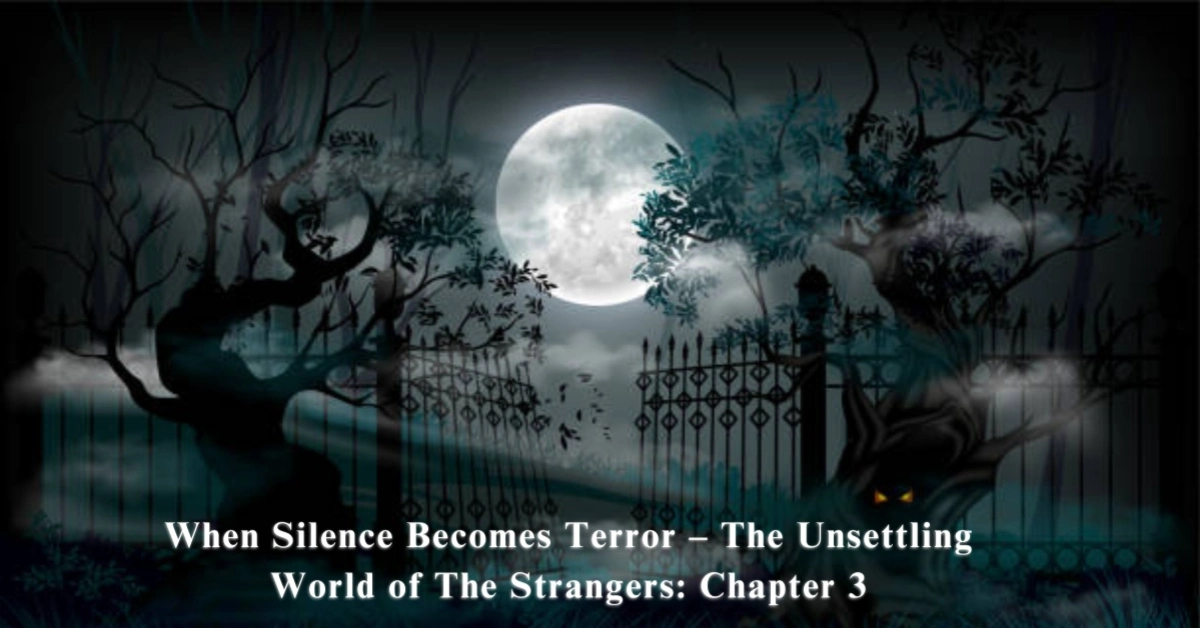
by Horror movies often rely on loud jump scares or complex supernatural ideas to keep audiences engaged. But some films choose a different path. Instead of overwhelming the viewer with action, they focus on quiet tension and unsettling situations that feel uncomfortably real. That’s exactly the experience I had while watching The Strangers: Chapter 3.
Going into the film, I already had certain expectations. The earlier entries in the franchise built their reputation around simple but disturbing concepts: strangers appearing without explanation, ordinary environments turning dangerous, and the feeling that safety can disappear in an instant. Watching this new chapter made me think about how these psychological horror elements continue to carry the series forward.
Rather than being a movie driven purely by story twists, this film works more through atmosphere and tension. While watching it, I often found myself paying attention to the quiet moments — the pauses, the empty spaces, and the way the masked strangers behave. Those details are what make the experience unsettling. From my perspective as a viewer, several moments clearly show why this franchise still manages to hold attention even after multiple installments.
1. The Quiet Build-Up Creates Uneasy Expectations
One thing I immediately noticed while watching The Strangers: Chapter 3 is that the film doesn’t rush into chaos. Instead, it allows the environment to slowly create tension.
As a viewer, I found myself scanning every corner of the screen, almost expecting something to happen. This kind of slow build-up is effective because it makes the audience participate mentally. Even before the strangers appear, the film already plants a feeling that something is wrong.
This is where the psychological horror elements become clear. The movie doesn’t rely on constant action; it relies on anticipation. That sense of waiting is what makes the atmosphere uncomfortable in a very effective way.
2. The Masked Strangers Still Feel Disturbingly Anonymous
The identity of the masked characters has always been one of the most memorable parts of the franchise. When I watched the new film, I realized that their anonymity still works surprisingly well.
In many horror movies, villains eventually become familiar or predictable. But here, the strangers remain emotionally distant and unexplained. As a viewer, this makes them feel less like characters and more like a disturbing presence.
While watching the scenes where they appear quietly in the background, I kept thinking about how the film uses horror elements rather than explicit explanations. The strangers don’t need detailed motives to feel frightening. Sometimes the lack of explanation is what makes them more unsettling.
3. Silence Becomes One of the Film’s Strongest Tools
Another thing that stood out to me while watching The Strangers: Chapter 3 is how much the film depends on silence.
Instead of constant background music, many scenes allow quiet moments to dominate the screen. As a viewer, those silent spaces made me pay closer attention to small sounds — footsteps, distant movement, or even the absence of noise.
These moments highlight the psychological horror elements of the film because the fear comes from uncertainty. Silence forces the audience to imagine what might happen next, which often feels more disturbing than seeing something directly.
4. Ordinary Locations Feel Unexpectedly Unsafe
One of the reasons this franchise still works is the way it transforms ordinary locations into threatening spaces.
While watching the film, I realized how familiar the environment feels. There is nothing supernatural about the setting, and that normality is exactly what makes the situation uncomfortable. The story doesn’t rely on haunted houses or mysterious mythology. Instead, it places danger in a location that could easily exist in real life.
This approach strengthens the horror because it removes the feeling of distance that many horror films create. When the environment looks normal, the tension feels more personal and believable.
5. The Characters React in Ways That Feel Human
While watching The Strangers: Chapter 3, I also paid attention to how the characters respond to the situation.
In some horror movies, characters make unrealistic decisions that break immersion. Here, many reactions feel closer to what a real person might do in a moment of fear or confusion. That sense of human vulnerability makes the tension stronger.
From my perspective, the film’s psychological horror elements are reinforced by these reactions. Instead of heroic action scenes, the focus is often on uncertainty and survival instincts. That emotional realism helps maintain the unsettling tone of the film.
6. The Film Maintains the Franchise’s Uncomfortable Simplicity
Perhaps the most interesting thing I noticed while watching The Strangers: Chapter 3 is how simple the overall concept remains.
The franchise has never depended on complicated mythology or elaborate plot twists. Instead, it sticks to a very straightforward idea: strangers appearing without warning and disrupting ordinary life.
While some viewers might expect the series to evolve into something more elaborate, I actually think this simplicity is its greatest strength. The psychological horror elements remain effective precisely because the film doesn’t over-explain anything.
Sometimes horror becomes more powerful when it leaves questions unanswered.
7. The Trailer Already Hints at the Film’s Mental Game
Before watching The Strangers: Chapter 3, I actually watched the trailer a few times, and it already gave me a clear impression of what kind of horror experience the movie was aiming for.
The trailer doesn’t reveal too much of the story. Instead, it focuses on short glimpses of tension — a masked figure standing quietly, a character looking around in confusion, and small moments that suggest something unsettling is about to happen. From those few scenes alone, I could already sense that the movie would rely heavily on psychological horror elements rather than just quick scares.
This kind of trailer strategy works well because it prepares the viewer mentally. When I finally watched the film, I wasn’t expecting constant action. Instead, I was expecting the same slow tension that the trailer hinted at. That expectation actually made the experience stronger, because I started paying attention to every small detail on the screen.
In many ways, the trailer sets the tone for the film’s approach to horror — subtle, quiet, and mentally disturbing rather than visually overwhelming.
8. The Franchise Still Understands the Fear of the Unknown
Another thing that stood out to me while watching The Strangers: Chapter 3 is how much the film depends on the fear of the unknown.
Many modern horror films try to explain everything. They reveal the villain’s backstory, motivations, and sometimes even supernatural rules behind the events. While those explanations can be interesting, they often remove part of the mystery that makes horror effective.
This franchise does the opposite. The strangers remain mysterious, and the film doesn’t spend time trying to justify their actions. As a viewer, this creates a strange feeling because you realize that the danger doesn’t follow a clear logic.
Those moments highlight the psychological horror elements that define the series. Instead of telling the audience why things are happening, the film allows the uncertainty to remain. That uncertainty is what keeps the tension alive throughout the experience.
Why This Franchise Still Holds Attention
After watching The Strangers: Chapter 3, I kept thinking about why the series still manages to attract viewers despite its simple concept.
The answer seems to lie in its consistency. The franchise understands what kind of fear it wants to create and doesn’t try to change that identity too drastically. The focus remains on tension, quiet moments, and the unsettling idea that ordinary places can suddenly become dangerous.
Those psychological horror elements are what give the film its lasting impact. Instead of relying on complex storytelling, the movie uses atmosphere and subtle details to keep the viewer engaged.
For horror fans who appreciate slow tension and uneasy silence, this approach still works surprisingly well. And after watching this latest chapter, it becomes clear that the franchise continues to rely on the same core ideas that made it memorable in the first place.
If you enjoy reading this The Strsngers: chapter 3, you can explore more film analysis on our website.
Final Thoughts
After watching The Strangers: Chapter 3, my overall impression is that the franchise continues to work because it understands its own identity. Instead of trying to compete with large-scale horror spectacles, it stays focused on tension, atmosphere, and unsettling simplicity.
For viewers who enjoy slow-building suspense, the film offers several moments that highlight its strengths. The use of quiet scenes, anonymous antagonists, and ordinary environments creates a form of fear that feels more psychological than visual.
These psychological horror elements are what keep the franchise interesting even after multiple films. As a viewer, I found that the movie doesn’t necessarily try to reinvent the genre, but it does remind us why simple ideas can still create powerful tension.
In a genre that often relies on spectacle, this film shows that sometimes the most disturbing experiences come from subtle details and uncomfortable silence. That approach may be exactly why the series continues to attract attention from horror fans who appreciate tension built through atmosphere rather than constant action.