 by
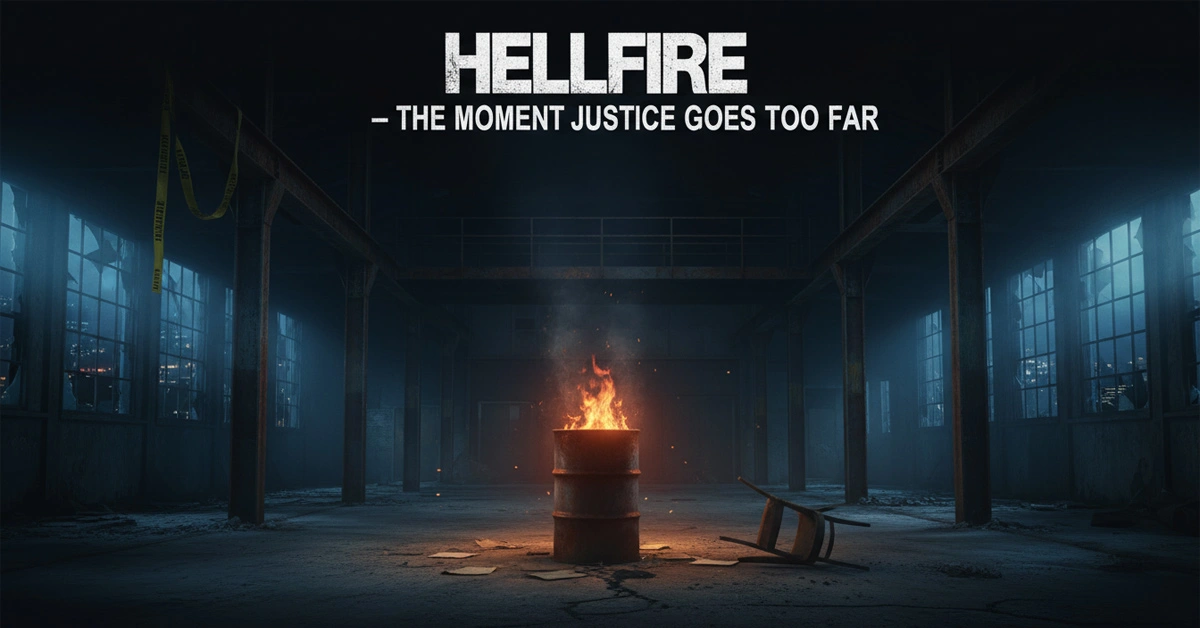
by There’s a certain point in Hellfire where you stop asking, “Is this right?” and start wondering, “Why does this feel so necessary?” That quiet shift is exactly where the obsession vs justice theme in Hellfire begins to take over the story — not loudly, not dramatically, but in a slow, creeping way that almost feels justified at first.
As a viewer, you walk into this film expecting a familiar revenge-driven narrative. Someone gets wronged, someone seeks justice, and eventually, someone pays the price. But what Hellfire does differently is how it blurs the line between justice and personal fixation so subtly that you don’t even notice when the character’s purpose starts turning into something far more consuming.
When Justice Feels Personal
At the beginning, everything feels grounded. The protagonist’s motivations are understandable, even relatable. There’s pain involved, yes — but there’s also a moral center that keeps their actions from crossing into dangerous territory. You root for them because their need for justice feels earned.
But this is where the obsession vs justice theme in Hellfire quietly plants its first seed.
The character’s sense of justice slowly becomes less about what’s fair and more about what’s unfinished. It’s no longer about restoring balance — it’s about filling an emotional void that refuses to go away. And that’s when you, as the viewer, begin to feel conflicted.
Because now, you’re not just watching someone fight for what’s right — you’re watching someone who needs to win for reasons that go beyond morality.
The Emotional Weight of Being “Right”
One of the most interesting things about Hellfire is how it explores the emotional burden of always believing you’re on the right side. There’s a moment in the film where the character’s choices start affecting people who were never part of the original conflict.
And yet, those choices still feel justified.
Why?
Because when someone convinces themselves that justice is their responsibility, every action starts to feel necessary — even the ones that clearly aren’t. The obsession vs justice theme in Hellfire becomes more visible here, as decisions stop being measured by consequences and start being measured by emotional satisfaction.
You can almost sense the internal dialogue happening beneath the surface:
“If I stop now, then everything I’ve done so far loses meaning.”
And that’s a dangerous place to be.
The Point Where Justice Becomes Identity
What truly makes this character journey compelling is how justice stops being a goal and becomes an identity. It’s no longer something the protagonist is chasing — it’s something they are.
Every conversation becomes strategic.
Every relationship becomes secondary.
Every hesitation becomes weakness.
The obsession vs justice theme in Hellfire evolves at this stage from motivation into personality. Justice becomes less about fixing what’s broken and more about proving that their suffering wasn’t meaningless.
You see it in the way the character reacts to opposition — not with doubt, but with determination. Not with fear, but with anger. The mission is no longer optional. It’s survival.
And now, the line between doing the right thing and needing to feel right starts to disappear completely.
How Silence Speaks Louder Than Action
Interestingly, some of the most powerful moments in Hellfire aren’t explosive or dramatic. They’re quiet. Pauses. Hesitations. The way the character looks at someone who questions their actions.
There’s defensiveness there — but also something deeper.
A fear that if they admit this has gone too far, then they’ll have to confront what all of this has turned them into.
That’s what makes the obsession vs justice theme in Hellfire emotionally heavy. It’s not about dramatic breakdowns or visible guilt. It’s about the absence of self-reflection. The refusal to ask, “Am I still doing this for the right reasons?”
Because asking that question might destroy the only thing holding them together.
When Winning Doesn’t Feel Like Relief
In most justice-driven narratives, achieving the goal brings closure. Peace. A sense of emotional resolution.
But in Hellfire, something else happens.
Victory feels hollow.
Because when justice turns into obsession, the outcome stops mattering as much as the process. The character has spent so much time chasing this one outcome that they don’t know what to do once it’s within reach.
The obsession vs justice theme in Hellfire reaches its peak here — when success no longer feels like justice, but simply the end of a distraction.
And now the silence is louder than ever.
The Cost of Holding On Too Long
By the time the story reaches its emotional turning point, you realize that justice was never meant to be carried this far. That maybe some battles are supposed to end earlier — not because they’ve been won, but because continuing them changes who you are.
That’s the quiet tragedy of Hellfire.
Not that justice was pursued, but that it was never allowed to rest.
The character didn’t lose their moral compass all at once. It didn’t shatter. It slowly bent — decision by decision — until what once felt like justice started resembling something else entirely.
And through this journey, the obsession vs justice theme in Hellfire becomes less about the character’s choices and more about how easily any of us could make the same ones under the right circumstances.

That Moment When You Stop Rooting So Confidently
There was a strange moment while watching Hellfire where I realized I wasn’t rooting as confidently for the protagonist as I was in the beginning. Not because the story suddenly flipped the narrative — but because their actions started feeling… heavier.
You know that feeling when a character does something technically “right,” but it still makes you uncomfortable?
That’s where the obsession vs justice theme in Hellfire becomes deeply personal from a viewer’s perspective. You’re still on their side, but now you’re silently hoping they slow down. That they pause. That they reflect.
And when they don’t — you start questioning not just them, but your own earlier support for their actions.
Justice Isn’t Always Loud
What really stood out to me was how the film didn’t treat justice as something heroic or cinematic all the time. Sometimes, it looked lonely. Isolating. Even exhausting.
There’s a quiet emotional fatigue that builds up in the protagonist as the story progresses. Their determination becomes routine. Their anger becomes normal. Their mission becomes automatic.
And that’s the unsettling beauty of the obsession vs justice theme in Hellfire — it doesn’t need dramatic speeches or breakdown scenes to show you something is wrong. It just lets the silence do the work.
Because obsession rarely announces itself. It usually shows up disguised as consistency.
The Subtle Loss You Don’t Notice Immediately
By the later parts of the film, there’s an emotional distance that creeps into the character’s interactions. Conversations feel shorter. Responses feel colder. Priorities feel narrower.
At first, it seems like focus.
But eventually, it feels like loss.
Loss of connection. Loss of perspective. Maybe even loss of self.
Watching this unfold made me realize how the obsession vs justice theme in Hellfire isn’t just about what the character is chasing — it’s about everything they’re unintentionally leaving behind in the process.
And the film never pauses to underline that for you. It trusts you to feel it on your own.
A Story That Stays With You
Long after the credits roll, what lingers isn’t the conflict — it’s the realization that justice can sometimes be the most convincing excuse for obsession.
That doing something for the right reason doesn’t guarantee it will stay right forever.
And that sometimes, the hardest question to ask isn’t:
“Was it worth it?”
But:
“When should I have stopped?”
That’s what makes Hellfire feel less like a revenge story and more like a cautionary tale about how easily purpose can turn into pressure — and how chasing closure can quietly cost you your sense of self.
Because in the end, justice isn’t just about what you’re fighting for.
It’s about what you’re becoming while you fight for it.