 by
by Introduction: Beyond the Medicine Seller
As a 25-year-old movie blogger, I’ve come to appreciate the richness of stories that don’t rely on spectacle but instead peel back the layers of human experience. Mononoke Supporting Characters is one such masterpiece. Often praised for its animation style and the enigmatic presence of the Medicine Seller, this series goes much deeper. What truly anchors the story—especially in the “Phantom in the Rain” arc—are the Mononoke supporting characters. These seemingly minor figures hold immense narrative weight. Their silence, actions, and internal turmoil become the foundation for the haunting atmosphere that defines this arc. This article dives into how these supporting characters reflect societal trauma, emotional scars, and unspoken truth that give rise to the supernatural horror.
The Spiritual Backbone of the Narrative
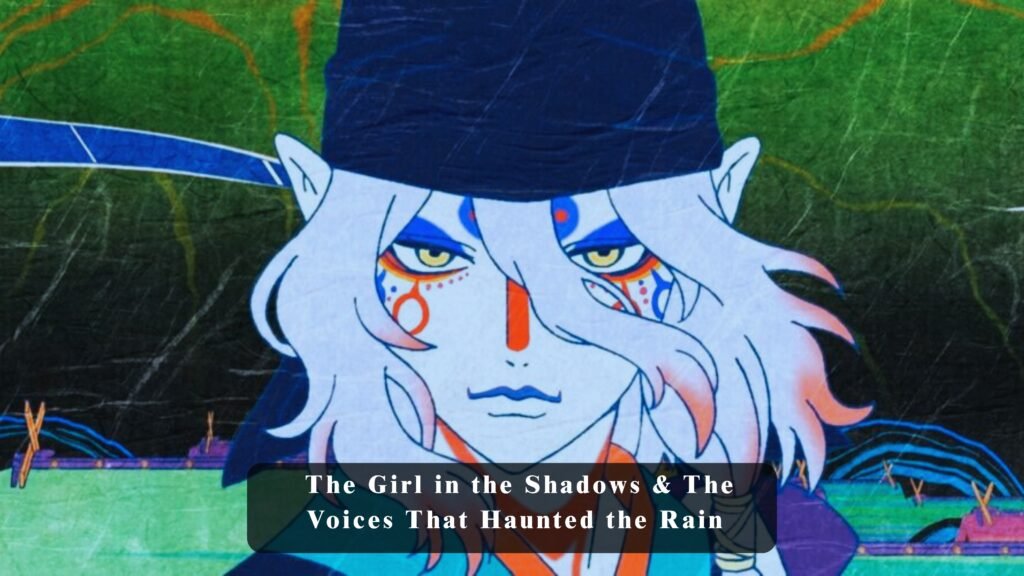
The Mononoke supporting characters are the spiritual spine of the story. They are not merely background figures designed to populate the town; they are essential conduits through which the emotional and moral failures of the community are exposed. The girl in the shadows, for instance, is not just a vengeful spirit—she is a metaphor for memory, guilt, and abandonment. Her presence permeates the town not because she screams or demands attention but because her suffering was ignored, silenced, and ultimately buried. Her character is crafted so intricately that she becomes a symbolic echo of countless silenced voices in society.
Her role illustrates how society often blames the victim instead of the perpetrator, especially in conservative cultures where honor and reputation are prioritized. The way the townsfolk treat her reveals a deep discomfort with truth and accountability. No one wants to face the consequences of their inaction, and so they create a narrative where she becomes the villain. This rewriting of reality—subtle and collective—is what births the true horror of the Phantom.
Silent but Powerful Presences
One of the most powerful aspects of these Mononoke supporting characters is the way they communicate without speaking. Take the silent midwife, who refuses to help the girl during childbirth. Her actions are a piercing commentary on societal abandonment and the institutional betrayal that often goes unnoticed. She doesn’t utter a single word, yet her rejection speaks volumes. She represents the cold detachment of a system that chooses procedure over compassion, safety over humanity.
Characters like the midwife symbolize how individuals within a system can cause immense harm by simply doing nothing. Her silence is more damaging than loud opposition because it reflects deliberate neglect. In her refusal, we see a societal reflex to self-preserve, even at the cost of another’s life. She becomes a shadow accomplice in the story’s tragedy.
Guilt Cloaked in Humor
Similarly, the drunken elder—masked behind layers of forgetfulness and humor—reveals how guilt doesn’t always come in the form of direct confrontation. His behavior is symptomatic of someone who witnessed injustice but lacked the courage to intervene, and he now drinks to blur those memories. He is a Mononoke supporting character study in avoidance and buried guilt.
What makes him especially interesting is that he attempts to normalize his behavior through jokes and dismissiveness. But every laugh has a hollow ring to it, and the animation subtly changes when he’s on screen. His eyes carry sorrow, and his movements become slower as the truth creeps closer. The audience understands, even without being told, that he is running from something only he can see.
The Rain as a Living Character
What’s even more remarkable is how Mononoke supporting characters integrates environmental elements as characters themselves. The rain, for example, is more than atmospheric decoration. It functions as an emotional barometer, reflecting the suppressed anguish and unresolved tension of the villagers. Spirits of the rain appear faceless, shifting, intangible—but they embody the weight of unspoken truths. These spirits are the emotional residue of the Mononoke supporting characters’ past actions.
In many scenes, the rain becomes a curtain through which the real world and the spiritual world blur. You can see figures but not faces. Hear voices but not words. This distortion mirrors the mental state of the townspeople who know something is wrong but refuse to confront it. The rain becomes a participant in the deception and the suffering.
Religion as Repression
Equally important is the spiritual infrastructure represented by Mononoke supporting characters like the Shinto priest. In the narrative, he encourages the villagers to move on from the incident, urging spiritual detachment instead of introspection. His role critiques how religion or institutionalized spirituality can sometimes become a tool for suppression. Rather than being a guide to healing, he becomes a facilitator of silence.
The priest, rather than helping the community face its guilt, reinforces denial. He misuses rituals as a barrier between the people and their emotions. In doing so, the spiritual becomes political—used not for enlightenment but to maintain the status quo. This character warns us of the dangers when faith becomes dogma, and when comfort is chosen over truth.
Ghosts of the Past: The Girl’s Father
The girl’s father is another figure whose influence lingers long after his death. Although he appears only in flashbacks, his rejection of his daughter upon discovering her pregnancy sets the emotional tone for her suffering. His role is subtle but central—representing the personal betrayal that morphs into societal trauma.
What makes his rejection so harrowing is its finality. There is no confrontation, no dialogue—just absence. He leaves, and in doing so, he becomes the first domino in a sequence of irreversible damage. His decision to abandon her is echoed in the community’s decision to pretend she never existed. It shows how personal failure can become collective cruelty.
Everyday Cruelty and Complicity
What makes the Mononoke supporting characters especially compelling is that they are often unnamed, faceless, or brief in appearance—but they are unforgettable. The town’s gossiping housewives, for instance, serve as agents of psychological violence. Their whispers carry the weight of judgment and help isolate the girl further.
Their power lies in social conditioning. They don’t throw stones, but they create the pressure that pushes people to the edge. Their whispers become the wind that feeds the storm. In real life and in fiction, we often underestimate the impact of minor characters—but in Mononoke supporting characters , they represent the most dangerous form of violence: casual cruelty.
Emotion in Art: Visual Symbolism
The animation style itself reinforces this emotional narrative. Many of the Mononoke supporting characters are drawn with exaggerated features—tired eyes, slumped postures, worn expressions. These visual cues communicate their emotional burdens without needing dialogue.
The stylization is intentional and purposeful. Faces appear stretched during moments of guilt. Backgrounds twist when secrets are spoken. This visual distortion mimics the unraveling of the town’s fabricated peace. Even the linework changes with mood, enhancing the psychological dimension of every supporting character.
The Phantom as Collective Guilt
One of the most profound revelations in the arc is the Phantom’s final form. It isn’t a singular monster—it is a collective embodiment of the town’s guilt, fear, and regret. As each supporting character confronts their role in the tragedy, the Phantom changes shape, echoing the emotional evolution of the narrative.
This collective nature makes the Phantom so terrifying—it doesn’t represent one villain, but many failings. It punishes not just action but inaction. Not just the liar, but the silent witness. And when it is finally exorcised, it doesn’t vanish with violence but with understanding. Each supporting Mononoke supporting characters must confess and confront their role. Only then can the curse be lifted.
The Town Itself as a Character
Even more subtly, the show uses abstract elements as Mononoke supporting characters. The town itself—the architecture, the rain-slicked stones, the crooked rooftops—serves as a silent participant in the narrative. Every crack in the wall and every puddle reflects the decay not just of the physical space, but of the community’s moral backbone.
The town’s design tells a story: narrow alleys that suffocate, windows that never open, temples that feel more like prisons. The environment isn’t just where the story happens—it is part of why the story happens. As the truth comes out, even the landscape feels like it’s sighing in relief.
Shadows That Speak
In one particularly haunting scene, the girl’s shadow begins to move independently from her body. This moment, surreal and symbolic, shows how her trauma has developed a life of its own. It has grown so powerful that it detaches from her, becoming an entity in itself.
This visual metaphor explains something profound: pain doesn’t stay contained. When ignored or suppressed, it grows. It moves. It infects others. The shadow becomes her grief, her shame, her desperation—finally made visible. It’s one of the most poetic uses of symbolism in the series.
The Watchful Child: Trauma's Legacy
Another overlooked but significant Mononoke supporting characters is a silent child who appears near the climax. He watches the events unfold with wide, fearful eyes. Though he says nothing, he becomes a vessel for the next generation, witnessing the sins of the previous one.
His presence reminds us that trauma doesn’t end with the victim. It’s passed down, transformed, and sometimes repeated. This child doesn’t understand the full story, but he feels every ripple. The lesson here is that confronting truth isn’t just about closure—it’s about protecting the future.
Symbolic Echoes: Minor but Mighty
Supporting Mononoke supporting characters like the lantern maker, the masked spirits, and even the architecture of the town all serve the larger narrative in crucial ways. They reinforce the themes of memory, repression, and the collective responsibility we all share in confronting injustice.
Each of these Mononoke supporting characters adds a note to the overall melody of the arc. They are threads in a tapestry of sorrow and silence. They may seem minor, but without them, the picture would be incomplete.
Subtle Storytelling and Emotional Truth
What makes this exploration truly special is that Mononoke supporting characters trusts its audience to see beyond the surface. These supporting characters are not explained in heavy-handed exposition; they are shown through subtle behavior, visual symbolism, and psychological depth. They are not merely accessories to the protagonist’s journey—they are the journey. Without them, the curse would have no meaning, the spirit no form, and the Medicine Seller no reason to intervene.
Conclusion: The Heart of the Narrative
In conclusion, Mononoke supporting characters is a series that rewards deep attention and emotional engagement. Its supporting characters are more than tools for exposition—they are the soul of the story. They reflect our own flaws, our silences, and our responsibilities. As someone who values storytelling that challenges and transforms, I can confidently say that Mononoke supporting characters deserve recognition not just as plot devices, but as essential voices in a chorus of emotional truth. Their presence turns a simple ghost story into a profound meditation on memory, guilt, and the cost of looking away.
If You interested in movie related many more blog click here…