 by
by Hi, I’m a 25-year-old boy who’s always been obsessed with anime films that blend haunting visuals with deep philosophical themes. When I first watched Mononoke: Phantom in the Rain, I was struck not just by its beautiful animation, but by the eerie, almost sacred soundscape and the spiritual weight behind its ghosts. This blog post is my deep dive into the Mononoke sound and spiritual meaning—exploring how sound design enhances the fear, how whispers echo trauma, and what the word Mononoke truly stands for in Japanese folklore.
Whether you’re a fan of horror, anime, or Japanese culture, this post will open your ears—and maybe even your soul—to the deeper layers of this artistic masterpiece.
1. The Sound of Sorrow: Rain, Silence, and Spiritual Dread
The most chilling moments in Phantom in the Rain come not from jump scares, but from silence broken by rain. The director uses silence like a blank canvas—forcing us to listen closer. The rainfall isn’t just a backdrop—it’s a heartbeat of the dead.
Why Rain Matters in Mononoke Sound and Spiritual Meaning
In Japanese culture, rain often symbolizes cleansing, mourning, or spiritual activity. In this film, it feels more like grief that refuses to be washed away. The Mononoke themselves are trapped in emotional loops—cycles of trauma, guilt, and unfinished business.
The ambient track includes:
Dripping water echoing in alleyways
Distant thunder that rumbles like buried emotions
Faint flutes that mimic traditional funeral processions
These elements are not random. They build a Mononoke sound and spiritual meaning that ties atmosphere with emotional weight. Watching this film with headphones makes the sorrow feel physically present.
2. Whispers in the Rain: How Audio Brings Spirits to Life
Some of the most unsettling parts of Phantom in the Rain are the ghostly whispers that slip into the background. You almost don’t notice them—until you do. Then they haunt you.
What the Whispers Say (and Don’t Say)
These whispers aren’t just horror effects. They’re fragments of memory. If you listen closely, you’ll hear:
“Why did you leave me…”
“It hurts…”
“I was cold…”
These lines are delivered with such rawness that they don’t feel scripted. It’s as if we’re eavesdropping on the emotional residue of someone’s death.
This technique makes the Mononoke sound and spiritual meaning personal. These aren’t evil spirits—they’re broken people.
3. What is a Mononoke? A Deep Dive into Japanese Folklore
Let’s shift gears and explore the folklore behind these entities. The word Mononoke isn’t just a spooky term—it has rich historical layers.
Origins in Shinto and Buddhist Belief
In ancient Japan, “mono” means spirit or thing, and “ke” refers to an effect or influence. Together, Mononoke refers to a spiritual presence that affects the physical world—usually because of unresolved emotions.
From Heian-era court documents to classic Buddhist texts, Mononoke are often described as:
Wrathful spirits of those who died unjustly
Possessive entities tied to karmic retribution
Manifestations of repressed guilt or pain
In Phantom in the Rain, these ghosts aren’t just part of the horror—they’re metaphors for trauma. The Mononoke sound and spiritual meaning comes to life when you understand that these are not monsters—they are emotions made sentient.
4. Phantom vs. Poltergeist: Understanding the Spirit in the Rain
As someone who grew up watching both Japanese anime and Western horror, I’ve always been fascinated by the differences between their ghosts. Let’s compare:
| Feature | Mononoke (Japan) | Poltergeist (West) |
|---|---|---|
| Motivation | Emotional trauma, injustice | Chaos, mischief |
| Visibility | Vague or symbolic | Often physical & violent |
| Resolution | Spiritual cleansing or release | Exorcism or banishment |
| Sound Usage | Ambient whispers, silence, chants | Loud knocks, voices, screams |
The Mononoke sound and spiritual meaning is softer but more haunting. It’s not trying to scare you—it’s trying to make you feel. In the West, we “fight” ghosts. In Japan, we understand and release them.
5. Sound Design That Breathes with the Spirits
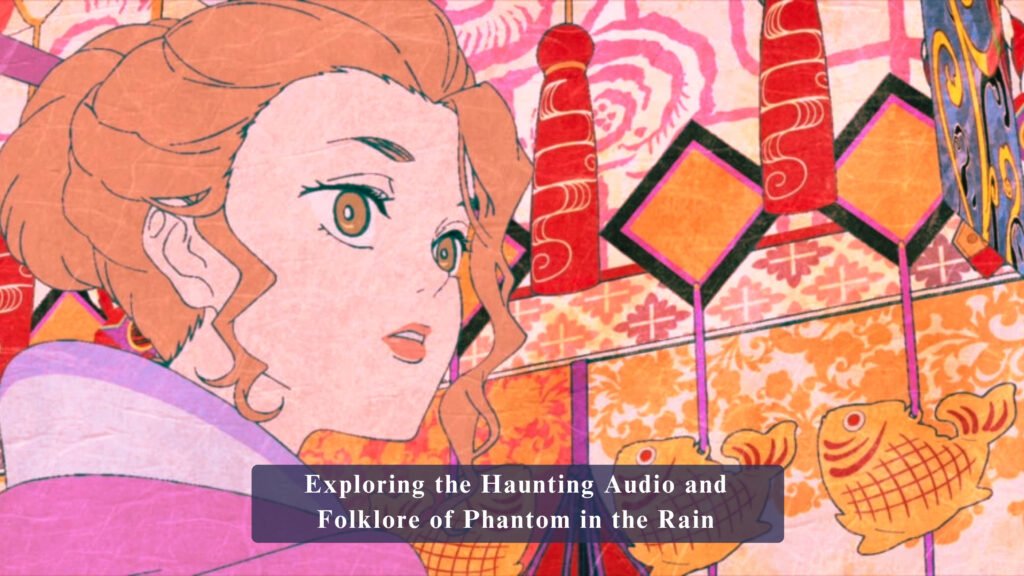
The sound design in Phantom in the Rain is a masterclass in minimalism and intention. Every sound you hear has purpose:
The wind whistles like a cry
The rain echoes memory
The flute grieves with each note
Even the absence of sound is powerful. When the screen goes still, and all we hear is a breath, we’re invited to fill that silence with our own emotion.
This kind of design is rare in modern cinema. It’s poetic. And it’s the reason why the Mononoke sound and spiritual meaning lingers long after the credits roll.
6. The Role of Traditional Japanese Instruments
To truly understand the sound of this film, we need to look at the instruments used. Some of them include:
Shakuhachi (bamboo flute): Often used in Zen meditation
Koto (13-string harp): Echoes of nostalgia and melancholy
Taiko (drum): Used only during intense spiritual tension
These instruments are tied deeply to Japanese rituals, funerals, and purification ceremonies. When you hear them in the background, it’s not just music—it’s a spiritual invocation.
Their use in Mononoke gives it a ritualistic atmosphere, enhancing the Mononoke sound and spiritual meaning throughout the film.
7. Spiritual Themes: Karma, Memory, and Release
Mononoke are not just ghosts. They’re the consequence of unspoken pain. Every time a character dies with regret, their memory lingers.
The film explores:
- Karma: What we do echoes beyond life
- Memory: Pain that is ignored becomes louder in death
- Release: Only through understanding can peace come
Sound is used as a medium of communication between the living and the dead. Through the audio, the spirits speak, not in words, but in emotions.
That’s why the Mononoke sound and spiritual meaning hits so hard—it’s not about fear. It’s about empathy.
8. Psychological Horror Without Gore
Mononoke are not just ghosts. They’re the consequence of unspoken pain. Every time a character dies with regret, their memory lingers.
The film explores:
- Karma: What we do echoes beyond life
- Memory: Pain that is ignored becomes louder in death
- Release: Only through understanding can peace come
Sound is used as a medium of communication between the living and the dead. Through the audio, the spirits speak, not in words, but in emotions.
That’s why the Mononoke sound and spiritual meaning hits so hard—it’s not about fear. It’s about empathy.
9. My Experience: How This Film Changed My View of Fear
I used to think ghosts were just scary. But after watching this film and researching the folklore, I realized something deeper:
“Ghosts are not here to harm us. They’re here to tell us we’ve ignored pain too long.”
And that pain has a sound. In Phantom in the Rain, it’s the whisper of a forgotten voice. The drip of unresolved guilt. The silent scream of a soul that wants to be heard.
The Mononoke sound and spiritual meaning taught me that horror can be beautiful. And that healing often begins with listening.
10. Why This Movie Matters in Today’s World
In our fast-paced lives, where we mute pain and drown silence with noise, a film like this reminds us to slow down. To hear what’s been ignored.
It’s not just about ghosts.
It’s about grief, trauma, forgiveness—and the sounds that carry those emotions when words fail.
In the end, the Mononoke sound and spiritual meaning is a lesson:
“If you truly listen, even the dead have something to teach.”
Final Thoughts: The Art of Hearing the Unheard
Mononoke: Phantom in the Rain is a deeply spiritual experience. Every sound is a prayer. Every silence is a scream. Every whisper is a memory longing for peace.
I hope this blog post helps you hear this film differently.
Loved this breakdown? Click here to explore more blogs just like this one!