 by
by The Maa movie left me restless long after the final frame faded to black. Walking out of the theater, I felt an unnerving silence settle in, almost as if the darkness of that village had followed me out. The ending looked triumphant—villagers rejoiced, fireworks painted the night sky, and laughter echoed in the streets. Ambika even allowed herself a faint, weary smile. Yet, beneath the joyous celebration, I couldn’t shake the feeling that something sinister still lingered.
As I reflected on the Maa movie, I kept recalling those quiet, almost throwaway details—the broken shrine still standing untouched, the faint whispering of wind that refused to die down, and the way the camera lingered on empty corners as if watching for something unseen. It felt intentional, as if the director was hinting: “The story isn’t over yet.” That unsettling ambiguity is what made the ending genuinely haunting for me.
Ambika’s Aftermath: A Journey of Pain and Strength
At its core, the Maa movie is as much about Ambika’s emotional odyssey as it is about horror. Her grief as a mother was palpable—etched in her trembling hands, her exhausted posture, and the way her eyes carried both sorrow and determination. Her personal loss didn’t just fuel her actions; it became the heart of the film.
Some of the most gripping moments came when Ambika confronted the very customs her village clung to. Watching her challenge the elders, demanding explanations for rituals shrouded in fear and secrecy, was powerful. It exposed how the Maa movie wasn’t just about supernatural darkness, but also about how blind faith in old practices can become its own kind of monster.
By the time Ambika faced the evil head-on, her transformation from broken mother to fierce protector felt deeply satisfying. Yet even in victory, her expression carried an edge of unease—a quiet understanding that surviving one battle doesn’t mean the war is truly over.
A Mid-Credit Scene That Changes Everything
When I thought the Maa movie had concluded, the mid-credit scene jolted me upright. Vanraaj—yes, the chilling figure from Shaitaan—emerged in a ruined temple, silently absorbing traces of dark energy from a blood-stained altar. It was a blink-and-you-miss-it moment, but it implied something enormous: Amsaja’s evil isn’t gone—it’s evolving.
This brief but powerful tease connects the Maa movie to a larger horror universe. It suggests the nightmare isn’t confined to one village or one family. Instead, it’s part of a much older, far-reaching curse. That single scene reframed the ending for me entirely—it wasn’t closure, it was a warning.
Kajol’s Magnetic Performance
A huge reason why the Maa movie worked for me was Kajol’s powerhouse performance. She poured raw, visceral emotion into every frame, making Ambika feel painfully real. Whether she was trembling in fear, screaming in rage, or breaking down in tears, Kajol’s portrayal hit with unflinching intensity.
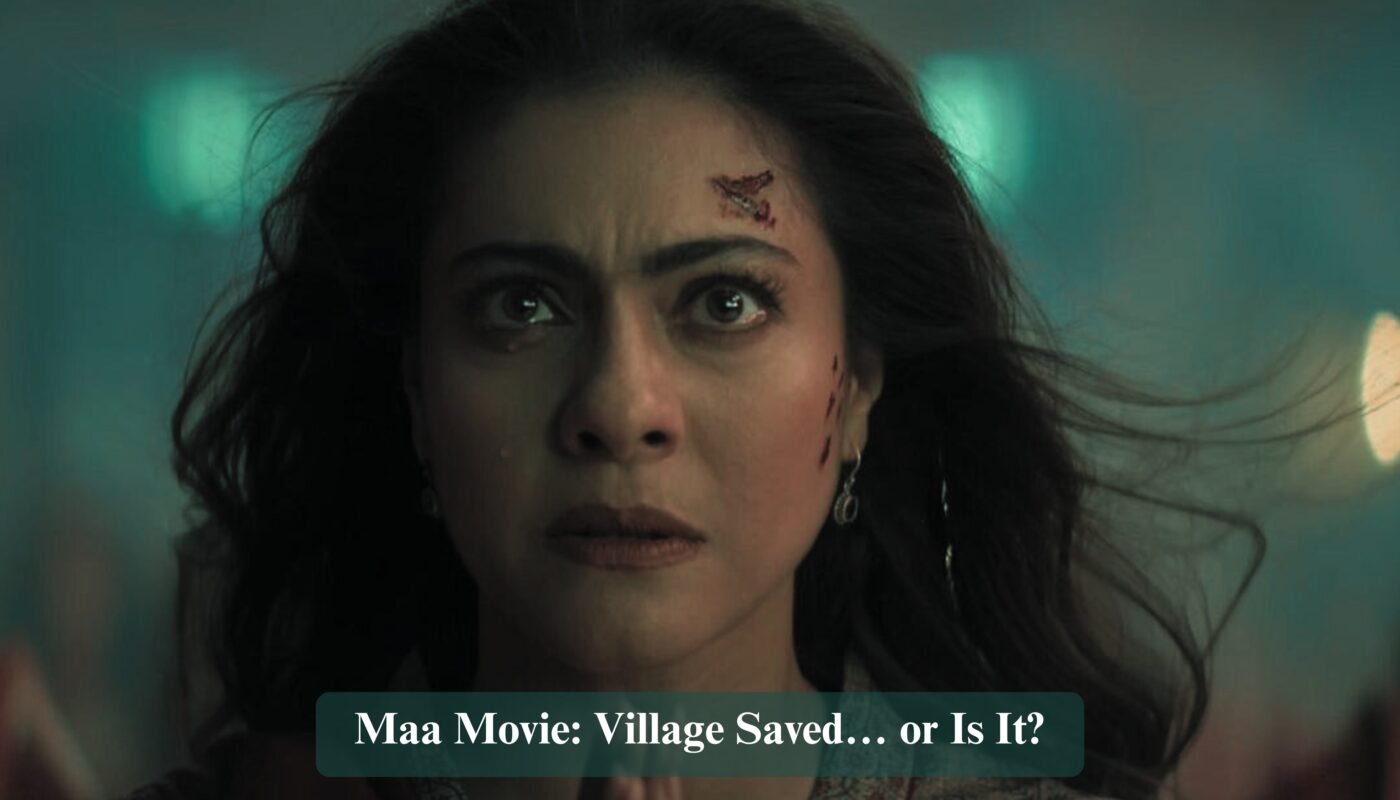
Her climactic ritual scene still sticks in my mind: her face was a storm of terror and determination, all colliding at once. It was the kind of performance that makes you forget you’re watching an actor and instead believe you’re witnessing a mother’s desperate fight.
Of course, the movie wasn’t flawless. The writing stuttered at times, and the CGI occasionally weakened key moments—especially during the final confrontation. But Kajol’s performance anchored everything so firmly that even when the effects stumbled, I was too emotionally invested to care.
Visuals That Create Unease
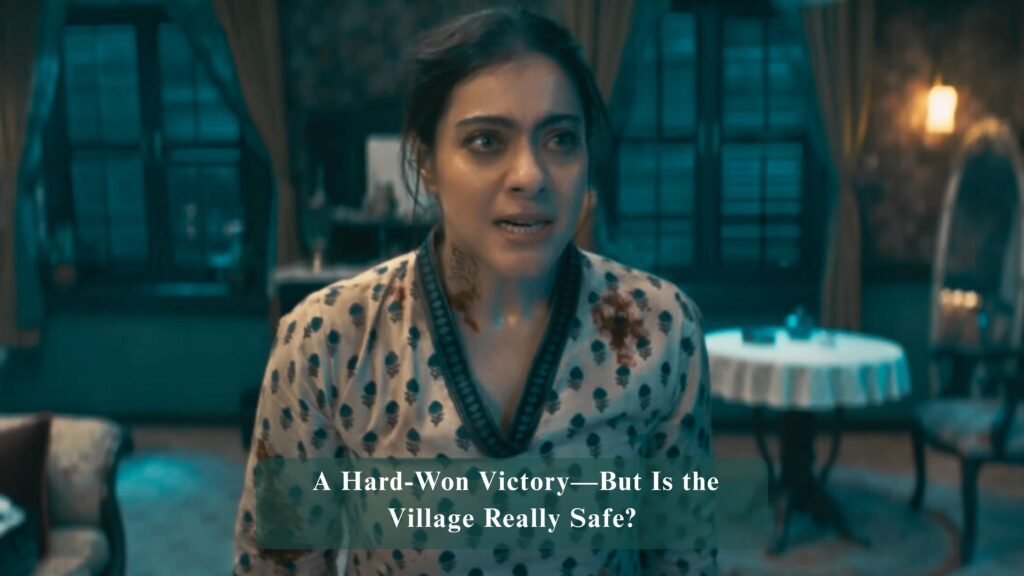
Visually, the Maa movie excelled at building dread. The remote village setting—shrouded in mist, lined with weathered shrines, and dominated by an ancient banyan tree—felt alive, almost like it was breathing alongside the characters. It was the perfect backdrop for a story steeped in folklore and unease.
One standout scene showed Ambika walking through her dimly lit house with only a flickering oil lamp. The shifting shadows seemed to move on their own, amplifying her fear and ours. The restrained use of sound—just the soft creak of wood, her quiet footsteps—pulled me straight into her terror.
Yes, the CGI stumbled here and there, but the grounded practical sets and tense soundscape made the fear feel tactile. Instead of relying on jump scares, the Maa movie leaned into slow-building dread, which I found far more chilling.
Reception and Box Office Impact
The Maa movie struck a chord with audiences, raking in ₹26 crore in its opening week. Viewers praised Kajol’s deeply emotional portrayal and the eerie visuals, even while critics noted the uneven pacing and lackluster CGI.
For me, those flaws didn’t overshadow the film’s strengths—they highlighted its ambition. The Maa movie dared to mix horror with deeply rooted cultural commentary, exploring grief and ritual in ways few mainstream films attempt. That boldness is precisely why it resonated despite imperfections.
Building a Larger Horror Mythos
Perhaps the most exciting aspect of the Maa movie is what it hints at for the future. Vanraaj’s cameo makes it clear that the filmmakers are weaving a shared horror universe. It opens the door for sequels or even crossovers, where Ambika’s story could intersect with others battling similar curses.
Indian horror has long leaned on standalone tales, but this interconnected approach feels fresh. It builds anticipation not just for another film, but for an unfolding mythology grounded in folklore and fear.
Final Reflections
Leaving the theater, I realized the Maa movie wasn’t just horror—it was a reflection on the lingering power of grief and superstition. Ambika’s victory was bittersweet because it mirrored life itself: even when we overcome our demons, their shadows often remain.
That’s why this film lingers with me. It’s unsettling, yes, but also strangely poetic. It doesn’t offer neat resolutions. Instead, it leaves you pondering what evil truly means—whether it’s supernatural forces or the destructive weight of traditions that refuse to die.
If you haven’t watched the Maa movie yet, go in expecting more than cheap scares. It’s an experience that crawls under your skin and stays there, whispering long after the screen fades to black.
Explore more movie insights and reviews—click here.