 by
by I’m a 25-year-old sci-fi movie fan, and Dune absolutely blew my mind — not just because of the epic sandworms or otherworldly visuals, but because of the deep-rooted political betrayal that set the entire story in motion. The House Atreides betrayal wasn’t just a dramatic twist — it was a carefully orchestrated master plan by the Emperor and House Harkonnen, one that turned noble intentions into a tragic downfall.
In this blog, I’ll unpack how this betrayal was plotted, why it was so devastating, and how it ultimately sparked the rise of Paul Atreides. If you’re a fan of Dune, or even just someone who loves political thrillers with real emotional stakes, this story is for you.
Who Are House Atreides? A Legacy Built on Honor
Before diving into betrayal, we need to understand what House Atreides represents. In the Dune universe, noble houses rule over planetary fiefs under the Padishah Emperor. House Atreides, led by Duke Leto, governs Caladan, a planet rich in water and culture.
Unlike other houses, House Atreides is defined by:
- Honor
- Strategic intelligence
- Deep respect from other houses
- Loyalty from their subjects
Duke Leto Atreides was beloved not just for his power, but for his fairness. His leadership style stood in stark contrast to the brutal and greedy methods of House Harkonnen. But ironically, this nobility and growing influence made House Atreides a threat to the throne.
Why Was House Atreides Targeted?
Let’s ask the key question: Why would the Emperor, who’s supposed to maintain order, turn against one of his most capable and honorable houses?
The answer lies in fear.
Duke Leto was popular among other houses, his army was becoming stronger, and he had growing influence with the Spacing Guild and even the Landsraad. On top of that, he was moving closer to forming an alliance with the Fremen — the fierce desert warriors of Arrakis.
All these factors made the Emperor believe that House Atreides might one day challenge the Corrino throne.
So what does a paranoid emperor do? He strikes first. But he does it indirectly, using House Harkonnen as a weapon.
The Strategic Trap: Transferring Arrakis
Arrakis — also called Dune — is the galaxy’s most important planet because it’s the only source of spice melange. This spice fuels interstellar travel, enhances consciousness, and supports the political economy of the entire empire.
When the Emperor removed House Harkonnen from Arrakis and granted control to House Atreides, it looked like a promotion.
But it was actually a death sentence.
Arrakis was sabotaged:
- The infrastructure was booby-trapped
- The Harkonnens left behind spies
- Resources were drained
- The local population was distrustful
By giving them control over a hostile, unstable planet, the Emperor set House Atreides up to fail.
House Harkonnen: The Perfect Executioners
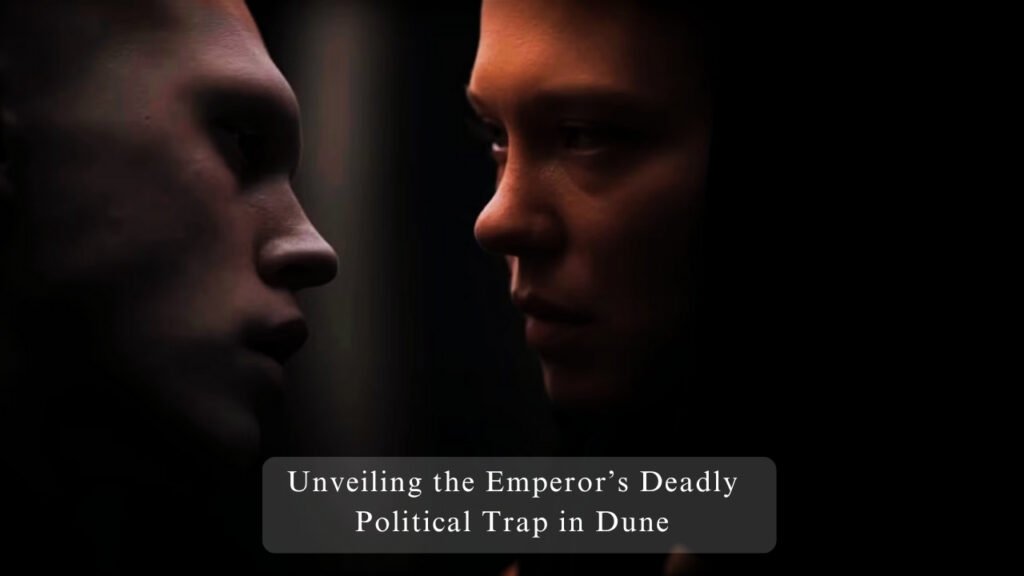
House Harkonnen, led by the grotesque and cunning Baron Vladimir Harkonnen, is known for its cruelty and lust for power. After being forced to leave Arrakis, the Harkonnens wanted revenge. The Emperor used this anger to fuel the betrayal.
The plan was simple:
- Let House Atreides feel like they’re in charge.
- Secretly empower House Harkonnen with an elite army.
- Strike when House Atreides is most vulnerable.
The Emperor even provided Sardaukar — his own elite soldiers — to fight alongside the Harkonnens under a false banner, ensuring a complete massacre.
This alliance between two powerhouses — Harkonnen and the Emperor — ensured that the House Atreides betrayal would be swift, brutal, and total.
The Role of Psychological Warfare
This wasn’t just physical warfare. The betrayal was psychological.
House Atreides believed they were selected for their excellence. They thought the Emperor recognized their leadership. They moved to Arrakis with pride and hope.
By playing on this honor and ambition, the Emperor made them walk into a trap willingly.
That’s what makes the betrayal so heartbreaking. They were not just killed — they were deceived.
The Night of the Betrayal
The actual fall of House Atreides came swiftly.
- Dr. Yueh, their trusted Suk doctor, was coerced into betrayal by the Harkonnens through the torture of his wife.
- He disabled the shields of Arrakeen, the Atreides base on Arrakis.
- Harkonnen troops, supported by Sardaukar forces, attacked under the cover of darkness.
- Duke Leto was captured and later killed.
- Countless Atreides soldiers and allies were slaughtered.
This wasn’t just an attack — it was a purge.
Only a few survived, including Paul and Lady Jessica.
Paul Atreides: The Unintended Consequence
The Emperor and Harkonnen believed they had eliminated all threats. But they failed to anticipate one major variable: Paul Atreides.
Escaping into the desert with Lady Jessica, Paul eventually finds refuge with the Fremen. There, he not only survives but begins a transformation that will shake the galaxy.
Paul evolves into Muad’Dib — a messiah figure who unites the Fremen and sets the stage for a holy war that will threaten the very Empire that betrayed his family.
So in a twist of fate, the House Atreides betrayal becomes the spark that ignites a far larger conflict.
The Political Lessons from the Betrayal
Frank Herbert wasn’t just writing science fiction. He was making a political statement — one that remains relevant today.
1. Power fears integrity
Duke Leto’s nobility was his greatest asset but also the reason he was seen as a threat.
2. Absolute power corrupts
The Emperor’s manipulation of alliances to destroy a rival shows how corrupted centralized authority becomes when unchecked.
3. Betrayal often creates resistance
Rather than securing power, the Emperor’s actions laid the foundation for his own downfall through Paul’s rebellion.
Hidden Symbolism Behind the Betrayal
The House Atreides betrayal is filled with symbolic meaning:
- Spice: Represents oil, or any real-world resource over which wars are fought.
- Fremen: Symbolize oppressed people who become revolutionary forces.
- Duke Leto: Embodies failed leadership that is moral but strategically naive.
- Baron Harkonnen: A caricature of pure greed and tyranny.
- Emperor Shaddam IV: Represents institutional fear and manipulation.
These layers make Dune not just entertaining, but intellectually rich.
How Villeneuve’s Dune Captured the Betrayal
Denis Villeneuve’s Dune (2021) masterfully visualizes the betrayal. The night attack scene is chilling, chaotic, and hopeless — perfectly showing how outmatched the Atreides were.
The subtle glances, tension-building silence, and sudden violence all convey the deep emotional impact of betrayal. Viewers don’t just see the fall of House Atreides — they feel it.
Why This Scene is a Turning Point in the Dune Universe
The betrayal of House Atreides is more than a narrative plot — it’s the catalyst that drives everything forward:
- Paul’s transformation
- The Fremen uprising
- The fall of House Corrino (eventually)
- The spice war
- The coming jihad
Everything begins here. The betrayal wasn’t the end of House Atreides — it was their rebirth.
Final Thoughts from a 25-Year-Old Sci-Fi Fan
I’ve watched a lot of science fiction, but nothing hit me quite like Dune. The House Atreides betrayal was a moment that left me speechless — not because of the action, but because of the calculated coldness behind it.
As someone who’s always been fascinated by how politics play out behind closed doors, this storyline reminded me how betrayal often wears the mask of opportunity.
If you’re a fellow sci-fi lover or just someone who enjoys stories with depth, Dune is more than a movie — it’s a mirror to how power operates.
Thanks for reading. Drop your thoughts below — who do you think was more dangerous: the Baron or the Emperor?