 by
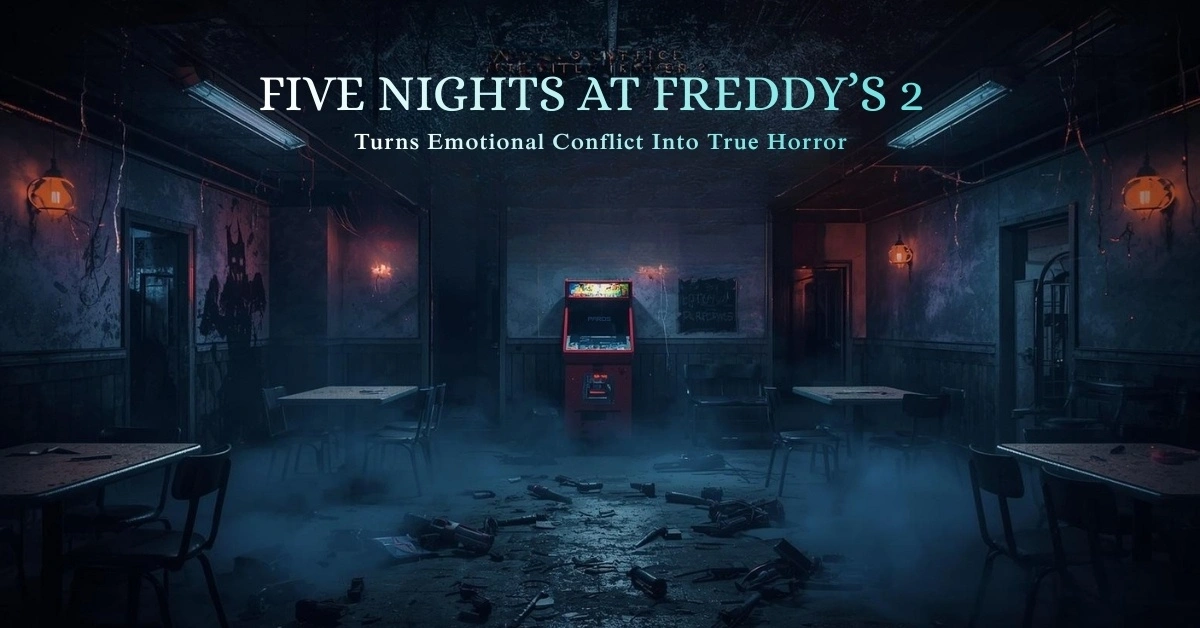
by While watching Five Nights at Freddy’s 2, I slowly realized that the film isn’t really trying to scare you in the traditional sense. It’s not about sudden sounds or shadowy figures appearing out of nowhere. Instead, what makes the experience unsettling is how emotionally heavy everything feels. The fear here doesn’t come rushing toward you — it quietly builds through hesitation, doubt, and emotional tension between characters.
This is where the idea of Five Nights at Freddy’s 2 emotional depth becomes so important. Because what I experienced while watching the movie wasn’t just suspense, but emotional discomfort. There’s a difference between being startled and being disturbed — and this film constantly leans toward the second.
Watching People Fight Their Own Thoughts
What struck me the most was how often the characters seem trapped inside their own minds rather than their surroundings. Many horror films rely on external threats to move the tension forward, but here, it often feels like the biggest conflict exists internally.
Throughout the movie, decisions are not made out of bravery — they’re made out of emotional compulsion. Some choices seem irrational at first, but when you look closely, they’re driven by personal history, emotional attachment, or unresolved regret.
This subtle layering is what gives its real strength. It allows you to watch characters struggle not just against what’s around them, but against what they believe about themselves.
And honestly, that feels far more real.
Silence Speaks Louder Than Panic
There are several moments in the film where nothing “happens” in the conventional horror sense. No loud noise. No sudden movement. No immediate danger. And yet, those moments feel heavier than any chase or confrontation.
Why?
Because emotional silence creates anticipation.
When a character pauses before acting, or when someone chooses not to speak, it hints at an internal conflict that’s far more terrifying than anything visible. This emotional stillness is where Five Nights at Freddy’s 2 emotional depth becomes most noticeable.
You’re not waiting for something to appear on screen — you’re waiting for someone to break emotionally.
As a viewer, I found myself leaning in during these quiet stretches more than during the tense ones.
Motivation That Comes From Attachment
In many horror stories, survival is the ultimate goal. But here, survival often takes a backseat to emotional attachment. Characters act not because they want to stay alive, but because they want closure, reassurance, or redemption.
That shift in motivation changes everything.
It makes their decisions feel personal instead of strategic. Sometimes, they move forward not because it’s safe, but because walking away would mean abandoning something emotionally unfinished.
This is another reason why this movie plays such a crucial role in the viewing experience. You start to understand that fear alone isn’t driving the story — emotional loyalty is.
And emotional loyalty can be dangerously powerful.
The Viewer’s Emotional Involvement
Interestingly, the film doesn’t just show emotional conflict — it transfers that conflict to the audience. While watching, I noticed that I wasn’t just observing the tension; I was questioning the characters’ choices in a very personal way.
Would I stay in that situation?
Would I confront something I didn’t fully understand?
Would I choose truth over comfort?
This is where Five Nights at Freddy’s 2 emotional depth becomes interactive in a sense. The film quietly invites viewers to imagine themselves in the same emotional space.
And the answers aren’t always comforting.
Trust vs. Doubt
A recurring emotional theme I picked up on while watching the movie is the struggle between trust and doubt. Not necessarily trust in others — but trust in perception.
Characters frequently find themselves questioning what they believe to be real. This emotional instability creates tension that doesn’t rely on visible threats. Instead, it’s rooted in uncertainty.
Can you trust what you’re seeing?
Can you trust your instincts?
Can you trust your memory?
These questions keep resurfacing, and they contribute significantly to the emotional depth that defines the film’s tone.
Sometimes, doubt is more frightening than danger.
Fear of Being Alone vs. Fear of Being Wrong
Another subtle emotional conflict lies in the difference between isolation and denial. Some characters appear more afraid of being wrong than being alone.
And that’s incredibly human.
Admitting fear often means admitting vulnerability — and vulnerability feels like weakness in high-stress situations. So instead of acknowledging what they feel, characters push forward with false certainty.
This internal resistance adds another layer to the Five Nights at Freddy’s 2 emotional depth. It shows how emotional pride can become just as dangerous as any physical threat.
Emotional Consequences Over Physical Ones
What truly makes this film stand out is how it prioritizes emotional consequences over physical ones. Even after tense moments pass, the emotional impact lingers.
Regret doesn’t disappear.
Doubt doesn’t fade.
Uncertainty doesn’t resolve itself.
And this lingering emotional tension reinforces the importance ofemotional depth throughout the experience. The movie understands that what happens inside a character often matters more than what happens to them.
Five Nights at Freddy’s 2 Emotional Depth in Moments of Emotional Collapse
One thing I kept noticing while watching Five Nights at Freddy’s 2 was how carefully the film balances emotional control with emotional breakdown. Some characters appear composed on the surface, almost calculated in their reactions. But underneath that calm exterior, you can sense pressure building.
And that pressure feels realistic.
In stressful situations, people don’t always scream or panic immediately. Sometimes they suppress. They hold their breath. They convince themselves they are fine. That emotional suppression becomes a ticking clock. You can see it in their eyes — the moment when control starts slipping.
This dynamic adds another important layer to. The tension doesn’t come only from what might happen next, but from wondering who will emotionally crack first.
When someone finally does lose control, it doesn’t feel dramatic — it feels inevitable.
As a viewer, that slow unraveling is far more unsettling than sudden chaos. Because emotional collapse feels human. And humanity is what makes horror believable.
The Theme of Consequence Without Closure
Another powerful element that strengthens Five Nights at Freddy’s 2 emotional depth is the way the film handles consequences. In many movies, emotional conflicts are neatly resolved. Apologies are made. Truths are revealed. Characters grow and move on.
Here, things feel heavier.
There’s a lingering sense that not every emotional wound gets closure. Some regrets remain unspoken. Some realizations arrive too late. That absence of complete resolution makes the experience feel grounded rather than cinematic.
While watching, I realized the film isn’t interested in comforting the audience. It doesn’t hand out emotional relief easily. Instead, it allows discomfort to exist — and sometimes stay.
That creative choice is bold.
Because in real life, not every conflict gets a satisfying ending. Not every fear disappears once it’s faced. And by reflecting that reality, the movie strengthens its emotional impact.
This is exactly why Five Nights at Freddy’s 2 emotional depth stands out compared to typical horror sequels. It respects the audience enough to leave certain emotions unresolved.
And strangely, that lack of closure makes the experience feel more complete.
If you enjoy reading this, you can explore more film analysis on our website.
Final Thoughts
By the time the film ended, I didn’t feel relieved in the way I usually do after a horror movie. Instead, I felt reflective.
Because this wasn’t just about being scared — it was about understanding why fear exists in the first place.
And in that sense, Five Nights at Freddy’s 2 emotional depth becomes the defining element of the entire viewing experience. It transforms what could have been a straightforward horror sequel into something more emotionally engaging, where decisions are shaped by memory, hesitation, and emotional need rather than instinct alone.
Sometimes, the scariest thing isn’t what’s chasing you.
It’s what you’re carrying inside.