 by
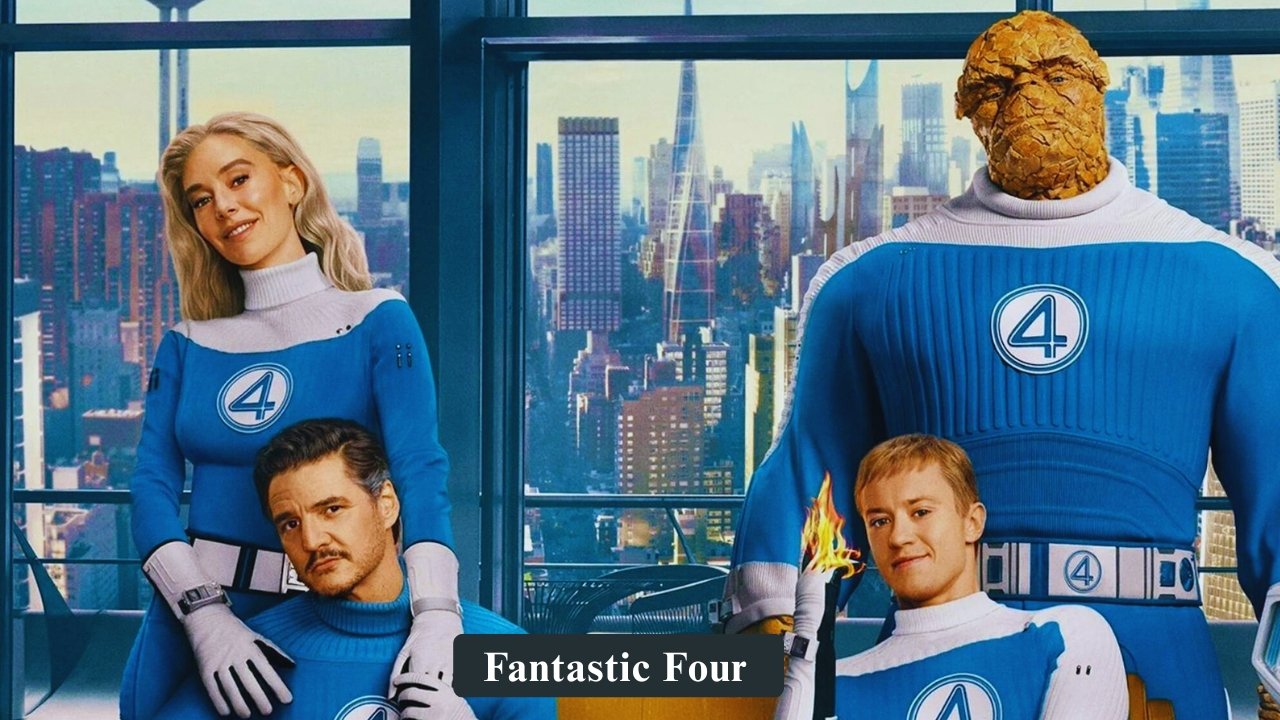
by When you see the words “First Steps” tucked into the title, you might expect an origin story. And indeed the Fantastic Four opens with our beloved quartet already established, but it is less about “how they got their powers” and more about “what they do next”. This is the story of the team known as the Fantastic Four, but also the story of family, sacrifice, power and what happens when the universe itself comes knocking.
Key Characters
Here are the core players you’ll want to keep in mind:
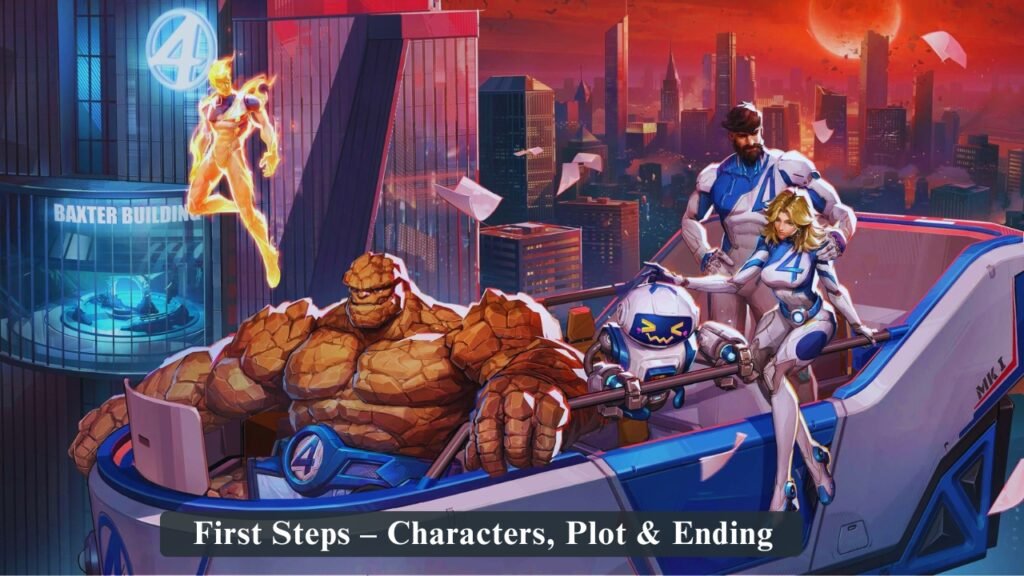
Reed Richards / Mr. Fantastic – Smartest guy in the room. In the Fantastic Four he’s already had his powers for some time, and now he’s tinkering with big ideas: teleportation/bridge-tech for planets, big space threats, and all that.
- Sue Storm / Invisible Woman – Reed’s partner in every sense. Here she’s pregnant (yes, that comes into play) and grappling with what it means to be a hero and a mother. Her story is emotional, grounded and central.
- Johnny Storm / Human Torch – The fire-brand, the showman, the brother of Sue. He brings the energy—literally—and he also plays a more meaningful role in the Fantastic Four big reveal and the cosmic threat arc.
- Ben Grimm / The Thing – The rock-like powerhouse and perhaps the emotional anchor of the group. His role is less about heavy lifting (though there’s plenty of that), and more about steadiness and being the one who’s there when things go wrong.
- Franklin Richards – He’s a newborn, but he may be the biggest story of all. Sue and Reed’s baby, who carries something extraordinary. Many of the stakes hinge on him.
- Galactus – The cosmic threat. Not simply a villain to beat with fists, but a force of nature, a device to raise the stakes.
- Shalla‑Bal / Silver Surfer – Herald to Galactus, conflicted, one of those characters whose arc goes from “tool” to “redeemer”. Her presence changes the battlefield.
- Harvey Elder / Mole Man – A surprise ally in this Fantastic Four (yes, the subterranean lord). He represents help from unexpected corners when the entire planet is under threat.
Setting & Tone
The movie takes place on what’s referred to as Earth-828, in the 1960s retro-futuristic style. The team has already been active for a few years. They are public heroes, celebrated by the globe, but also under more pressure than ever.
Instead of origin-story pacing, we jump into their “fourth anniversary” as a team. That gives the Fantastic Four a confident, “we’ve done this before” feeling — but everything gets ramped up when the cosmic threat appears.
The aesthetic mixes vintage flair (think early space exploration era), superhero spectacle and full-on cosmic scale. The contrast is important: these are relatable human characters (a family) in an absurdly big situation (world-devourers, cosmic portals, newborn super-kids).
Plot Summary
Here’s how the story unfolds in rough beats:
Act 1: The calm before the storm
We open with the Fantastic Four already legendary. They’ve become media icons. We learn Reed and Sue are expecting a baby. The team dynamic, the public image, the powers they’re all established. Then the tone shifts when the Silver Surfer arrives and warns that Earth is “marked for death” by Galactus.
Reed begins working on teleportation/bridge technology–the kind that might move a planet, or perhaps redirect Galactus. Meanwhile, Johnny discovers something: Shalla-Bal (Silver Surfer) has a past.
Act 2: The confrontation
Galactus’s arrival forces the team into full-blown crisis mode. The bridge towers go up around the world to attempt to relocate Earth before Galactus devours it. But Shalla-Bal sabotages nearly all of them, leaving only one in New York standing.
At the same time, the team grapples with the moral weight: Galactus offers they believe that Franklin (their unborn child) is key. He wants to use the baby’s power to satiate his hunger, or maybe to succeed him. The family rejects that path.
In New York, they implement a high-risk plan: use baby Franklin as bait to lure Galactus into the one remaining portal/bridge, then send him away. Sue tries to balance motherhood and hero-duty; Reed tries to keep the tech running; Johnny and Ben fight in the streets; Mole Man aids in evacuating civilians underground.
Act 3: The climax
Galactus attacks. Buildings collapse. Reed is stretched to breaking point. Ben is flung into orbit. Johnny unleashes full flame. Sue uses her force-field powers in a grand act of will. The portal is nearly closed. It’s all or nothing.
In the final push: Sue, exhausted, uses her full power to push Galactus into the portal. She collapses and appears to die. The team mourns. Reed tries CPR. The world seems saved but the cost is heavy.
Then: baby Franklin reaches out. His hands glow. He touches Sue’s chest. Life returns. It’s a moment of wonder, fear, hope, all at once.
Ending Explained & Meaning
The ending of this Fantastic Four is layered: emotional, cosmic and fraught with future implications.
On one level, it’s a victory. The team saves Earth from Galactus—for now. He is sent through the portal, Silver Surfer sacrifices herself, and the citizens are safe. The Fantastic Four remain heroes.
On another level, it’s a sacrifice. Sue appears to die. The team faces the worst possible cost of heroism. The child they love is used (even if only as bait). The stakes are personal and human.
- But then—miracle. Franklin revives his mother. That moment flips everything. It reveals he possesses immense power (likely cosmic, reality-altering), which elevates the story from “just another hero movie” to “universe-scale possibilities”.
- Then: the future hook. We jump ahead four years. Franklin is older. A cloaked figure holding Doctor Doom’s mask appears and interacts with him. We know larger threads are in motion—the Marvel Universe is shifting.
So the ending is both closure (evil defeated, world safe) and open (new powers rising, a new villain looming, a new era beginning).
Themes & Takeaways
Here are some of the deeper ideas the Fantastic Four explores:
Family & Responsibility: This is a “superhero family” story, yes—but it’s also about the cost of keeping your loved ones safe while fighting for everyone else. Sue’s pregnancy, Franklin’s role, Reed’s inventions—all of these bring family into the cosmic.
Power & Sacrifice: The larger measure of power isn’t simply physical strength—it’s the willingness to sacrifice what you love. The Fantastic Four makes that clear in Sue’s act and in Franklin’s awakening.
Redemption & Choice: Shalla-Bal’s arc shows that even those complicit can choose a different path. The Fantastic Four isn’t black-and-white. It’s about finding the right choices when everything seems lost.
Scale & Wonder: When you’re dealing with a character like Galactus (world-eater) and portals that move planets—you have to balance the absurd with the grounded. The Fantastic Four tries to do that by anchoring the grand with human stakes (a baby, a mother, a team).
What’s Next: With Franklin’s powers, and Doctor Doom teased, the Fantastic Four invites viewers into “what comes next”. It isn’t purely self-contained—it plants seeds for the wider universe.
Final Thoughts
“The Fantastic Four: First Steps” is not just a beginningit’s the next stage. It takes familiar characters and pushes them into unfamiliar territory. A baby with cosmic significance. A planet-devouring threat. A hero turned herald. The ordinary and the extraordinary collide.
What makes the Fantastic Four compelling is that despite all the wild visuals and scorch-marks on skyscrapers, the heart of it remains a family fighting for one another. That emotional grounding gives the spectacle weight.
If I were to sum it up: It’s the story of a family stepping into a larger world and discovering that they either rise together, or the world falls apart. Franklin’s first steps are both literal and metaphorical: the first steps of a new age.
For more movie insights, read our full blog collection here….