 by
by When I walked into the theater to watch F1: The Movie, I expected a high-octane racing drama, but what I got was so much more. As someone who has followed Formula 1 for years, I was blown away by how this film not only captured the speed and thrill of the sport but also humanized it in ways few racing movies ever have. It’s not just about cars hurtling down tracks at 300 km/h; it’s about discipline, mental strength, representation, mentorship, and dreams that demand sacrifice.
After watching F1: The Movie, I knew I had to write this blog. It’s a film that left me reflecting on the unseen side of racing—the blood, sweat, and personal battles that happen before drivers even get to the starting grid. From the powerful training montage that builds its hero to the refreshing inclusion of strong female characters, the movie offers something special for everyone. And if you’re wondering how realistic it is compared to actual Formula 1, don’t worry—I’ll break that down too. Let’s dive deep into why F1: The Movie deserves all the attention it’s getting.
The Training Montage: How F1: The Movie Built Its Hero
The training montage in F1: The Movie is hands down one of the most memorable parts of the film. Our protagonist, Alex Carter, is a young driver brimming with raw talent but lacking the polish needed to compete at the highest level. Watching his journey unfold felt personal, almost like you’re strapped in alongside him as he transforms from a promising rookie into a disciplined, razor-focused competitor.
Unlike typical sports films where training montages are brushed over quickly, F1: The Movie dedicates real time to show what goes into building a Formula 1 driver. You see Alex:
Working on Neck Strength: Because of the G-forces in F1, drivers train their neck muscles relentlessly. This detail immediately signaled how much research went into the film.
Undergoing Reflex and Reaction Drills: Using strobing light panels and quick-response systems, Alex hones his split-second decision-making—essential for navigating corners at blistering speeds.
Simulating Races in VR: There are intense scenes where he trains with virtual track simulations, familiarizing himself with every corner, apex, and braking zone.
Endurance Training: From grueling cardio sessions to heat training in special suits mimicking cockpit temperatures, we see how physically punishing F1 prep can be.
I loved that the film didn’t sugarcoat this process. Alex struggles. He fails repeatedly, often collapsing in exhaustion. But gradually, you see him evolve—not just physically, but mentally. This isn’t just about driving fast; it’s about learning focus, resilience, and consistency.
One sequence I particularly loved shows Alex shaving milliseconds off his lap time, celebrating quietly before his mentor pushes him harder. This kind of attention to detail—mixing triumph with relentless grind—is why the montage works so well. For anyone who’s ever followed real F1 drivers, it mirrors the discipline of greats like Lewis Hamilton or Max Verstappen, whose off-track regimens are as important as their race-day skills.
This part of F1: The Movie isn’t just cinematic—it’s inspiring. It made me appreciate that behind every split-second race decision lies thousands of hours of preparation that we, as fans, rarely see.
Women in the Fast Lane: Female Representation in F1: The Movie
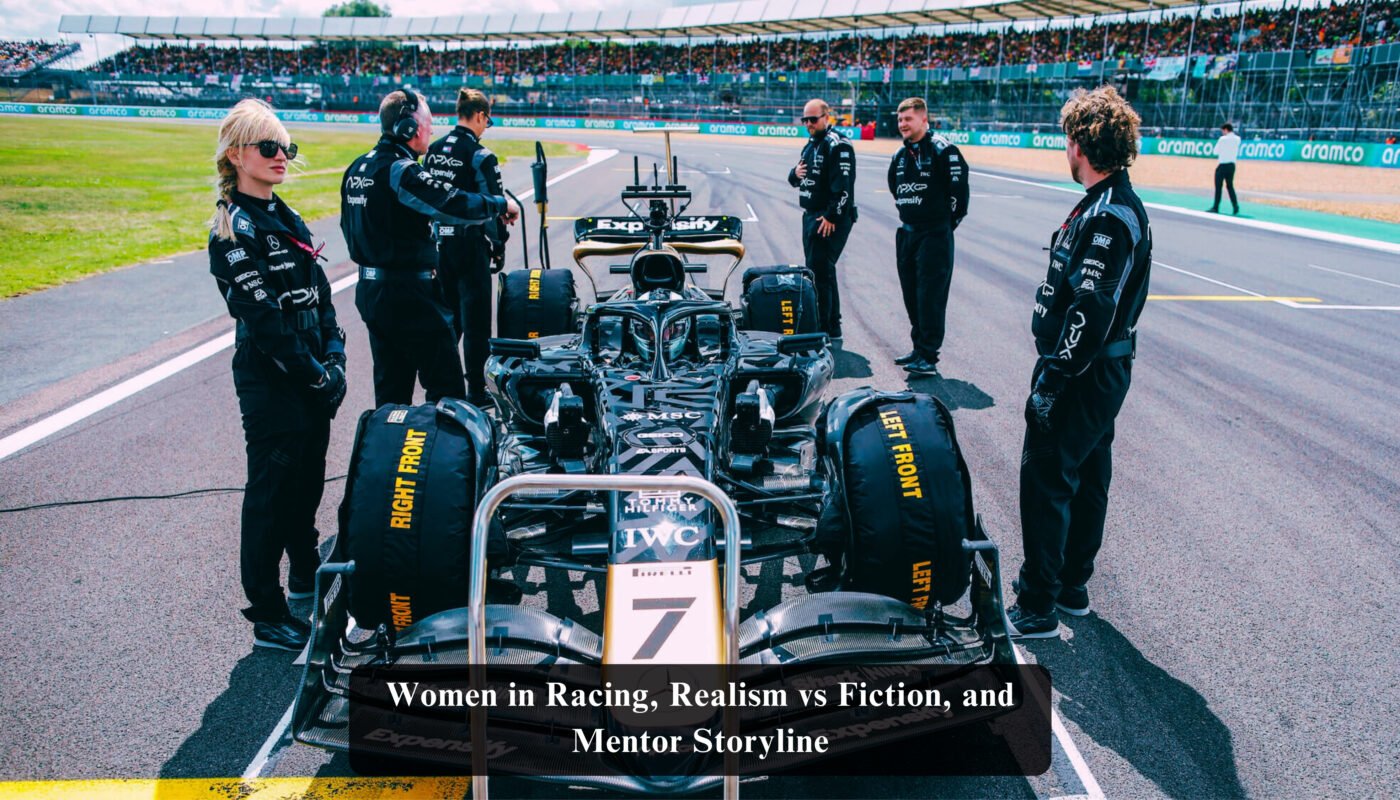
One of the things that struck me about F1: The Movie was its commitment to female representation. Motorsport has historically been a male-dominated arena, so it was refreshing to see women not just as background characters, but as vital contributors to the story.
The standout character is Sofia Vega, Alex’s lead engineer. She isn’t just there to support him; she’s brilliant in her own right. From analyzing real-time telemetry data to making split-second pit calls, Sofia commands respect. Her sharp dialogue and presence remind us that F1 is as much about engineering brilliance as it is about driving skill.
Then there’s Lena Torres, a young female driver introduced mid-film who becomes Alex’s rival. Lena’s introduction flips the story on its head. She’s fearless on track, executing daring overtakes that leave Alex rattled. Watching her go wheel-to-wheel with Alex in a rain-soaked race was one of the film’s most electrifying sequences. It’s a subtle but powerful nod to real-world female racers like Jamie Chadwick, who are proving that gender doesn’t define talent.
The movie doesn’t treat Sofia and Lena as tokens—they have arcs. Sofia faces sexism from team sponsors, while Lena fights to be taken seriously in the media. Both characters bring realism and depth, showing how women are carving their space in motorsport despite hurdles.
By the end of F1: The Movie, I found myself rooting for Sofia and Lena just as much as I did for Alex. Their inclusion felt natural, essential, and inspiring—an element that gives this movie a broader appeal beyond just racing fans.
F1: The Movie vs Reality – What’s Fiction and What’s Real?
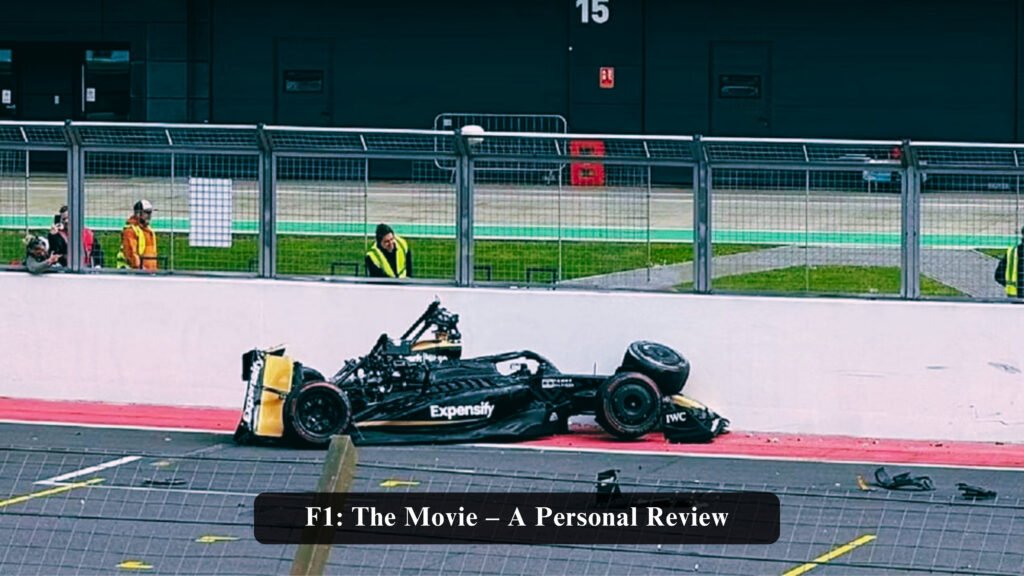
As someone who follows Formula 1 closely, one of my biggest questions going into F1: The Movie was: How accurate will it be? I was pleasantly surprised at how grounded it felt while still offering cinematic thrills.
What’s Accurate in F1: The Movie:
Technical Precision: The film nails F1’s details—pit stops, team radio chatter, tire strategies, and DRS use all felt authentic. I noticed that they even modeled their fictional cars on real F1 chassis design.
Driver Mentality: Alex’s internal struggle, media scrutiny, and sponsor demands mirror the very real pressures faced by drivers like Hamilton or Leclerc. The psychological side of racing is brilliantly depicted.
Mentorship Dynamics: The mentor-mentee relationship reflects real-life examples, such as how Niki Lauda guided young drivers.
What’s Exaggerated:
Crashes: While spectacular and dramatic on screen, modern F1’s safety protocols make such accidents less frequent today.
Rapid Rise: Alex’s rookie-to-champion arc is very compressed compared to how long it actually takes to climb F1 ranks in real life.
it heightens drama (it is a movie), but it doesn’t insult the intelligence of fans who understand the sport. It’s reminiscent of Rush (the Niki Lauda vs James Hunt film), blending fact and fiction seamlessly.
The Mentor Figure: Wisdom and Sacrifice in F1: The Movie
If I had to pick one element that emotionally anchored F1: The Movie, it’s Marcus Kane, Alex’s mentor. A retired F1 legend, Marcus is gruff, tough, and brutally honest. Their relationship is anything but smooth; Marcus tears Alex down before building him back up, teaching him that racing isn’t just about speed but control, patience, and purpose.
Marcus’s own tragic backstory—a crash that ended his career—adds weight to his advice. One scene where Marcus says, “You win races in your mind before you win them on the track,” hit me hard. His wisdom is rooted in experience, and his tough-love approach ultimately transforms Alex from a reckless talent into a disciplined champion.
By the climax of F1: The Movie, Marcus sacrifices his health to personally coach Alex for the championship decider, despite lingering injuries. This act of selflessness deepens their bond. When Alex finally wins, his first gesture is to hand the trophy to Marcus—a symbolic passing of the torch.
This mentor-student arc reminded me of real-world motorsport icons like Ross Brawn or even Lauda’s guidance at Mercedes. It’s proof that even in an individual sport like F1, mentorship and teamwork shape greatness.
Final Thoughts on F1: The Movie
Walking out of the cinema, I felt like I’d been on an emotional and adrenaline-packed journey. F1: The Movie is more than a racing film—it’s about discipline, mentorship, representation, and the sheer willpower it takes to succeed. It’s cinematic enough to thrill casual viewers but authentic enough to satisfy hardcore fans.
Whether it’s Alex’s grueling training, Sofia and Lena’s inspiring arcs, the mentor’s wisdom, or the thrilling finale race, this film delivers on every front. It’s the kind of movie that doesn’t just entertain you—it makes you appreciate the real-life heroes behind Formula 1 even more.
If you love sports dramas or even just powerful human stories wrapped in high-octane racing, F1: The Movie is a must-watch. It’s inspiring, emotional, and deeply respectful of the sport it represents.
If You interested in movie related many more blog click here…