 by
by As a 25-year-old movie blogger who has spent years watching and analyzing action films, I can confidently say that Ballerina is one of the most visually striking and stylistically unique action movies I’ve seen in recent years. It’s not just a spin-off in the John Wick universe—it’s a full-blown ballet of brutality, elegance, and cinematic brilliance. In this blog post, we’ll dive deep into the three main aspects that define Ballerina: its visual aesthetics, Rooney’s weapon choices and fighting style, and the graceful yet gritty blend of elegance and violence.
Let’s take this journey into the world of Ballerina Cinematic Style and explore why it stands out not just as an action thriller, but as a work of visual and thematic art.
Ballerina Cinematic Style: Visual Aesthetics and Cinematography
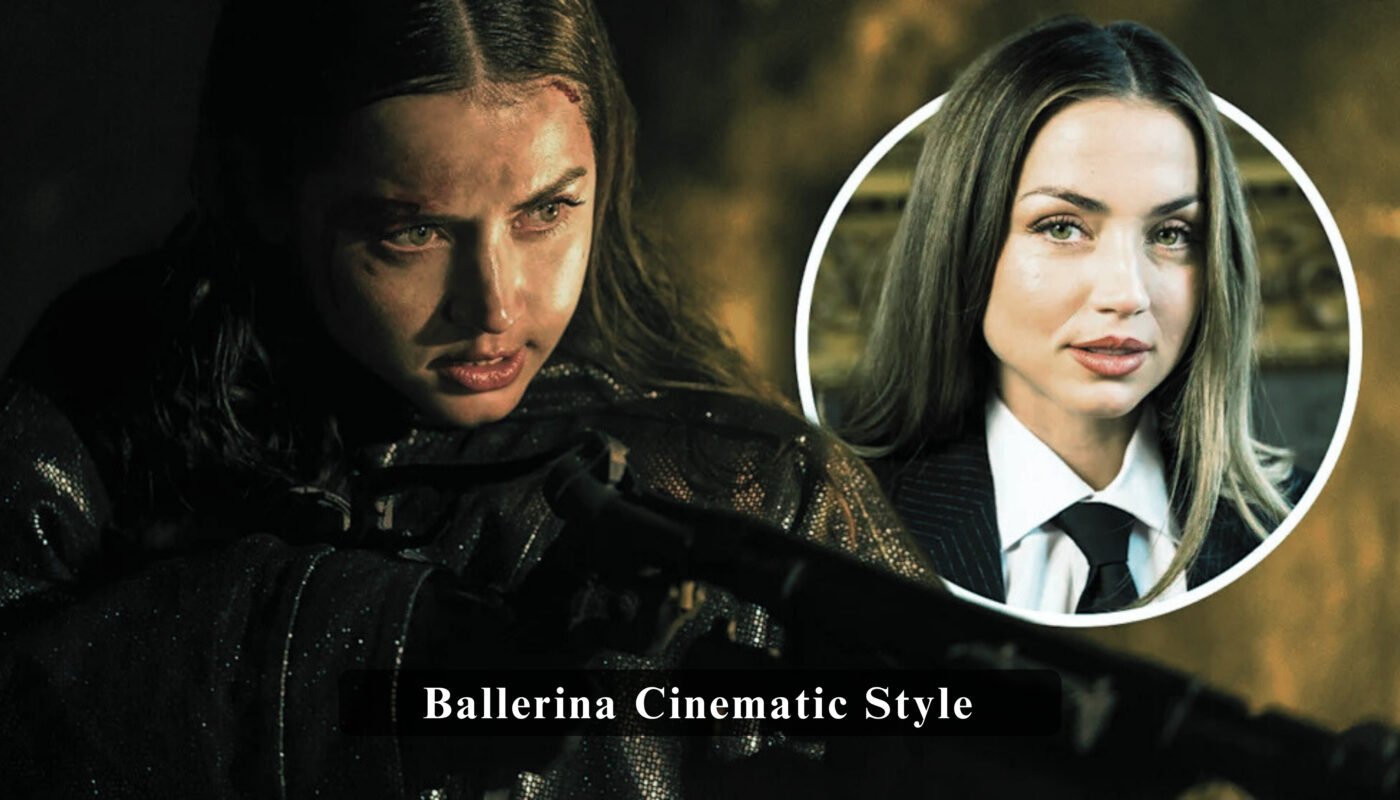
From the opening scene, Ballerina sets the tone with a cold, haunting blue color palette that immediately immerses viewers in its world. The use of lighting, shadows, and framing reflects not just the physical world Rooney inhabits, but also her internal struggles. Directed by Len Wiseman, the movie carries the DNA of the John Wick series but carves its own identity through a stylized, neo-noir approach to cinematography.
Color Palette and Lighting
The Ballerina cinematic style heavily leans on high contrast visuals—neon blues, burning oranges, muted grays—which all serve to heighten the emotional intensity of each scene. Scenes shot in candle-lit cathedrals juxtapose with neon-lit alleyways. These visuals aren’t just pretty to look at; they reflect the duality of Rooney’s character: a trained performer and a deadly assassin.
Lighting plays a crucial role in revealing character motivations. When Rooney is in control, she is often bathed in soft, natural lighting. During chaos or conflict, the lighting shifts to harsh fluorescents or deep shadows, amplifying the disorientation and emotional volatility.
Camera Movement and Framing
One of the most noticeable elements of Ballerina cinematic style is its use of fluid camera motion. The fight scenes are choreographed like dance numbers, and the camera follows Rooney’s movements with grace. There’s an intentional rhythm to the cinematography, which mirrors Rooney’s background as a ballerina. In close combat scenes, the camera zooms in to capture every expression and emotion, making the viewer feel every hit and every breath.
Long takes dominate the action sequences, allowing viewers to follow the choreography without the interruption of constant cuts. This method, often associated with the John Wick films, is used to greater emotional effect in Ballerina because it emphasizes both the brutality and grace of the action.
Production Design and Visual Symbolism
Production design also plays a key role in setting the tone. Gothic architecture, vintage opera houses, and underground fight clubs are just a few of the visually rich settings that reinforce the theme of duality—elegance clashing with violence.
Symbolism is woven throughout the film. For instance, mirrors are often used during transitional scenes to reflect Rooney’s fragmented identity. The visual metaphors extend into costume design as well—her combat outfits are often designed with flowing elements that mimic ballet costumes, bridging her past and present selves.
In totality, the Ballerina cinematic style is not just about looking good—it’s about storytelling through visuals. It captures the essence of a character torn between artistry and vengeance.
Weapon of Choice – Rooney’s Arsenal and Combat Tactics
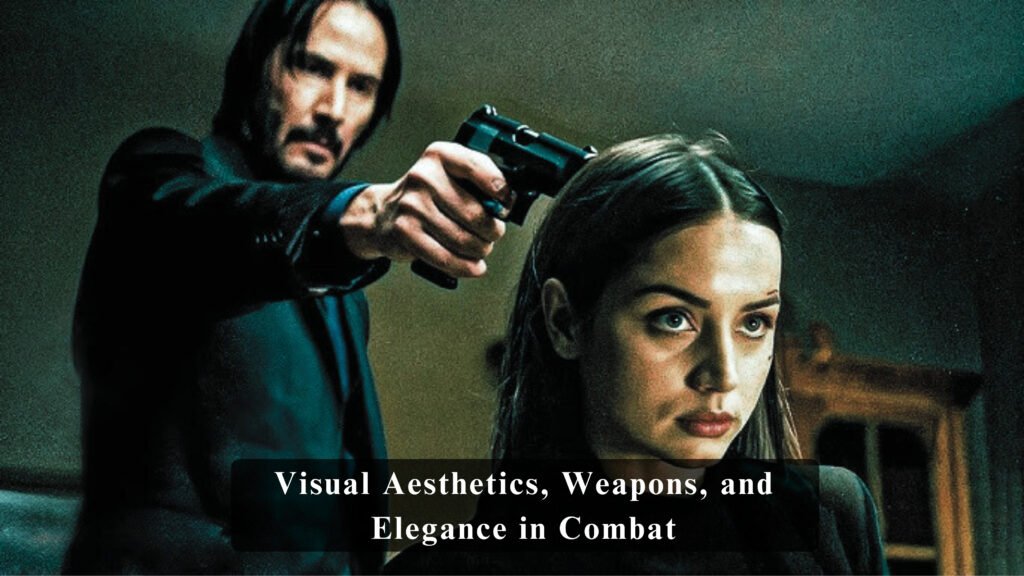
When it comes to weapons, Ballerina doesn’t disappoint. Rooney is armed not just with guns and knives, but with a strategic mind honed by years of discipline as a dancer and a killer. Her weapon choices and fighting techniques are key to understanding her character and the unique appeal of the Ballerina cinematic style.
Handguns and Precision Fire
Rooney’s signature weapon is a modified Glock 19 with a custom suppressor. The gun is light, compact, and ideal for the fast, fluid movement that defines her combat style. What sets Rooney apart from other assassins is how she uses her gun—not just for brute force, but with precision and rhythm. Her aim is impeccable, and her reloads are choreographed like pirouettes.
Throughout the film, close-up shots emphasize the importance of precision. This ties into her ballerina background where every movement must be exact. Whether she’s taking out enemies at a distance or up close, Rooney’s weapon use mirrors her disciplined upbringing.
Blades and Hand-to-Hand Combat
Knives play a major role in Rooney’s arsenal. She often dual-wields curved blades designed for both slashing and thrusting. These weapons are more than just tools—they are extensions of her arms, just like a dancer’s limbs. In several key scenes, she performs close-quarters combat routines that are almost balletic in their fluidity.
Unlike traditional assassins who rely solely on brute force, Rooney uses momentum, balance, and flexibility. Her fighting techniques blend ballet spins, aerial kicks, and contortion-style escapes. This approach makes her unpredictable and incredibly dangerous.
Improvised Weapons and Environment Interaction
One of the most exciting parts of the Ballerina cinematic style is Rooney’s use of the environment. Much like John Wick, she uses anything available—glass shards, piano wires, even a stiletto heel—to defend herself. These improvisational techniques highlight her resourcefulness and adaptability.
She turns everyday objects into deadly instruments, creating a visual spectacle that keeps the audience on edge. One memorable scene involves her fighting in a luxurious hotel using only curtain rods and broken champagne bottles. This ingenuity contributes to the film’s theme of elegance merging with brutality.
Tactical Strategy
Rooney doesn’t charge into battle blindly. Her tactical planning is another hallmark of her character. She surveys environments, identifies weaknesses, and plans exits in advance. This calculated approach adds realism to the action and makes each sequence feel earned.
In short, Rooney’s weaponry and tactics aren’t just about action—they are about character development and thematic cohesion. The Ballerina cinematic style comes alive in these moments of orchestrated chaos.
From Stage to Street – Blending Elegance and Brutality
The most compelling aspect of Ballerina is how it balances the polar opposites of art and violence. Rooney’s journey is as much about identity and purpose as it is about revenge. Her training in ballet is not a gimmick—it’s the foundation of her fighting style and the emotional thread of the story.
Ballet as Backstory
Rooney’s ballerina past isn’t just a flashback—it’s a living, breathing influence on how she moves, fights, and thinks. The film intercuts scenes of her performing on stage with scenes of her fighting for survival, drawing a powerful parallel between the discipline of dance and the discipline of combat.
The grace of ballet is evident in her posture, timing, and control. Each move she makes is a calculated strike—just as a dancer hits every beat, Rooney lands every punch with intention.
Emotional Brutality
The film doesn’t shy away from the emotional consequences of violence. Rooney is not a one-dimensional killer—she feels loss, regret, and pain. Her face often betrays a sense of conflict during fight scenes, reminding viewers that every act of violence has a cost.
This emotional weight is what elevates Ballerina above typical action fare. The Ballerina cinematic style includes not just external beauty, but internal turmoil. Rooney isn’t just fighting enemies; she’s fighting the parts of herself that have died along the way.
Soundtrack and Rhythm
Another layer to the film’s aesthetic is the use of classical music during combat. Vivaldi, Tchaikovsky, and original orchestral compositions guide the rhythm of fights. It’s not just cool—it’s meaningful. The soundtrack connects her past to her present and turns violence into performance.
There’s one sequence where Rooney fights a group of assassins inside a decaying opera house while a haunting violin solo plays in the background. The choreography, music, and emotion culminate in what feels like a tragic ballet.
Thematic Cohesion
Every visual and sound in Ballerina ties back to a central theme: beauty and violence can coexist, but they always come at a cost. The Ballerina cinematic style is a study in contrasts—hard and soft, light and dark, poised and feral.
By the time the credits roll, viewers aren’t just left breathless by the action—they’re left thinking. About the cost of vengeance. About identity. About what happens when art is corrupted by violence.
Final Thoughts: The Art of Ballerina Cinematic Style
As someone who lives and breathes cinema, I can honestly say that Ballerina is not just a movie—it’s an experience. The Ballerina cinematic style is one of the most immersive and artistic in the genre. It uses cinematography, choreography, production design, and storytelling to elevate what could’ve been a generic spin-off into something extraordinary.
Rooney is a character who embodies contradiction. She is graceful and brutal, beautiful and terrifying, elegant and relentless. Through her journey, we see how style can be used not just for flair, but for emotional depth and character evolution.
Whether you’re a fan of action, art, or storytelling, Ballerina delivers on all fronts. And if you love dissecting film visuals as much as I do, you’ll find the Ballerina cinematic style a rich subject for analysis.