 by
by As a 25-year-old movie blogger who has followed the evolution of action cinema for years, I approached Ballerina with cautious optimism. Being a spin-off from the John Wick universe, expectations were naturally high. However, what this film delivers is more than gunplay and vengeance—it offers a distinct form of action: a fusion of elegance and destruction.
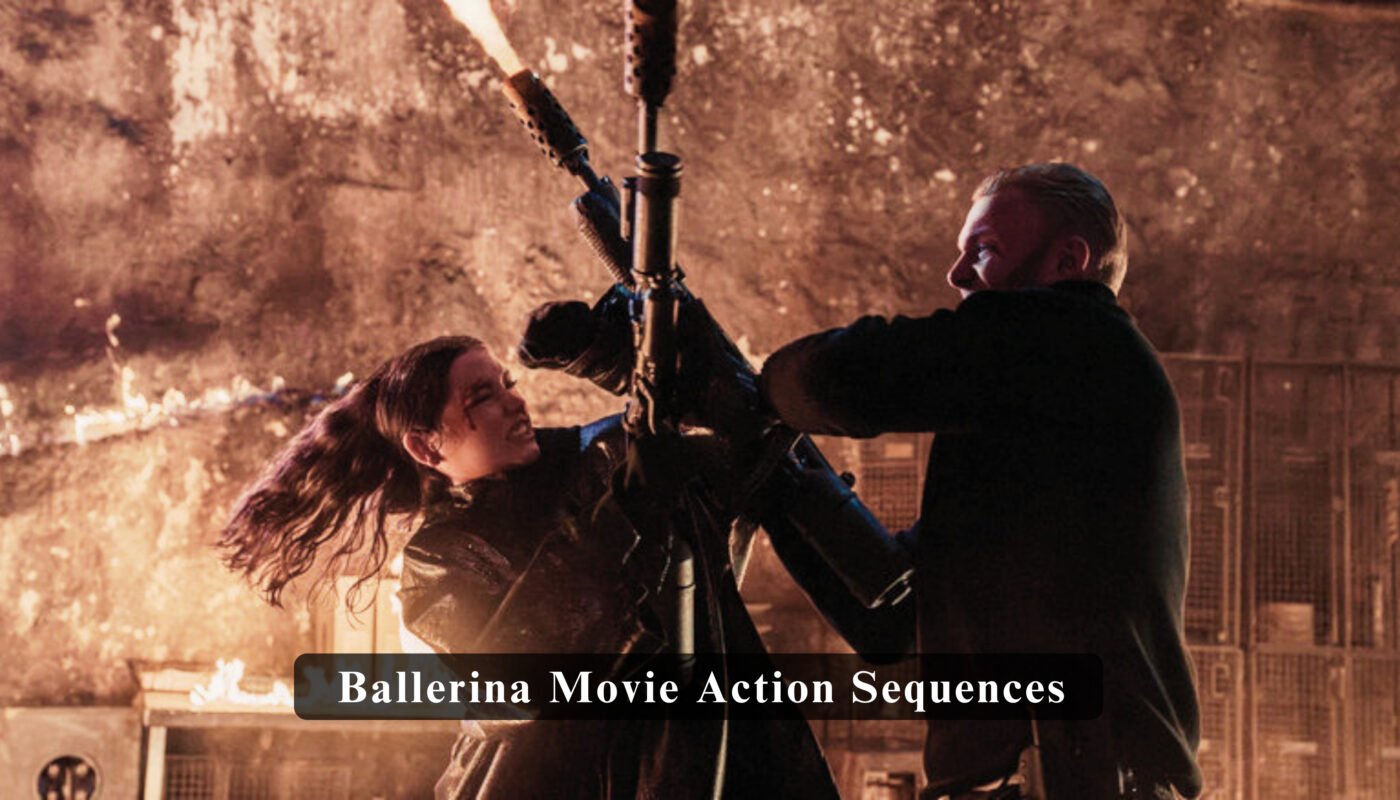
This article is a deep dive into the Ballerina action sequences, breaking down the choreography, fight philosophy, character movement, and cinematic technique behind the violence. With a unique blend of ballet and brutality, Ballerina introduces a new visual language in the world of action cinema.
1. Reimagining Action: What Sets Ballerina Apart
The film’s director clearly understood that audiences have seen it all—slow-motion shootouts, acrobatic stunts, chaotic hand-to-hand brawls. What makes Ballerina stand out is its dedication to turning violence into performance. The action is not only kinetic but rhythmic. Every movement Rooney makes—whether she’s reloading, striking, dodging, or executing a kill—is intentional and choreographed like a piece of dance.
The film’s commitment to realism is balanced with stylized expression. Unlike other films that prioritize either brutality or aesthetics, Ballerina does both. It establishes a consistent tone where action doesn’t break the story—it enhances it. And this consistency is what elevates the Ballerina action sequences above genre clichés.
2. The Opening Attack: Introducing Combat as Choreography
The first major action sequence occurs in a ballet studio—one of the most symbolic settings in the film. Rooney is seen practicing alone. The silence, the mirror, the wooden floors—all establish calmness before violence. When armed men storm in, Rooney doesn’t just defend herself; she flows through them.
She uses the bar to pivot and gain leverage, counters with precise leg movements, and utilizes spatial awareness honed from years of disciplined training. This isn’t simply fighting—it’s structured movement under pressure. The film wastes no time making it clear: Ballerina action sequences are not improvisational chaos—they are designed and calculated.
3. The Hotel Ballroom Sequence: Controlled Mayhem
One of the most talked-about scenes takes place in a luxurious hotel ballroom. With orchestral music in the background, a firefight breaks out, but Rooney maintains a sense of rhythm in her chaos. What makes this sequence particularly compelling is how it blends opulence with violence. There are no screams—just the sound of measured gunshots, glass shattering, and footsteps over marble floors.
Rooney uses her surroundings like a dancer uses a stage. Tables become shields. A chandelier becomes a trap. Her costume—a flowing dress—doesn’t hinder her but becomes part of the motion. The camera captures long takes that follow her movement, giving viewers a sense of immersion rather than confusion.
This sequence alone exemplifies why Ballerina action sequences are being studied and praised. They are not only functional but expressive.
4. The Warehouse Fight: Tempo and Brutality
In contrast to the elegance of the hotel ballroom, the warehouse scene is gritty and industrial. Dimly lit and filled with sharp corners, it’s a hostile environment, yet Rooney adapts with the precision of a performer. The choreography here leans into tempo—fast bursts of action followed by moments of stillness.
Rooney’s background as a dancer is fully utilized. She flips between containers, leaps from platforms, and even uses a steel pipe as a pole to swing-kick enemies. At one point, she fights three attackers at once, managing their rhythm like a conductor leading an orchestra.
Again, the film avoids shaky-cam or excessive cuts. It trusts the choreography to speak for itself. The result is a sequence that feels both realistic and stylized, reinforcing that Ballerina action sequences rely heavily on structure, timing, and discipline.
5. The Rooftop Duel: Emotional Catharsis Through Movement
The final act takes place on a rain-soaked rooftop. Facing off against a mentor-turned-enemy, Rooney engages in the most personal fight of the film. This is not a chaotic brawl; it’s a duel shaped by memory, grief, and betrayal. The rain, the lighting, and the camera angles all contribute to the emotional weight of this moment.
What makes this scene so powerful is not just the technical combat but the vulnerability behind it. Rooney is tired, injured, and emotionally drained—but she still moves with purpose. Each attack feels like a release. Each counter is a memory. It’s a fight where the choreography tells the story better than words ever could.
The finale cements the idea that Ballerina action sequences are not only about survival—they are also about resolution, identity, and transformation.
6. Ballet as a Combat Foundation
Ballet is about control, balance, and discipline—all attributes crucial to effective combat. Rooney’s fighting style reflects this foundation. Her movements are grounded and symmetrical. She rotates from the hips, lands on the balls of her feet, and maintains excellent core alignment even while under fire.
This precision gives her a unique advantage. She can react faster, shift weight more efficiently, and generate power from her lower body. Her fighting is elegant but efficient.
The decision to incorporate real ballet technique into her combat training was a bold choice, but it pays off. It brings a layer of authenticity to her movement that enhances the believability of the action. The result is that Ballerina action sequences feel both original and grounded.
7. Weapons as Extensions of Movement
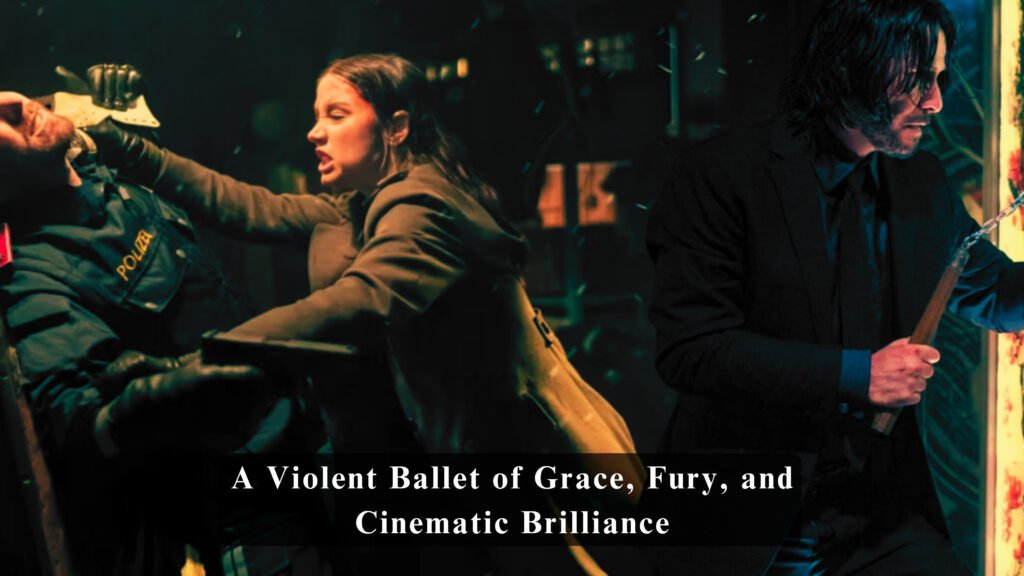
Rooney’s arsenal is a reflection of her personality—practical, efficient, but versatile. She favors dual pistols with suppressors, allowing for close-quarter stealth combat. She’s also seen using knives, wires, and even improvised weapons like glass shards and curtain rods.
What’s notable is how these weapons don’t interrupt her movement; they extend it. For instance, during a stairwell fight, she transitions from a takedown into a knife throw without breaking posture. In another scene, she uses a ballet ribbon to entangle and choke an opponent, turning a performance tool into a deadly device.
The action design team clearly understood that weapons shouldn’t dictate movement—movement should dictate how weapons are used. This philosophy adds depth to every one of the Ballerina action sequences.
8. Cinematography and Visual Language
The cinematography of Ballerina plays a crucial role in amplifying the impact of its action scenes. Dan Laustsen, who also worked on the John Wick franchise, brings his signature style to this film—long tracking shots, high contrast lighting, and the careful use of color.
In Ballerina, color isn’t just aesthetic; it’s symbolic. Warm tones represent past innocence. Cold hues reflect her emotional distance. Reds and blacks dominate during moments of extreme violence, reinforcing the psychological stakes behind the physical confrontation.
The lighting choices help shape the tone of the Ballerina action sequences. Shadow and silhouette are often used to highlight motion rather than detail, creating a sense of mystery and focus. The result is not just a series of fight scenes, but visual storytelling.
9. Psychological Underpinnings: Violence as Expression
Unlike many action heroes who kill without consequence, Rooney is shown to carry the emotional weight of her decisions. Her actions are often framed by grief or reflection. She kills not out of rage alone but out of necessity, trauma, and moral clarity.
The ballet sequences that bookend her violent encounters are essential. They are not mere callbacks—they serve as contrasts and parallels. Where ballet once symbolized restraint and discipline, combat represents liberation and self-definition. The audience begins to see that the Ballerina action sequences are extensions of her psyche, not just plot devices.
10. Place in the John Wick Universe
While Ballerina shares the same universe as John Wick, it carves its own niche. John Wick is cold, calculated, and brutal. Rooney’s style is fluid, expressive, and emotionally charged. The Ruska Roma return, as do brief appearances from Wick himself, but the tone is clearly distinct.
Where Wick fights as a man who lost everything, Rooney fights to reclaim something—her control, her freedom, her past. This shift in motivation is reflected in how the action is framed. It’s not just world-building—it’s world-deepening.
The result is a film that respects its lineage but isn’t confined by it. The Ballerina action sequences help build a character who is not just another assassin, but a new kind of warrior.
Conclusion: A Redefinition of Action Cinema
Ballerina offers something rare in today’s action films—originality. By merging the technical demands of ballet with the kinetic energy of combat, it presents a unique approach to visual storytelling. The choreography is intelligent. The movement is meaningful. The violence is not glorified but examined.
For audiences and filmmakers alike, this movie is a blueprint. It shows that action doesn’t need to be loud or mindless to be impactful. It can be graceful. It can be beautiful. It can be meaningful.
In a cinematic landscape filled with repetition, Ballerina emerges as a work of true innovation. And at the center of that innovation are the carefully designed, emotionally resonant, and visually striking Ballerina action sequences.
Interested in more movie-related blogs? Click here to explore