
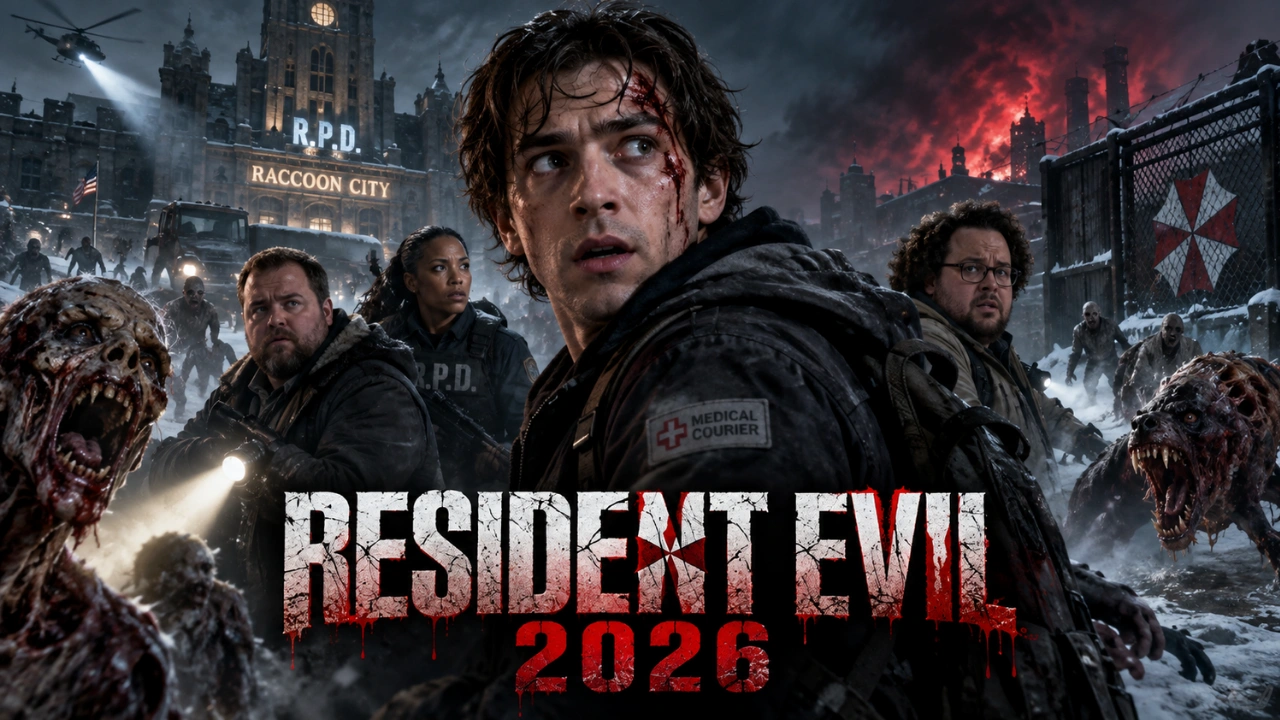
Resident Evil Movie 2026 Review: Story, Cast, Horror and Final Verdict
The Resident Evil movie 2026 takes the long-running horror franchise in a noticeably different direction. Rather than adapting one of Capcom’s games directly or building the story around a familiar hero such as Leon Kennedy or Claire Redfield, director Zach Cregger introduces Bryan, an ordinary medical courier who suddenly finds himself trapped in a nightmare.
Austin Abrams leads the cast, with Zach Cherry, Kali Reis and Paul Walter Hauser also starring. Cregger co-wrote the screenplay with Shay Hatten, and Sony Pictures released the movie in theaters on September 18, 2026.
From the beginning, this setup makes it clear that the film is taking Resident Evil in a different direction.
It isn’t interested in simply repeating the games on a bigger screen. Instead, it takes the survival-horror feeling associated with Resident Evil and builds a new story around it.
The result is a fast-moving horror movie that mixes tension, monsters, gore and dark humor while keeping its central character deliberately ordinary.
Resident Evil Movie 2026: What Is the Story About?
The story follows Bryan, played by Austin Abrams, a medical courier who accepts an urgent delivery connected to Raccoon City.
During the journey, an unexpected accident puts him in contact with a badly injured woman. What initially looks like a difficult but manageable situation soon becomes something far more disturbing.
Bryan finds himself surrounded by threats he doesn’t understand, and his simple delivery turns into a fight to stay alive.
That basic setup is important because Bryan isn’t introduced as an experienced fighter.
He isn’t a trained soldier walking into danger with all the answers. He is a regular person who has been dropped into a situation that is completely beyond his experience.
That gives the movie an immediate advantage.
When Bryan encounters something terrifying, the audience isn’t watching an expert calmly explain the situation. We are discovering the danger through someone who is just as confused as we are.
Sony’s official synopsis describes the movie as an all-new story and a race for survival, which fits the film’s relatively direct approach.
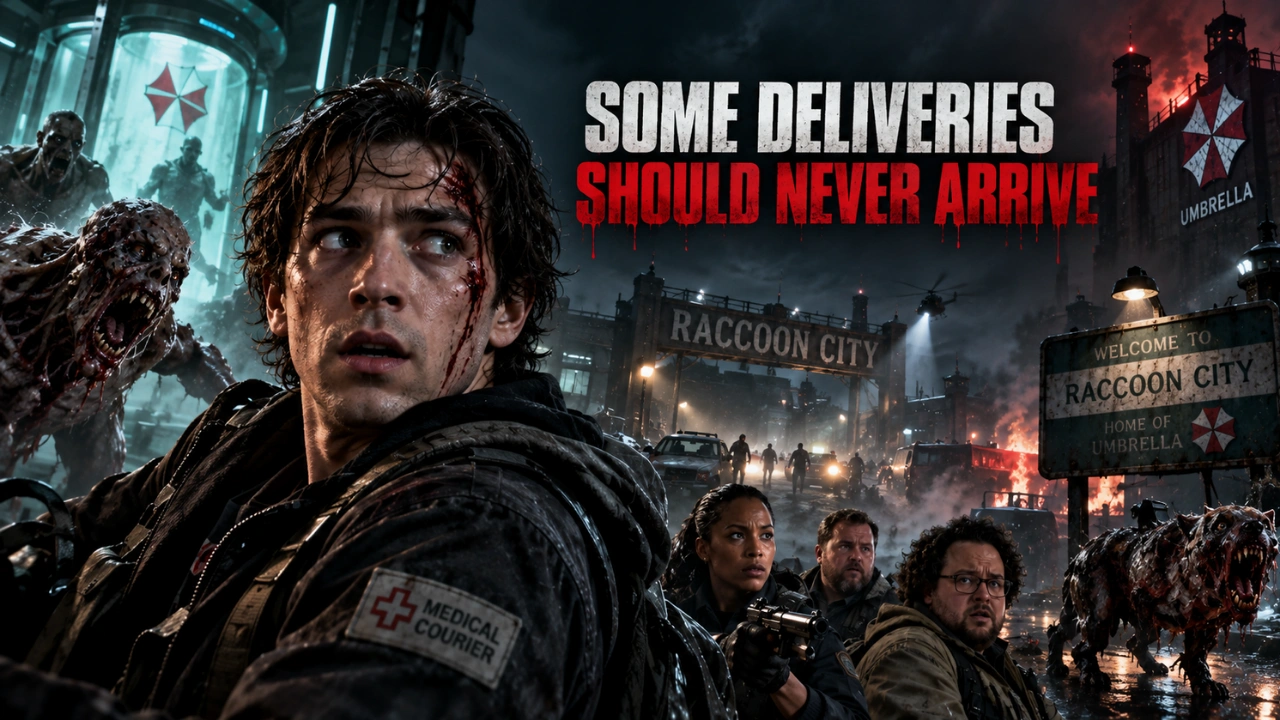
A New Resident Evil Story Instead of Another Game Adaptation
One of the most noticeable decisions in the Resident Evil movie 2026 is that it doesn’t directly adapt one of the mainline games.
For some viewers, that may initially sound like a problem.
For others, it is exactly what makes the movie interesting.
Cregger isn’t required to recreate a famous game sequence or spend the movie introducing characters that audiences already know. Instead, he can create his own protagonist and place him inside a world that still feels recognizably connected to Resident Evil.
RogerEbert.com’s review makes a similar observation, noting that the movie doesn’t directly adapt the Capcom games but captures many of the qualities that make the games work, including mission-like progression and survival-game mechanics.
The difference matters because the movie is borrowing the feel of the games rather than simply retelling one of their stories.
A successful video-game movie doesn’t necessarily have to reproduce the exact plot of its source material. Sometimes it is more effective to capture the experience of the game.
Instead of copying a familiar game plot, the film focuses on recreating the tension and uncertainty that make survival horror effective.
Why the Movie Feels Like Resident Evil
The movie uses several ideas that longtime players will recognize.
Bryan moves from one immediate objective to another. Supplies matter. Locations become dangerous puzzles. New creatures appear as the story progresses, and seemingly safe moments can turn threatening without much warning.
Those details give the movie a game-like rhythm without making it feel like a filmed walkthrough.
RogerEbert.com’s review specifically points to small details such as the appearance of a typewriter and a green plant, both of which have recognizable connections to the games.
These references work because they don’t require a character to stop and explain them.
Fans can notice the details.
Everyone else can simply continue watching the story.
That is a useful approach for a franchise as large as Resident Evil because it gives longtime players something to appreciate while keeping the movie accessible to newcomers.
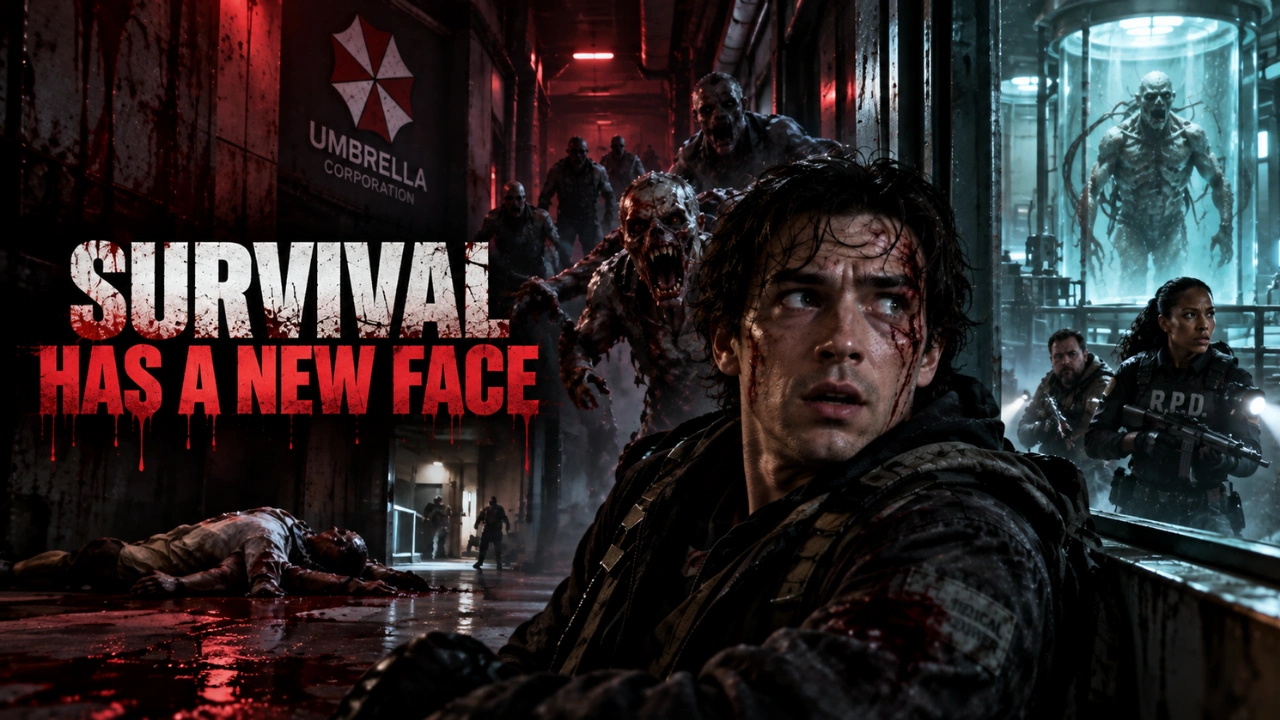
Austin Abrams Gives Bryan a Different Kind of Hero
Austin Abrams is central to the movie’s success because Bryan doesn’t behave like a traditional action protagonist.
He’s scared.
He’s confused.
He makes decisions under pressure.
And when the situation becomes completely ridiculous, his reactions provide much of the movie’s humor.
That makes Bryan easier to connect with than a character who seems completely comfortable fighting monsters from the first scene.
RogerEbert.com’s review highlights Abrams’ physical performance and the way he presents Bryan as an ordinary person rather than transforming him into an instant action hero.
Because Bryan has no real experience with these threats, his uncertainty makes the dangerous moments feel more immediate.
If Bryan already knew exactly how to handle every creature, the audience would have less reason to worry about him. His lack of preparation keeps the outcome uncertain.
The character also gives the film an emotional center.
The movie isn’t only about getting from one monster encounter to another. Bryan has personal reasons for continuing when the sensible option would be to turn around and run.
Those motivations help prevent the story from becoming a collection of disconnected horror scenes.
The Horror Goes Beyond Zombies
Calling the Resident Evil movie 2026 a zombie movie would undersell what it is doing. If you enjoy horror and thriller movies, you can also explore our Horror & Thriller collection for more genre reviews and recommendations.
Zombies are part of the franchise, but Resident Evil has always been interested in biological mutations and increasingly disturbing creatures.
This film follows that tradition.
As Bryan’s journey continues, the threats become stranger and less predictable. Some creatures are frightening because of how they look, while others are effective simply because the audience doesn’t know what they are capable of.
Cregger also understands that showing everything immediately isn’t always the best way to create fear.
Sometimes the anticipation of an encounter is more uncomfortable than the encounter itself.
Cinelinx’s review praises the movie’s ability to create tension even during scenes where an obvious scare isn’t happening, while also highlighting its more extreme gore and creature moments.
The combination keeps the horror from becoming predictable and gives the film more room to move beyond a standard zombie formula.
The Movie Knows When to Be Funny
Horror and comedy can be difficult to combine.
If the jokes are too frequent, the danger stops feeling real. If the movie takes itself too seriously, some of the naturally strange qualities of Resident Evil can disappear.
Here, much of the humor comes from Bryan himself.
His reactions to increasingly bizarre situations provide comic relief without requiring the story to stop for a separate joke.
Cinelinx’s review similarly points to Bryan’s reactions as an important source of the film’s humor and argues that the comedy helps release some of the pressure created by the horror.
For a Resident Evil story, that mix of tension and absurdity feels natural rather than forced.
The franchise has never been completely humorless. Even at its darkest, there is often something exaggerated or strange sitting underneath the horror.
Cregger uses that quality without allowing the movie to become a parody.
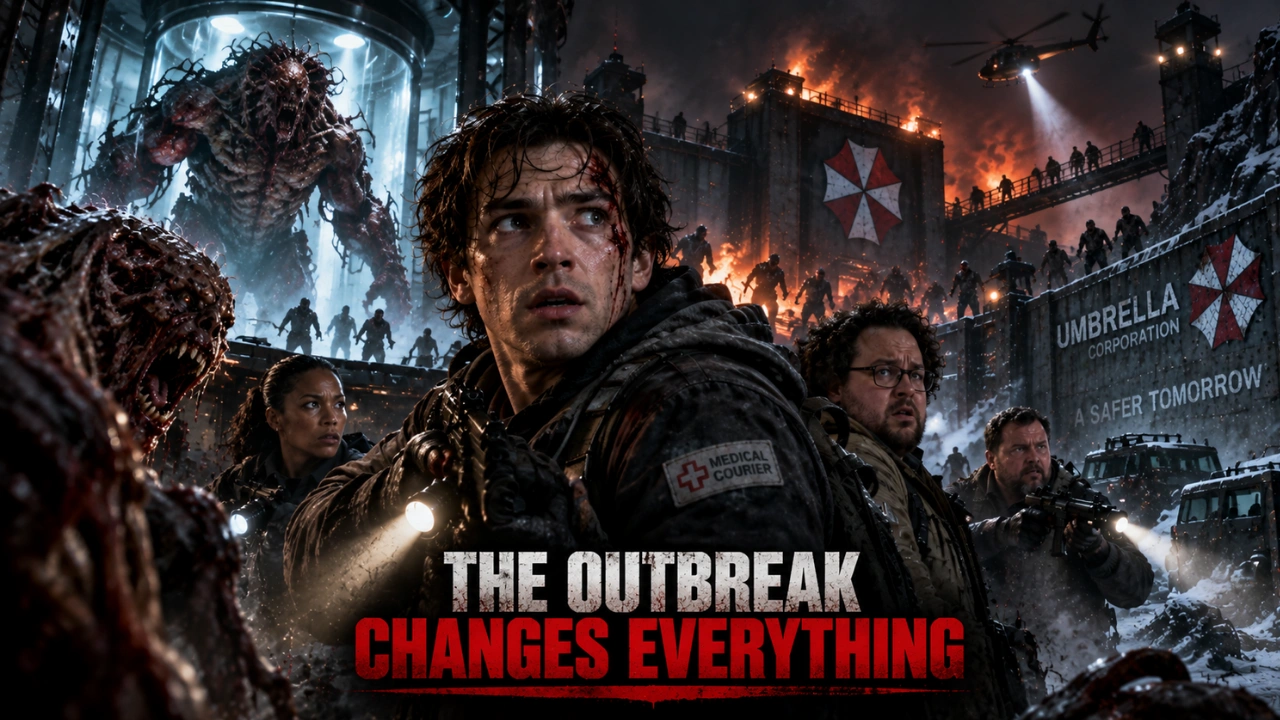
Resident Evil 2026 Keeps the Pace Tight
The movie has a runtime of around 90 minutes, which is relatively short for a modern franchise film.
That decision mostly works in its favor.
There isn’t much room for unnecessary exposition. Once the central situation is established, Bryan’s night keeps moving.
For a survival-horror movie, that momentum is valuable.
The audience gets little opportunity to become completely comfortable before the next problem arrives.
At the same time, the short runtime creates one of the film’s weaknesses.
RogerEbert.com’s review suggests that the movie could almost have used a little more time, particularly toward the conclusion. The review praises the tension but finds some of the final material less controlled than the earlier sections.
Cinelinx makes a similar observation, describing the third act as weaker from a story perspective even while praising the overall experience.
The short runtime keeps the film moving, although it also leaves some parts of the story feeling less developed than they could have been.
The movie is rarely boring, but some viewers may finish it wishing certain ideas had received more room to develop.
The Visual Approach Adds to the Atmosphere
The movie’s horror doesn’t depend entirely on darkness.
RogerEbert.com’s review praises cinematographer Dariusz Wolski’s visual approach, particularly the way threatening figures can appear around light and shadow without making every scene visually oppressive.
For a movie built around unsettling creatures, showing enough of them to make their presence feel real can be more effective than hiding everything in darkness.
If everything is hidden in darkness, the audience eventually stops looking. When the film gives viewers enough visual information to understand what they are seeing, the creatures can become more unsettling.
The snowy environments and isolated locations also reinforce Bryan’s vulnerability.
He isn’t surrounded by crowds or surrounded by people who can rescue him.
The sense of isolation becomes part of the threat.
Is Resident Evil Movie 2026 Faithful to the Games?
It depends on what you mean by “faithful.”
If you mean a direct adaptation of a specific game, then no.
The movie tells its own story.
But if you mean faithful to the feeling of survival horror, there is a much stronger connection.
The mission-based progression, resource pressure, strange creatures, environmental danger and small game references all help recreate the atmosphere associated with Resident Evil.
Cinelinx’s review also argues that the movie uses the franchise’s lore and background while telling a new story with a new protagonist.
This approach gives the filmmakers freedom to explore the Resident Evil world without being tied to the plot of an existing game.
The games already provide Leon, Claire, Chris, Jill and other familiar characters.
The movie doesn’t necessarily need to compete with those stories.
Instead, it can explore another corner of the same world.
Resident Evil Movie 2026 Cast
The principal cast includes:
- Austin Abrams
- Zach Cherry
- Kali Reis
- Paul Walter Hauser
Zach Cregger directed the film and co-wrote the screenplay with Shay Hatten, while the principal cast includes Austin Abrams, Zach Cherry, Kali Reis and Paul Walter Hauser. For additional cast and movie information, you can also check the film’s IMDb listing.
The casting supports the movie’s broader strategy: rather than relying entirely on established Resident Evil characters, it gives audiences a new group of people to follow.
That makes the story easier to approach as its own horror film.
What Works Best in Resident Evil 2026?
1. Bryan is an accessible protagonist
Making the central character an ordinary person gives the horror more weight.
He doesn’t have every answer, and the audience learns about the situation alongside him.
2. The movie understands survival-horror structure
The mission-like progression makes the film feel connected to the games without requiring a direct adaptation.
3. The creatures keep changing the rules
The threats aren’t limited to one type of monster. That keeps the horror unpredictable.
4. The humor doesn’t completely undermine the scares
Bryan’s reactions give the movie personality without turning the entire experience into comedy.
5. The runtime keeps the story moving
At around 90 minutes, the movie doesn’t spend too much time explaining what the audience already understands.
Where Resident Evil 2026 Could Be Better
The biggest weakness is the final stretch.
The early and middle portions benefit from a simple goal: Bryan needs to survive and keep moving.
As the story expands, the personal urgency becomes less prominent, and the larger stakes take over.
Both Cinelinx and RogerEbert.com’s reviews identify the third act as a weaker part of the movie, although neither treats it as enough to erase the film’s broader strengths.
There are also moments where the visual effects may not be equally convincing.
Cinelinx specifically mentions some questionable CGI creature work.
For viewers who are highly sensitive to digital effects, those moments may stand out.
Still, the film’s strongest weapon isn’t any individual visual effect.
It’s the tension created around the characters.
Is Resident Evil Movie 2026 Worth Watching?
For horror fans, the answer largely comes down to what you want from the franchise.
If you want a direct adaptation featuring familiar game protagonists, this isn’t that movie.
If you want a new survival-horror story that understands the tone, mechanics and atmosphere of Resident Evil, it has considerably more to offer.
It is also accessible to people who have never played the games.
You don’t need extensive knowledge of the franchise to understand Bryan’s situation. The references are there for fans, but the central survival story remains easy to follow.
That makes the movie a useful entry point for casual horror viewers as well as longtime Resident Evil players.
Final Verdict on Resident Evil Movie 2026
The Resident Evil movie 2026 succeeds because it doesn’t try too hard to imitate what came before it.
Zach Cregger takes the basic ingredients of survival horror and builds a new story around them. Bryan isn’t a legendary game character. He’s simply a regular person having an exceptionally bad night.
Keeping Bryan as an ordinary person makes the danger easier to feel because he has no special advantage when things start going wrong.
The movie’s strongest moments come from that combination of vulnerability, unpredictable creatures and tightly controlled tension. The humor gives the experience some breathing room, while the game-inspired details reward longtime fans without confusing newcomers.
Its biggest weakness is the third act, where the story becomes less focused and some of the earlier tension loses its edge. The short runtime also means certain ideas could have used more development.
Even so, the movie understands something important about Resident Evil: the franchise works when the audience feels uncertain about what is waiting around the next corner.
This isn’t a simple recreation of a game.
It’s a new nightmare built from the same survival-horror DNA.
And for a franchise that has already visited many familiar stories, that fresh approach is what makes Resident Evil movie 2026 worth discussing.
Frequently Asked Questions About Resident Evil Movie 2026
1. What is Resident Evil movie 2026 about?
The story follows Bryan, a medical courier whose routine assignment turns into a struggle for survival in Raccoon City.
2. Who directed Resident Evil movie 2026?
Zach Cregger directed the film and co-wrote its screenplay with Shay Hatten.
3. Who stars in Resident Evil 2026?
The movie stars Austin Abrams alongside Zach Cherry, Kali Reis and Paul Walter Hauser.
4. When was Resident Evil movie 2026 released?
The film was released in theaters on September 18, 2026.
5. Is the New Resident Evil Movie Based on a Game?
The film isn’t a direct adaptation of one particular game. Instead, it creates a new storyline inspired by the world and survival-horror experience of Resident Evil.
6. Do I need to play Resident Evil games before watching the movie?
No. The movie introduces its own central character and story. Knowledge of the games can make some references more enjoyable, but it isn’t required to understand the main plot.
7. How long is Resident Evil movie 2026?
Resident Evil (2026) runs for about 90 minutes.
8. Is Resident Evil 2026 a horror movie?
Yes. It combines survival horror, creature horror, action and dark comedy. Reviews have highlighted its tension, gore and frequent scares.
9. Does Resident Evil 2026 feature Leon Kennedy or Claire Redfield?
Leon Kennedy and Claire Redfield are not the focus of this story; the film instead follows Bryan as its central character.
10. Is Resident Evil 2026 a remake of the older Resident Evil movies?
No. The 2026 film tells a new story rather than retelling the earlier live-action Resident Evil movies.