 by
by I’m a 25-year-old boy who grew up watching horror movies, but 28 Days Later hit different. It wasn’t just about the infected — it was about the systems that failed us. One thing that stood out on my latest rewatch was how deeply political and scientific the movie actually is. So in this post, I’m diving into both: the 28 Days Later government response and the tragic trail of 28 Days Later cure research.
This isn’t a regular zombie movie blog. It’s an emotional, human, and brutally honest look at what went wrong — and what was never even attempted.
The Collapse of Order: A Nation Left to Die
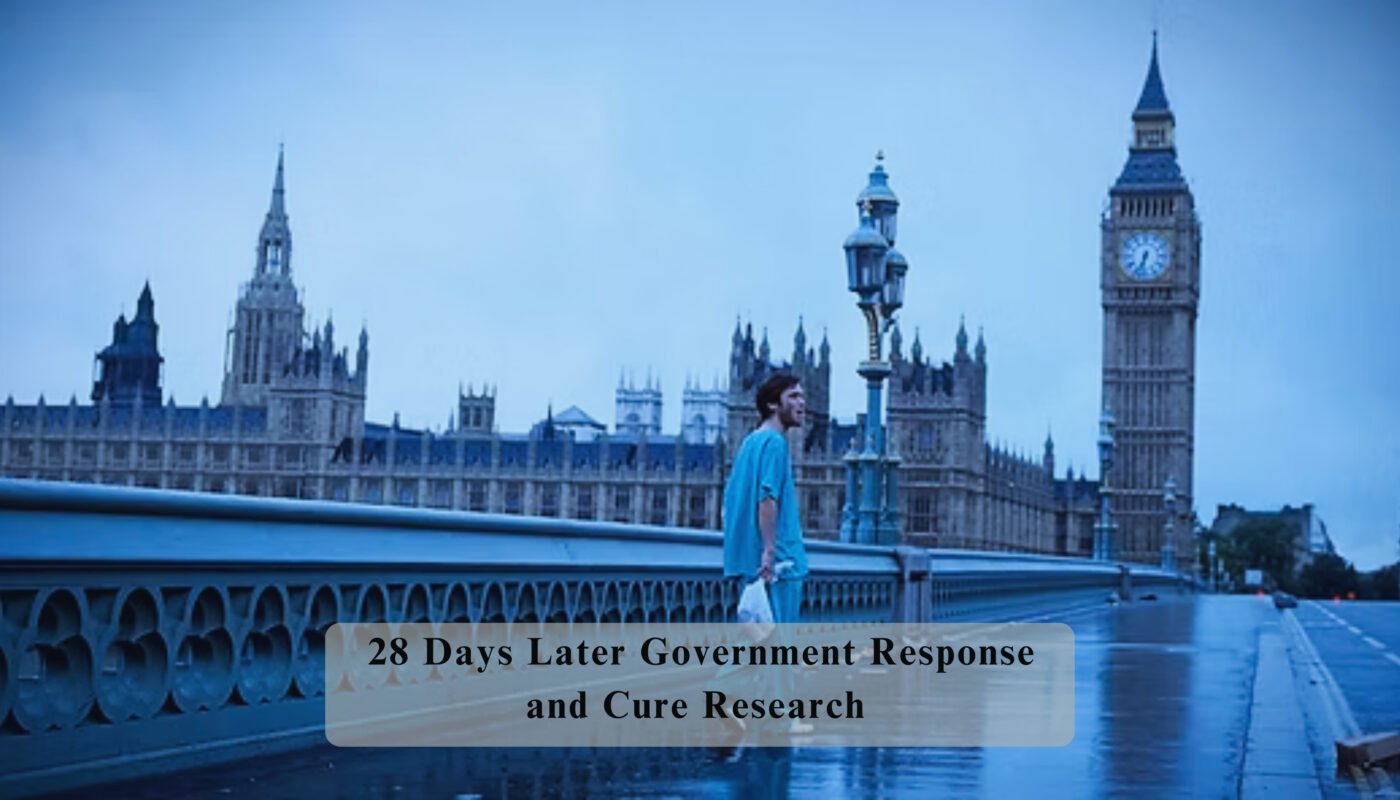
28 Days Later begins with a horrifying silence. Streets are empty. Shops are looted. Bodies lie forgotten. The first impression is not chaos — it’s abandonment.
That’s our first real clue about the 28 Days Later government response. Instead of a fight, there was a retreat. The film never shows politicians or coordinated public warnings. It suggests something scarier: that the government gave up.
When Jim wakes up in the hospital, there’s no sign of rescue efforts. That vacuum of power sets the tone. The authorities, faced with a virus they didn’t understand, seem to have chosen silence.
Military or Mayhem? The British Army’s Role
Midway through the film, our survivors discover a recorded message promising protection at a military blockade. It sounds like hope. But when they arrive, we learn the awful truth.
Major Henry West and his soldiers have no orders from above. They’re on their own, operating without accountability. And they’ve twisted their mission into something monstrous: using women to restart humanity.
This dark twist in the 28 Days Later government response reveals how quickly power turns violent when left unchecked. The virus didn’t destroy order — humans did. The British army, once symbols of national strength, are now the film’s second wave of horror.
The Politics Behind the Virus
The origin of the Rage Virus is another clue to how deeply political this film is. Scientists infected chimpanzees to study aggression — supposedly in a controlled lab environment. But once activists break in to “rescue” the animals, the virus is unleashed.
Who approved that experiment? Why was it being done in secret? And why wasn’t the public informed?
The 28 Days Later government response was compromised from the very beginning. Science was weaponized. Secrets were buried. And when it all fell apart, there was no plan.
This reflects real-world scenarios where governments hide crucial data during crises, thinking secrecy equals safety. But in 28 Days Later, secrecy led to extinction.
Denial and Abandonment
Introduction
The film never shows any attempt to communicate with the infected zones. There’s no radio. No emergency broadcasts. Nothing. That’s not an oversight — that’s the point.
The 28 Days Later government response was to cut off England from the rest of the world, essentially turning the country into a mass grave. Even the military in the film admit they don’t know if anyone is left outside their walls. No one is trying to help.
It’s a disturbing statement: in a world full of resources, the 28 Days Later government response chose isolation over intervention.
When Control Turns Deadly
The Rage Virus spreads fast — within seconds of contact, people turn. This isn’t a virus you can easily quarantine. But instead of researching a solution, the military and government simply resorted to execution.
Anyone infected? Kill them.
Anyone suspected? Kill them.
No trials. No containment.
Just elimination.
That’s the most horrifying part of the 28 Days Later government response. It became a system of fear-driven extermination rather than rescue. It’s a haunting reflection of how even democratic governments can abandon ethics under the guise of survival.
Science vs. Rage: Searching for a Cure
Now 28 Days Later government response let’s shift to the second part of the film’s message: the 28 Days Later cure research, or more specifically — the absence of it.
Unlike many outbreak films, 28 Days Later never shows scientists working on a vaccine. That’s unusual. The virus originated in a lab. That would usually mean there’s at least a trail to follow. But in this world, science has been silenced.
Why? Because the infection spread too fast. Because infrastructure collapsed. Because the government didn’t protect the scientists.
The 28 Days Later cure research was over before it began.
The Missed Opportunities
There are moments in the film where scientific intervention could have happened:
When Frank is infected by a drop of blood, his transformation is observed in real-time. That could have been valuable data.
The infected don’t live long — the virus burns them out. That could hint at a short lifespan or weakness.
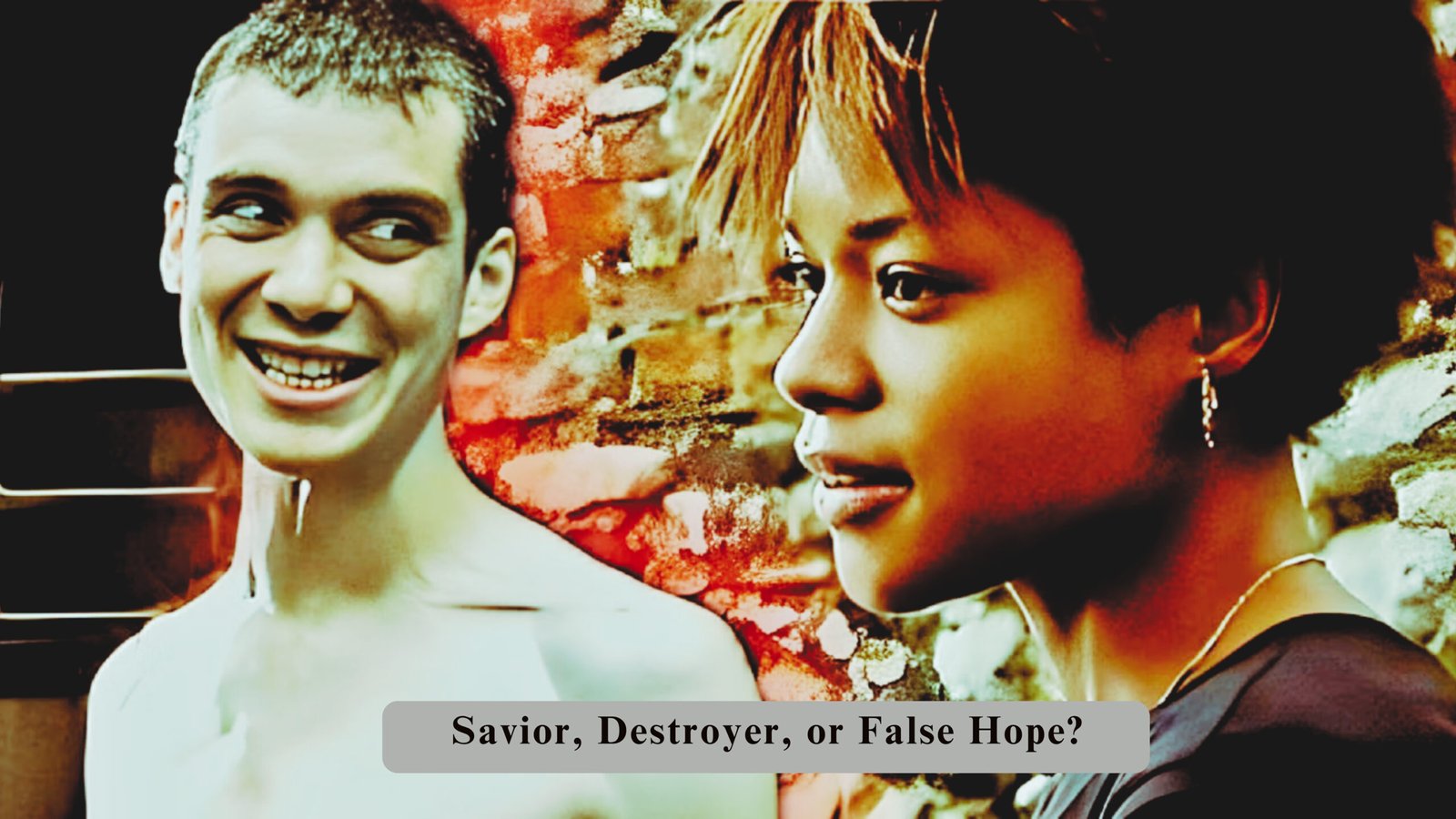
Some characters like Selena seem resistant, possibly immune.
But none of these leads are explored. Why? Because society had already given up on solutions. The government prioritized containment over research. By the time Jim meets the military, it’s clear that nobody is even trying to understand the virus anymore.
This failure defines the 28 Days Later cure research: not a scientific impossibility, but a societal unwillingness.
Fan Theories and What Might Have Been
Some fans believe there was a hidden cure:
The government developed it but refused to share.
Selena’s immunity was real and ignored.
Major West’s group was waiting for instructions from a higher command.
These are just theories, but they reflect our desperation. We want to believe there was hope. That someone was trying. But the film gives us no such comfort.
Instead, it’s brutally honest: hope didn’t die because the virus was unstoppable — it died because people stopped believing in each other.
Rage as a Metaphor for Society
The Rage Virus is a smart metaphor. It’s not just infection — it’s emotional breakdown. It turns people into violent, thoughtless animals in seconds.
What does that say about society?
It suggests we’re all one bad day away from collapse. That when fear takes over, civility dies. That’s what makes the 28 Days Later government response so terrifying — it’s not unrealistic. We’ve seen governments overreact during disasters. We’ve seen science ignored. We’ve seen people turn on each other.
The film isn’t just horror. It’s a psychological mirror.
The Role of the Sequel: 28 Weeks Later
In 28 Weeks Later, we learn a bit more:
One woman (Alice) appears to be immune.
Her blood becomes the key to studying the virus.
A vaccine is hinted at — but not confirmed.
This gives the 28 Days Later cure research a glimmer of life. Maybe there was something worth saving. But it also shows that the government’s actions in the first outbreak destroyed any chance of a timely cure.
By the time 28 Weeks Later begins, it’s too late. The damage is done.
Final Thoughts – What the Film Teaches Us
As a 25-year-old who lived through real-world lockdowns and news about global pandemics, 28 Days Later feels eerily familiar now. The film’s message is chilling because it’s grounded in human behavior.
The 28 Days Later government response shows how quickly leadership can collapse when faced with fear. And the 28 Days Later cure research shows what happens when science is silenced in favor of panic.
This film is not just fiction — it’s a warning. A brutal one. And maybe the scariest part is that we didn’t need zombies to prove it true.
If you interested this movie related many more blog click here….